In professional nail modeling, the adhesion between the natural nail and the applied material plays a crucial role. Even the best technique or highest-quality product won’t last if the foundation — the bond to the natural nail — is not secure. This is where one small but powerful product becomes essential: Ultrabond.
At the MONLIS School for Manicure and Pedicure in Munich, students learn how to use Ultrabond correctly to significantly increase the longevity of every nail enhancement while protecting the health of the natural nail.
What Is Ultrabond?
Ultrabond is an acid-free bonding agent (also referred to as a primer) that acts as a bridge between the natural nail and the following product layers — such as gel, acrylic, or shellac. It air-dries (no curing under a lamp is required) and prepares the nail surface for maximum adhesion.
Compared to acidic primers, Ultrabond is gentler: it does not irritate the skin or damage the nail plate, making it suitable for sensitive clients or compromised nails.
Why Is Ultrabond So Important?
Even with a properly prepared nail plate, skipping the bonding step can lead to several issues:
-
Lifting of the material from the natural nail
-
Moisture intrusion, which can cause fungal infections
-
Shortened durability of the nail design
-
Uneven results and formation of air bubbles
Ultrabond ensures that the product bonds securely to the nail — like a double-sided adhesive on a molecular level. At MONLIS School, we guide students step-by-step on how to apply Ultrabond correctly and tailor its use to different nail types.
When Should Ultrabond Be Used?
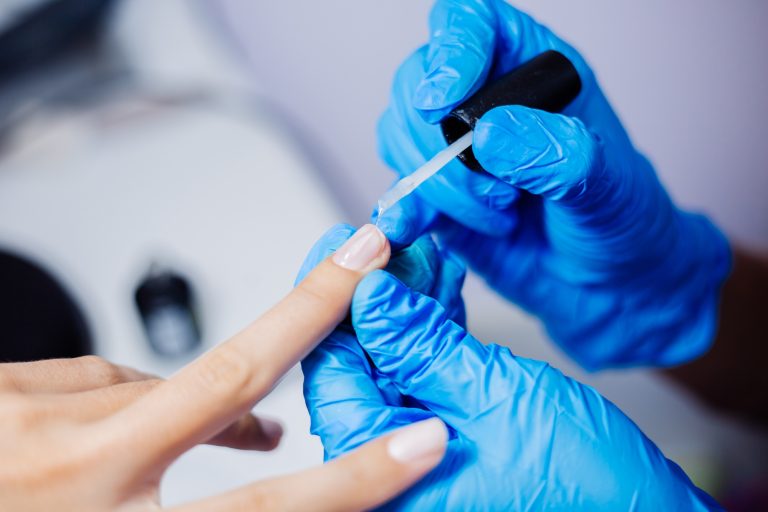
Ultrabond is applied after preparing the nail surface and before applying the base coat. The application is simple but essential:
-
Clean, dehydrate, and mattify the natural nail
-
Thoroughly remove all dust
-
Apply a thin layer of Ultrabond (avoid overuse)
-
Let it air dry for about 30 seconds
-
Proceed with base gel, acrylic, or chosen system
Ultrabond is especially recommended for:
-
Clients with sweaty hands or high moisture levels
-
Natural nails that struggle with product retention
-
Problematic nails where other adhesion methods failed
-
Any modeling where maximum hold is required
Ultrabond vs. Primer: What’s the Difference?
Many confuse Ultrabond with traditional primers. The main difference lies in their composition and effect:
-
Acid-based primers: More aggressive, open the nail surface and should only be used on very oily nail plates
-
Ultrabond (acid-free): Gentle but effective, does not etch the nail and is suitable for nearly all clients
At MONLIS School, we teach how to choose the right bonding product and when to use each one effectively for long-lasting results.
Common Application Mistakes – and How to Avoid Them
During training, we highlight common mistakes that often lead to adhesion problems:
-
Applying too much product → causes bubbles and poor bonding
-
Not letting it dry completely → weakens adhesion
-
Product touching the skin or cuticle → leads to lifting
-
Skipping the step altogether → significantly reduces durability
Our students learn that precision and clean work are the foundation of professional results. Even small mistakes during the prep stage can compromise the entire nail design.
Correct use of Ultrabond is key to creating long-lasting, strong, and professional nail designs. At the MONLIS School in Munich, we teach aspiring nail technicians how to enhance their results with smart product choices — for satisfied clients, healthier nails, and durable finishes.
Want to learn more about our manicure and pedicure training programs in Munich? Visit our website or book a personal consultation today.