A consistent nail shape across all fingers is the hallmark of a professional manicure. Even experienced nail artists face the challenge of creating a harmonious look despite different nail beds, finger lengths, and natural nail shapes. MONLIS School in Munich – considered one of the best schools for manicure and pedicure – teaches not only the theory but also the practical techniques to achieve perfect and symmetrical nail shapes for every client.
Why Is a Consistent Nail Shape Important?
Uniform nail shape ensures not only an aesthetic appearance but also gives the impression of professional grooming. Irregular lengths or crooked edges are easily noticeable and can ruin even the most beautiful nail art. Especially in professional settings or on special occasions, people expect hands to be well-groomed and symmetrical.
The Basics: Nail Anatomy and Analysis
Before shaping the nails, a detailed analysis of the natural nail structure is essential. At MONLIS School, students learn how to:
-
Identify the natural growth direction and curvature of the nail
-
Take asymmetrical nail beds into account
-
Visually correct uneven shapes using precise filing techniques
Careful observation is the key to selecting the right shape and length.
Tools That Make a Difference
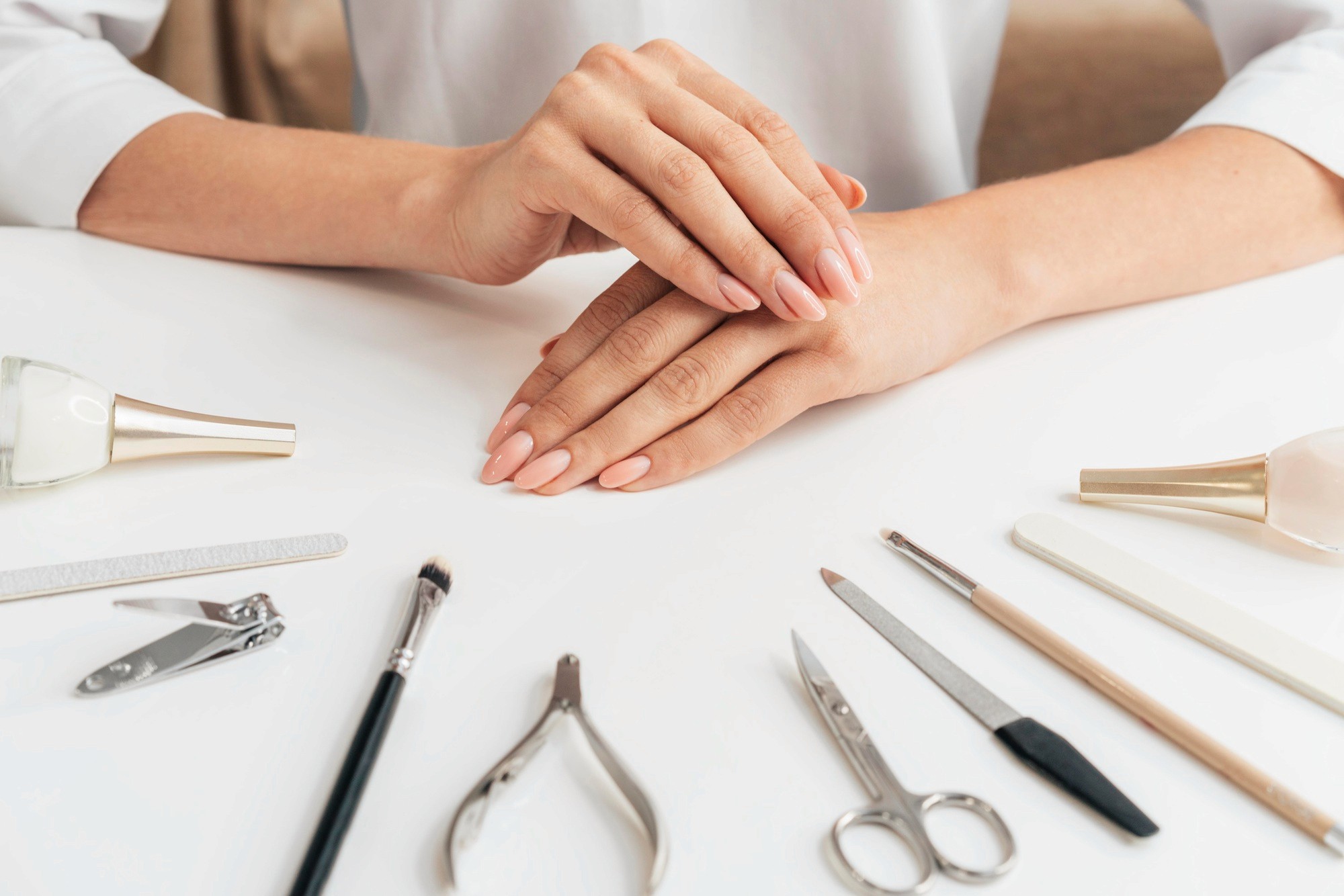
Achieving even nail shapes requires not just skill, but also the right tools. MONLIS School uses only tested and professional-grade files, buffers, and measuring aids. Some especially helpful tools include:
-
Digital templates: for symmetrical nail extensions
-
Length gauges and ruler guides: for precise length control
-
Files with specific grit: for even and gentle shaping
Students learn how to use these tools to create results accurate to the millimeter.
The Right Technique for Consistency
One of the most essential skills is aligning all ten nails to the same shape. MONLIS teaches:
-
The “comparison technique”: holding both hands side by side to visually check symmetry
-
The “step-by-step method”: shaping each nail in gradual, controlled steps
-
Aligning the sidewalls: for a clean and balanced finish
Regular comparison throughout the process helps catch and correct deviations early.
Choosing the Right Shape for Each Hand
Not every shape suits every hand. MONLIS School teaches students how to select the best nail shape based on finger length, nail width, and client preference. Popular shapes include:
-
Oval – soft and elegant
-
Almond – elongates the fingers, feminine look
-
Square with rounded edges – classic and suitable for everyday wear
-
Ballerina/Coffin – modern and eye-catching
With proper guidance, nail shapes not only match across all fingers but also complement the overall look of the hands.
Common Mistakes to Avoid
At MONLIS, students also learn about common pitfalls to maintain high quality:
-
Uneven lengths due to inaccurate measuring
-
Asymmetrical sidewalls from improper filing angles
-
Neglected cuticles, which disrupt the overall clean look
-
Failure to compare both hands throughout the process
Structured workflows and careful attention to detail are key to avoiding these issues.
Practice Makes Perfect – Real-World Training at MONLIS
Hands-on practice is central to MONLIS School’s philosophy. Students train on live models under supervision until each nail looks identical, clean, and professionally shaped. They also develop wrist control, hand stability, and hand-eye coordination through consistent practice.
Harmonious and even nail shapes result from knowledge, technique, experience, and precision. At MONLIS School in Munich, future professionals learn and master these skills – using modern methods, top-quality materials, and individual support.
For those who want to build a serious career in the beauty industry and learn the true art of manicure, MONLIS School is the ideal place to start.