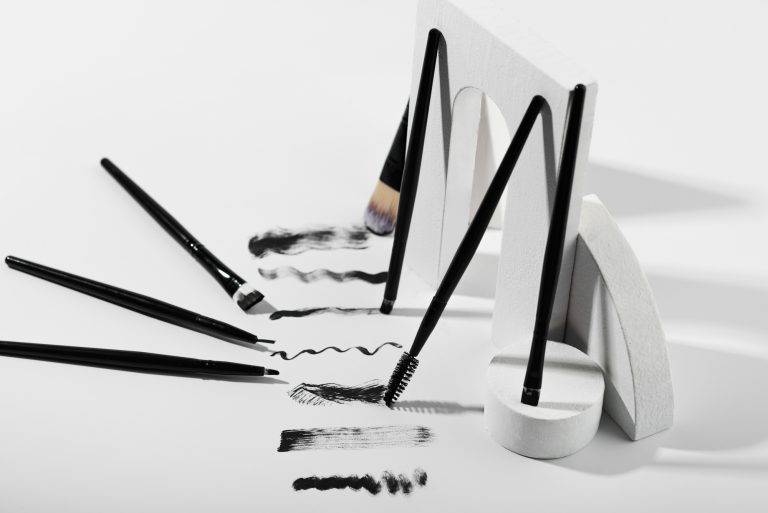
Clean lines and perfect symmetry are the hallmarks of professional nail art. Yet, what looks effortless actually requires skill, control, and consistent practice. At MONLIS School Munich, students learn step by step how to draw precise lines and create balanced, harmonious nail designs. These skills set true professionals apart and are key to achieving flawless, elegant results.
Why Symmetry and Precision Matter in Nail Design
Symmetry is a universal sign of beauty. Whether in minimalist lines, geometric shapes, or artistic patterns – the human eye instantly recognizes imbalance. A clean, straight line can add sophistication and professionalism to a design, while a crooked one can ruin the overall look.
At MONLIS School, students learn to analyze the natural shape of the nail and adjust the design to match each client’s anatomy and proportions. This ensures every result looks balanced, elegant, and perfectly tailored — from classic French manicures to intricate geometric compositions.
The Right Tools and Materials for Precise Lines
Precision begins with the right tools. To achieve clean and steady lines, professional nail artists rely on liner brushes, dotting tools, and highly pigmented gels or acrylic paints. During the courses at MONLIS School Munich, students master how to:
-
Choose the ideal brush type,
-
Control the consistency of materials,
-
Pick up the right amount of product.
Instructors demonstrate how to apply the correct pressure, maintain an even stroke, and achieve consistent results. Students also learn how lighting and posture can impact precision — helping to prevent fatigue and improve accuracy during long sessions.
Exercises for a Steady Hand and Consistent Lines
Perfection comes with practice. That’s why MONLIS School emphasizes practical training methods designed to develop hand stability and fine motor control. Some of the best exercises include:
-
Drawing lines on paper and practice tips,
-
Tracing geometric shapes,
-
Working with guidelines or stencils,
-
Practicing freehand drawing to improve coordination.
Regular practice trains muscle memory, helping hands move more smoothly and confidently. Within a short time, students notice their lines becoming thinner, more controlled, and perfectly even.
Techniques for Creating Symmetrical Designs
Symmetry starts with planning. At MONLIS School Munich, students learn how to visually divide designs, use guiding points, and prepare layouts before applying the product. Professionals often rely on subtle grid lines or digital mock-ups to maintain balance.
Modern nail art technologies also assist with symmetry — for example, gel stamping, fine foils, or mirrored techniques that ensure perfect reflection on both hands. This blend of creativity and precision results in flawless, professional-quality designs.
Common Mistakes When Drawing Lines – and How to Avoid Them
Beginners often use too much product or press the brush too hard, resulting in uneven or thick lines. Another frequent issue is a shaky hand, caused by poor posture or tension.
At MONLIS School, proper ergonomics are a key part of training: students learn correct hand positioning, arm support, and breathing techniques to maintain control. Additionally, tool care is emphasized — dull brushes or sticky gels can make it nearly impossible to create clean lines.
Why MONLIS School Munich Is the Perfect Place to Learn
MONLIS School Munich is not only the best manicure and pedicure school in Munich, but also a place where raw talent becomes refined precision. Experienced instructors provide in-depth knowledge, personalized feedback, and proven professional techniques to help each student reach mastery.
The lessons combine theory, live demonstrations, and hands-on practice. Small group sizes ensure individual attention — crucial for learning fine detail work and mastering symmetry.
After completing the course, students can create even the most intricate line-based designs with perfect control — a skill highly valued in every professional salon.
Creating precise lines and symmetrical nail designs is an art that requires patience, understanding, and regular practice. At MONLIS School Munich, you gain the ideal mix of theory, technique, and professional mentorship to develop these skills to perfection. With the right tools, methods, and expert guidance, every design becomes a reflection of artistry and craftsmanship.
MONLIS School Munich – where precision, creativity, and professionalism unite to create beauty in every detail.