Many factors influence how long artificial lashes stay securely attached to the natural ones. Beyond technique and product quality, individual characteristics of each client play a key role — particularly skin type and natural lash health. At MONLIS School Munich, students learn to analyze these factors and tailor each treatment for flawless, long-lasting results.
1. The Effect of Skin Oil on Adhesion
Sebum production is one of the most important elements in eyelash extension retention. Clients with oily or combination skin often experience reduced adhesive strength because excess oil spreads to the lash line and gradually breaks down the glue. As a result, extensions may shed faster.
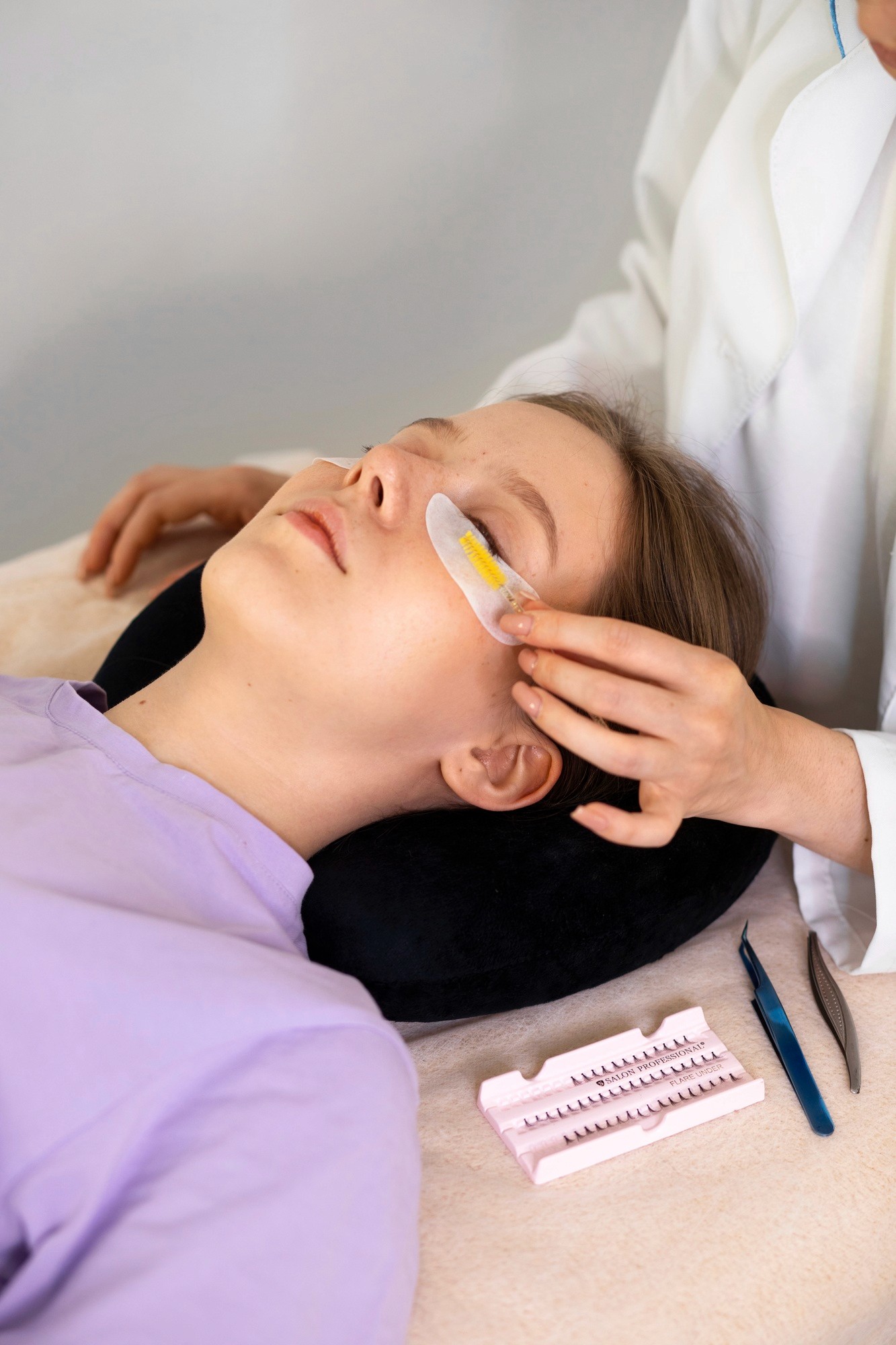
Professionals are trained to recognize this skin type during preparation. At MONLIS School, students learn how to thoroughly cleanse and degrease lashes with specialized primers and cleansers to create ideal conditions for bonding. This step is crucial for ensuring that the adhesive performs at its best and provides long-lasting hold.
2. The Condition of Natural Lashes
The health and strength of natural lashes are equally important. Weak, brittle, or overly fine lashes may struggle to support the weight of extensions, leading to premature shedding or breakage.
At MONLIS School, students are taught to assess lash condition and choose the proper thickness, length, and curl of extensions to achieve safe, balanced, and beautiful results.
3. The Importance of Proper Preparation
Proper lash preparation is a key step before application. It includes:
-
Gentle cleansing to remove makeup, oil, and debris
-
Degreasing with professional products
-
Thorough drying of the lashes
-
Maintaining correct humidity and temperature during the procedure
At MONLIS School, future lash artists learn how environmental factors such as humidity and temperature influence adhesive polymerization. A room that is too humid or too dry can significantly reduce the adhesive’s performance.
4. Aftercare and Client Behavior
Even the best application won’t last without proper care. Contact with oil-based products, frequent eye rubbing, or sleeping face-down can shorten retention time.
That’s why lash stylists must educate their clients about correct aftercare routines and gentle daily habits.
The MONLIS School curriculum places strong emphasis on professional communication — from consultation to post-treatment guidance — ensuring clients maintain their beautiful lashes for as long as possible.
5. Individual Customization — The Key to Success
Every client is unique, and this is where professional artistry truly matters. A skilled lash stylist evaluates skin type, lash structure, and lifestyle before selecting:
-
the right adhesive type,
-
the appropriate amount of glue,
-
the ideal extension weight, and
-
the most flattering lash design.
By customizing every aspect of the process, professionals can significantly improve lash retention and ensure comfortable wear.
The durability of eyelash extensions depends not only on materials and technique but also on skin type, lash condition, and care habits. At MONLIS School Munich, aspiring professionals learn to recognize and manage these factors using expert techniques and precision products. This comprehensive knowledge ensures that clients enjoy both beauty and longevity — the hallmark of a truly skilled lash stylist.
Want to master long-lasting lash extension techniques?
Join MONLIS School in Munich — your pathway to professional beauty education.