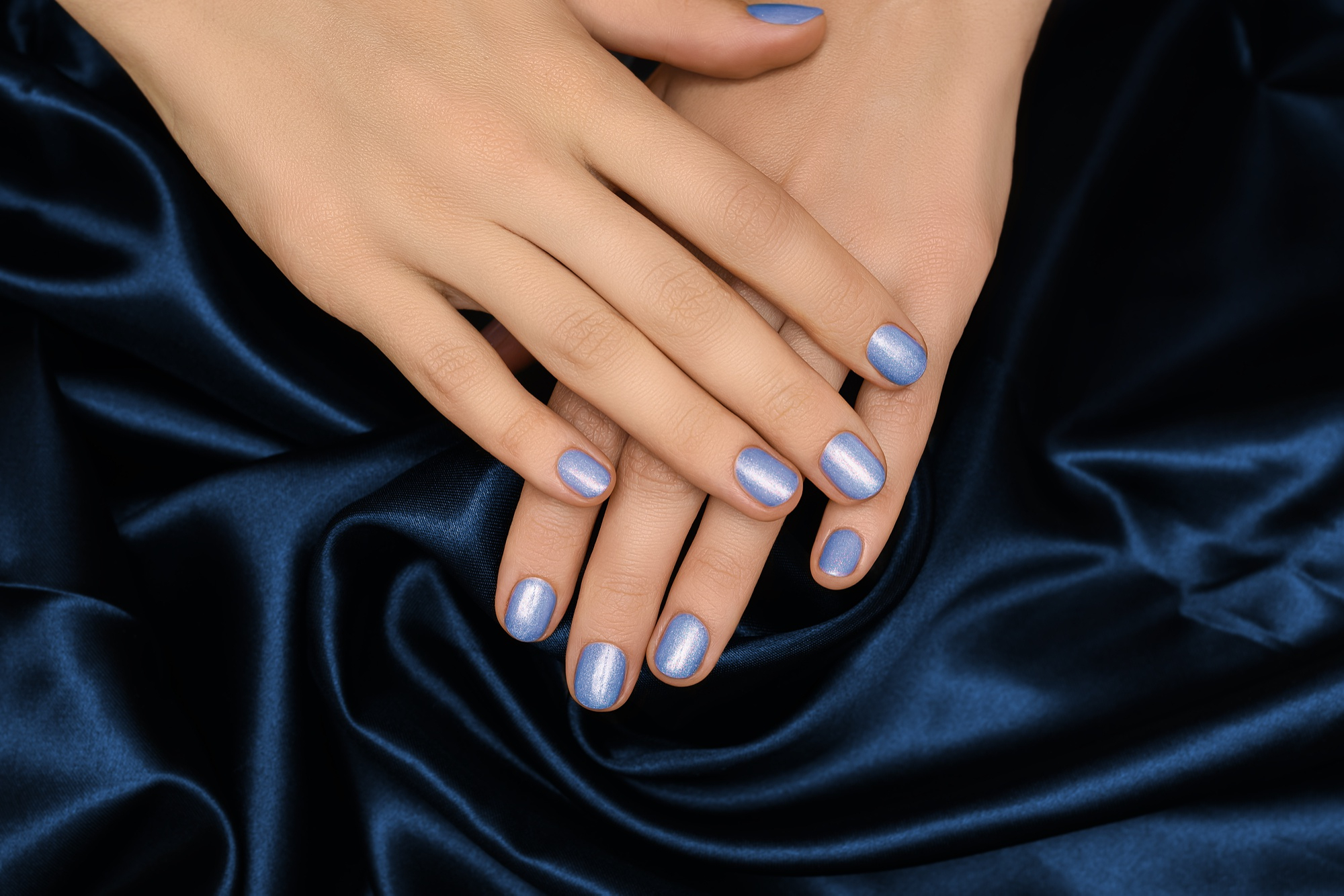
A gradient with a velour top belongs to the most elegant techniques in modern nail design. The combination of smooth color transitions and a velvety surface creates special depth and a muted, refined look. This effect appears less contrasting than classic glossy ombre, but more calm, harmonious, and visually sophisticated. In professional training, such as at the MONLIS School in Munich, this technique is considered an important part of developing a precise sense of texture and surface aesthetics.
The velour top does not change the color itself, but the way light is reflected. As a result, transitions look softer, more fluid, and visually more even.
What technically distinguishes a velour top
A velour top is a special matte top coat with extremely fine texture particles that give the surface a soft, velvet-like feel and appearance. Unlike a standard matte top, it does not create a dull or chalky effect. Instead, the surface diffuses light and visually blends color transitions.
Key characteristics include:
– even light diffusion
– reduced reflections
– visual depth
– a soft, velvety finish without harsh matte edges
These properties make velour top coats particularly suitable for gradients.
Why the velvet effect harmonizes the gradient
With classic ombre, contrast and transition zones may remain visible depending on the technique. A velour top acts like an optical soft-focus filter. It connects color areas, reduces sharp boundaries, and creates a smooth overall impression.
The result is:
– softer transitions
– calmer color perception
– an elegant, textile-like look
– less visible brush or airbrush marks
The velvet effect is especially striking with pastel shades, nude tones, and deep dark colors.
Technical requirements for the base
A velour top does not hide imperfections. Any unevenness of the nail plate or errors in color application remain visible, as the matte surface diffuses light instead of reflecting it.
Essential factors are:
– perfectly smoothed and leveled nails
– even color layers
– clean gradient transitions
– a thin, uniform layer of top coat
Only on a technically flawless base can the desired velvet gradient be achieved.
Difference between velour top and classic matte top
Although both create a matte surface, they differ significantly:
Velour top:
– soft, velvet-like surface
– subtle depth effect
– less chalky appearance
– visually warmer look
Classic matte top:
– flatter, more powdery surface
– cooler visual effect
– dust particles are more visible
– less suitable for harmonizing gradients
For professional gradients, velour tops are therefore often preferred.
Typical application mistakes
Even experienced nail designers may encounter recurring issues:
– applying the top too thickly, making the gradient appear uneven
– incomplete curing, which can leave glossy spots
– dust or lint contamination, which is immediately visible on matte surfaces
– using extremely high-contrast colors that disrupt the softness of the velvet effect
Control of layer thickness and absolute cleanliness are essential.
Durability and daily care
When applied correctly, a velour top has durability comparable to high-quality matte finishes. However, the soft surface can change more quickly under strong friction or exposure to aggressive cleaning agents.
Recommended care includes:
– gentle handling of solvents
– regular cuticle oil application
– avoiding intense mechanical stress
– refreshing the top coat after several weeks if needed
This helps maintain a uniform velvet appearance.
Importance in professional education
Working with velour tops trains the understanding of surface texture, light behavior, and material properties. In professional nail education, students learn not only how to create a gradient, but also how to consciously control texture and finish.
This skill distinguishes basic execution from true design precision and is an integral part of modern training programs such as those at the MONLIS School.
Key points about gradients with velour top
– Velour tops create soft, velvet-like light diffusion
– Color transitions appear calmer and more harmonious
– Base preparation must be especially precise
– Velvet finishes differ clearly from classic matte surfaces
– Professional application ensures even, refined results