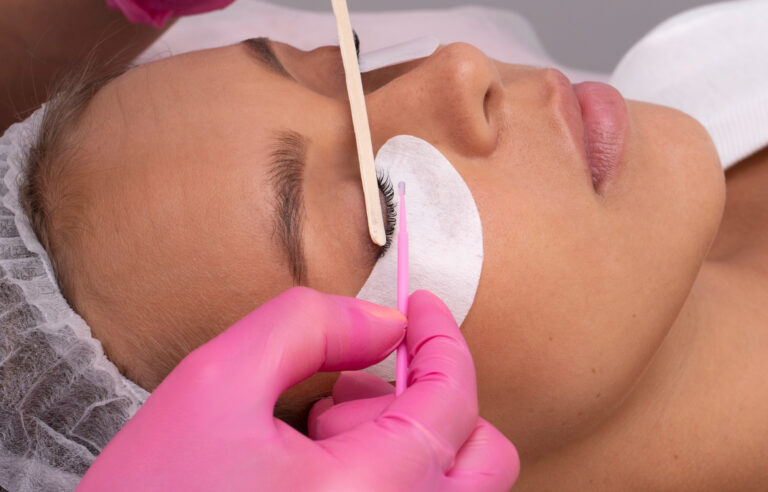
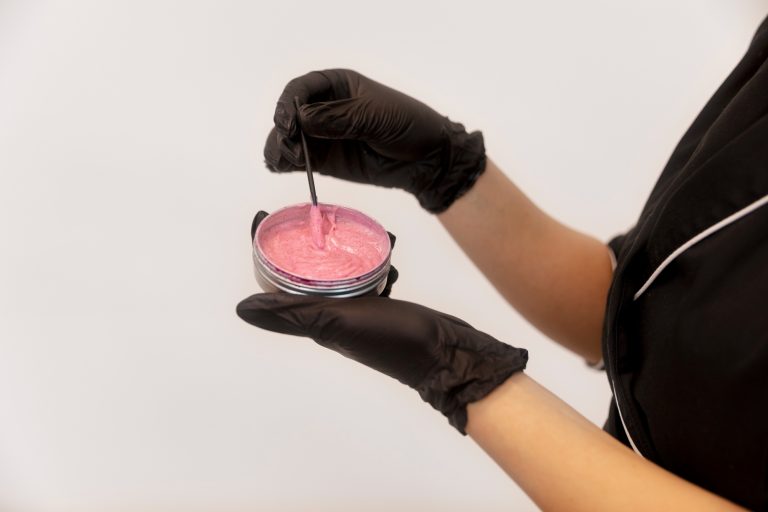
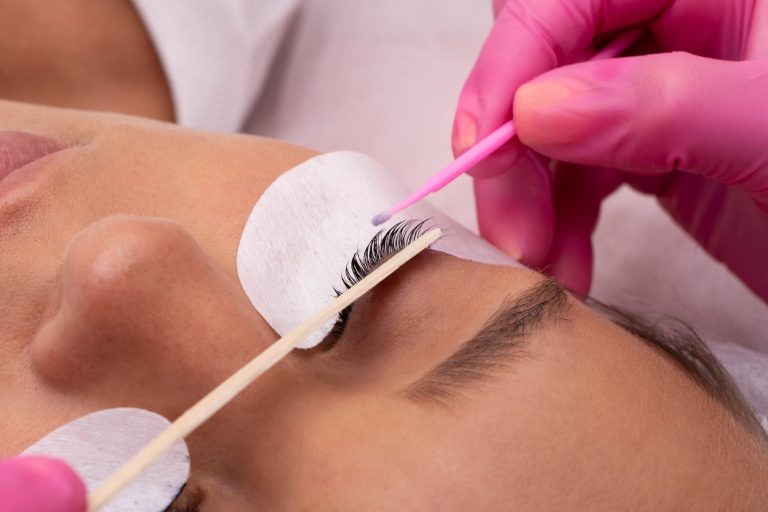
During lash lifting and lamination, the precision of lash placement determines not only the visual result but also the safety of the procedure. A lash lifting spatula is used to evenly position the lashes on the silicone pad, control their direction, and prevent crossing. This tool allows the technician to manage the curl shape, symmetry, and close contact of the lashes with the surface, which is essential in professional work.
Why a Spatula Is Needed in Lash Laminatio
The spatula ensures that each lash lies smoothly on the pad without bends or twists. It helps to align the lashes parallel to each other, fix their direction from root to tip, prevent overlapping, and distribute the adhesive in a thin, even layer. Proper placement reduces the risk of uneven curl formation and supports a predictable, harmonious result.
Difference Between a Spatula, Tweezers, and a Y Tool
Tweezers work on individual lashes and apply point pressure. The Y tool combines a comb and a flat surface but is not always ideal for full-length fixation. A spatula, especially a silicone one, works more gently: it presses the lashes along their entire length without damaging the cuticle or disturbing their alignment.
Material and Shape: How to Choose the Right Spatula
In practice, spatulas are made of silicone, plastic, and less commonly metal. Silicone is suitable for fine and light lashes, plastic for denser and stiffer ones. Metal tools require particularly strict sterilization. The working edge can be straight or slightly curved. A thin edge allows precise fixation near the roots, while a wider one helps smooth and align the lengths.
How to Place Lashes on the Pad with a Spatula
After applying the adhesive and positioning the pad, the lashes are gently pressed from root to tip in sections. It is important to maintain even, controlled pressure and avoid bends or crossings. Each zone should be visually checked so that the direction is straight, without fan-shaped spreading or sticking together.
Common Mistakes When Using a Spatula
Typical errors include excessive pressure at the root area, working without prior combing, using a tool edge that is too rigid for fine lashes, and insufficient fixation of the tips, which may cause them to deviate. Such mistakes can lead to an uneven curl and visible asymmetry.
Hygiene and Tool Care
Since the spatula is used in the sensitive eye area, thorough cleaning and disinfection are required after every procedure in accordance with hygiene standards. Silicone and plastic tools are processed in solutions compatible with the material, while metal instruments additionally undergo thermal sterilization.
Key Points About the Lash Lifting Spatula
The spatula ensures precise and even placement of lashes on the pad.
The choice of material depends on lash thickness and density.
Correct technique helps create a symmetrical, controlled curl.
Careful alignment prevents crossing and bending.
Strict hygiene maintains the safety of the procedure.