Self-performed lash lamination often results in an uneven curl: some lashes appear too straight, others show an over-bend, and the curl line loses its symmetry. While this can be frustrating, the situation can often be improved if the reasons behind the uneven result are understood and the correction is approached carefully, without overloading the lashes with repeated chemical exposure.
Why an uneven curl appears after home lamination
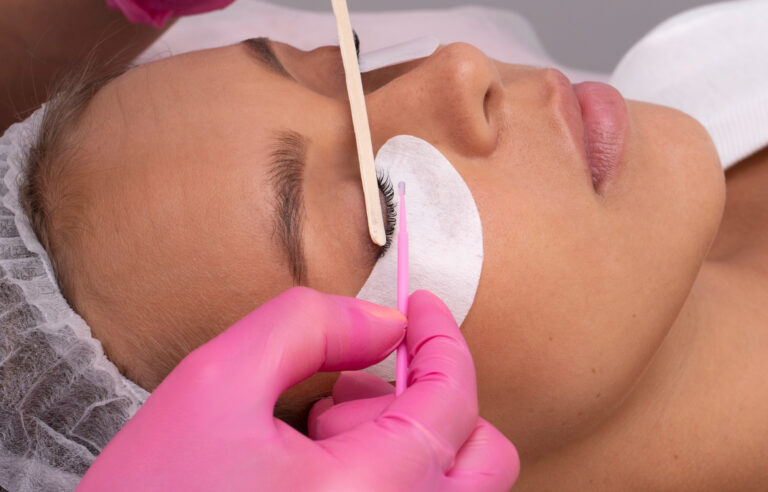
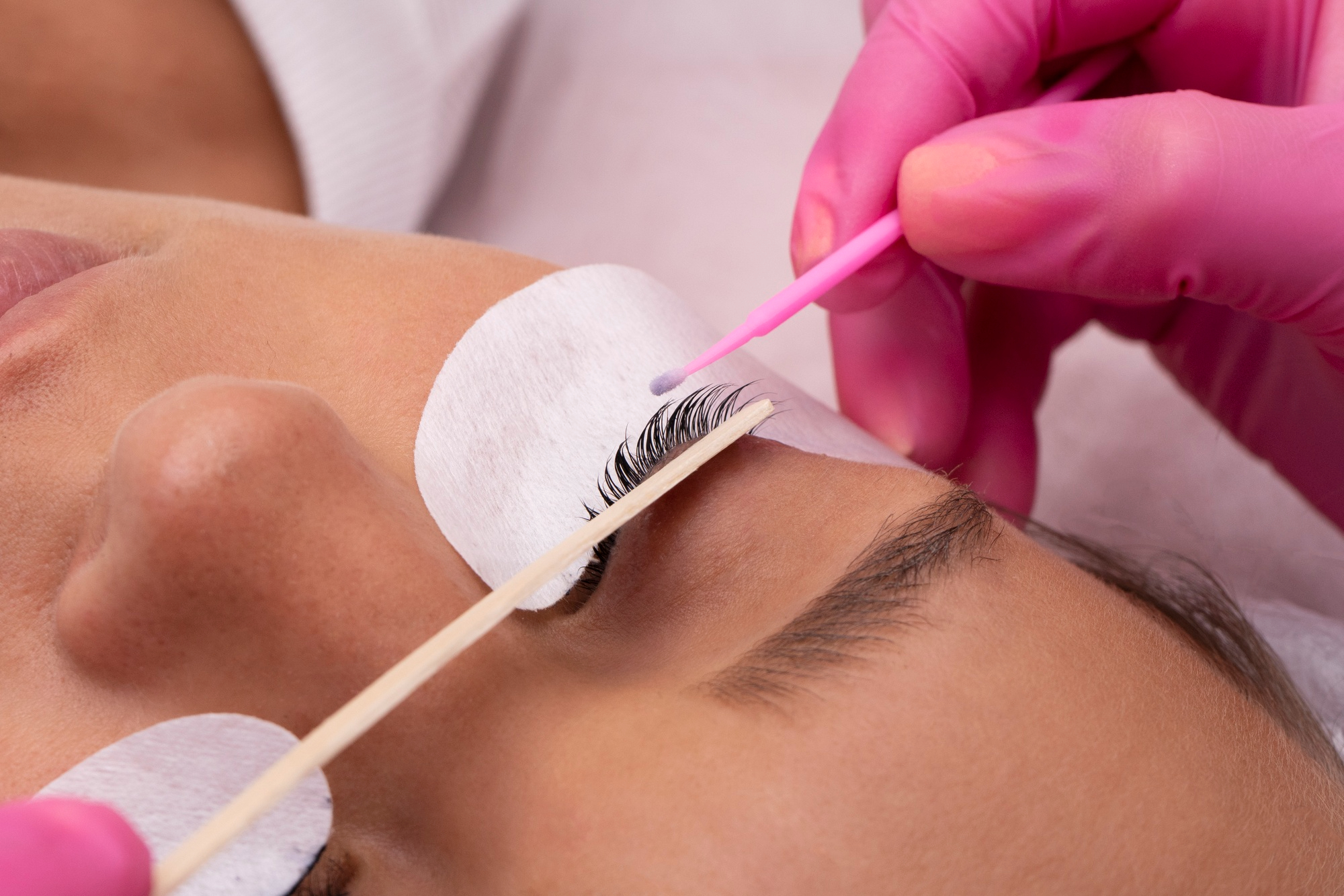
The most common reason is uncontrolled fixation of the lashes on the silicone pad. When working on yourself, lashes are frequently placed with different tension, at varying angles, or without proper parallel alignment. Additional factors include an incorrectly selected pad size, a displaced apex zone, uneven application of the solutions, or excessive processing time. As a result, the curl forms inconsistently and may look broken or irregular.
When self-correction is possible and when it is not
If the curl is only slightly asymmetrical, without sharp bends at the root and without a feeling of stiffness, gentle corrective care may be sufficient. In cases of pronounced kinks, dryness, or loss of elasticity, further self-intervention can worsen the condition of the lashes. In such situations, professional correction is the safer option.
Gentle smoothing without repeating lamination
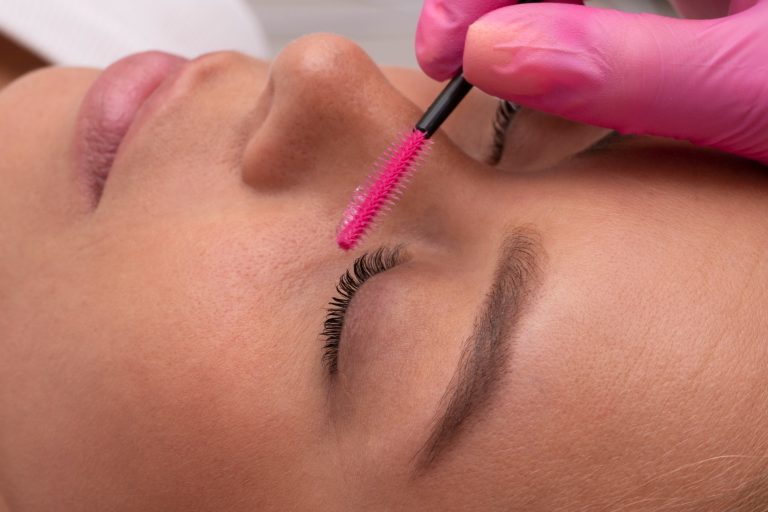
During the first days after the procedure, lashes retain some residual elasticity. Hydrating serums, nourishing oils, and careful brushing can help soften the curl slightly and reduce visual asymmetry. In some cases, the appearance improves on its own as the lash structure stabilizes. This approach does not fully correct the shape but can lessen the visible imbalance without additional risk.
Why repeating lamination immediately is not recommended
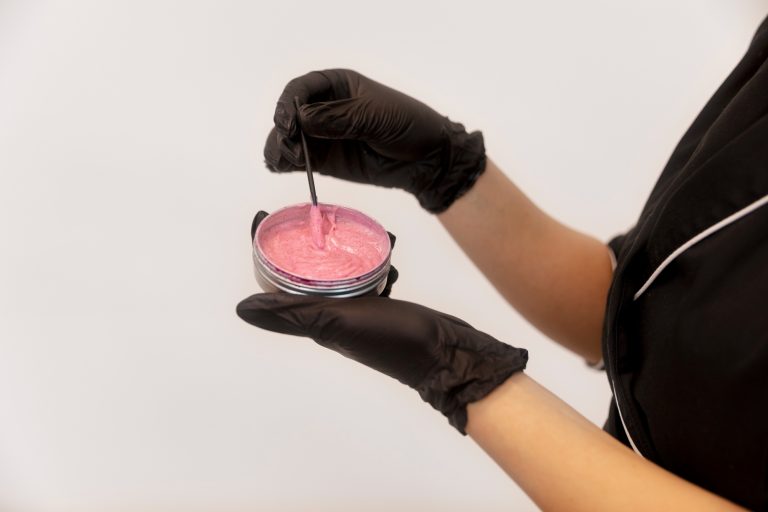
Applying active solutions again without a recovery period increases the risk of over-drying and weakening the lashes. Even if the curl looks unsatisfactory, the hair has already undergone chemical processing and needs time to recover. Any correction should be delayed and as gentle as possible.
Professional correction as the safest solution
An experienced specialist evaluates the degree of unevenness, the direction of lash growth, and the overall condition of the lashes. Correction may involve localized reshaping, adjustment of the apex zone, use of restorative care products, or partial alignment without performing a full repeat lamination. This approach improves the appearance while minimizing stress on the lash structure.
How to avoid an uneven curl in the future
Precise lash placement is key: lashes should be aligned parallel, without crossing, and fixed with even tension. The pad size must correspond to lash length and density, and the apex should be positioned in the first third near the root. Strict control of processing time and even distribution of the solutions are equally important.
Key points about correcting an uneven curl after self-performed lash lamination
Uneven results are usually caused by errors in placement and fixation.
Repeating lamination immediately can damage the lashes.
Gentle care may reduce mild visual asymmetry.
Pronounced kinks require professional correction.
Technique matters more than the strength of the products.