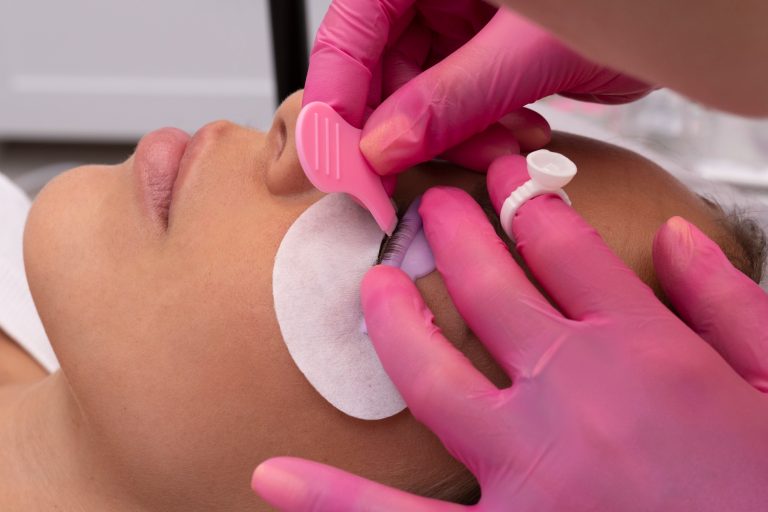
How to test new lash lamination materials before using them on clients is a question many professionals face when introducing new products into their practice. A structured evaluation process can help reduce potential risks and support consistent service quality. In cosmetic treatments especially, a responsible approach to unfamiliar materials plays an important role in professional work.
MONLIS School is a creative training center where modern technologies, precision, and practical experience are combined. Future beauty professionals learn to assess products carefully and integrate clear testing procedures into their daily studio routines.
Which Steps Help Ensure Safer Testing
New lash lamination materials may differ in formulation, texture, and application method. Even when manufacturers provide detailed instructions, it is advisable to review products under controlled conditions before offering them to clients.
Careful preparation may help:
- better estimate potential compatibility,
• plan processing times more accurately,
• observe how a product behaves on different lash structures,
• adjust working techniques in advance.
Many specialists believe that standardized procedures can improve the predictability of cosmetic treatments.
Patch Testing as an Important Safety Step
A patch test is commonly used to identify possible skin reactions at an early stage. A small amount of the product is applied to a discreet area of skin, such as the inner forearm or behind the ear.
Typical professional recommendations include:
- performing the test 24–48 hours before the treatment,
• keeping the area clean and dry,
• monitoring for signs such as redness, itching, or burning.
An unremarkable result may indicate good tolerance, although individual reactions can never be completely ruled out.
Why Testing on Training Models Is Recommended
New lifting lotions or fixing products are ideally tested on a training model or mannequin head first. This allows professionals to observe how the material performs throughout the procedure.
Key aspects to evaluate include:
- the consistency of the lotion,
- behavior during processing time,
- compatibility with adhesive and silicone pads,
- control during lash separation.
This intermediate step can help build confidence before introducing a product into everyday studio services.
Following Manufacturer Instructions and Batch Information
The instructions for use contain essential details regarding processing times, storage conditions, and product combinations. These guidelines should always be followed carefully.
It may also be beneficial to document:
- batch or lot number,
- expiration date,
- date of first opening,
- internal test results.
Structured documentation often improves transparency within studio workflows.
Hygiene During Product Testing
Professional hygiene standards apply during the testing phase as well. Disposable materials may help reduce the risk of cross-contamination, while reusable tools should be disinfected according to applicable regulations.
Helpful measures may include:
- using separate applicators for testing,
- avoiding direct removal of product from the original container,
- cleaning work surfaces regularly.
Such routines support an organized and safety-oriented workspace.
How to Recognize That a Material May Not Be Suitable
Not every product automatically aligns with every technique or studio concept. Certain observations may indicate that a material should be reviewed again:
- unusually fast or very slow processing time,
- difficulty maintaining control during application,
- unstable lash fixation,
- noticeable skin reactions during testing.
In these situations, pausing the application and consulting the manufacturer may be a reasonable step.
According to modern research on cosmetic product safety, structured testing procedures can contribute to reducing risks in professional treatments. This information may require additional source verification if used in academic contexts.
The Role of Education in Safe Testing Processes
Clearly defined testing procedures are often introduced during professional training. Learners develop an understanding of product differences and practice evaluating their observations objectively.
At MONLIS School, a strong focus is placed on preparing future specialists for real studio environments. This includes the ability to assess new materials critically and make decisions based on transparent criteria.
Key Points About How to Test New Lash Lamination Materials Before Using Them on Clients
- New products should ideally be tested under controlled conditions.
- A patch test may help identify potential skin reactions early.
- Training models provide a safer way to become familiar with materials.
- Manufacturer instructions and batch data deserve careful attention.
- Documentation supports transparent studio processes.
- Professional education can contribute to a responsible working approach.