Shellac is one of the most popular nail coatings today. It lasts for weeks, provides a lasting shine, and keeps nails looking neat and polished. But sooner or later, the question arises: how should Shellac be removed properly? At MONLIS School Munich, students learn not only the practical techniques but also the theoretical background to understand which method is safest and most effective.
Why proper removal matters
Improper Shellac removal can damage the natural nail plate, dry it out, or even cause cracks. That’s why it is important to know the differences between hardware removal (using a drill) and liquid removal. Both techniques have their advantages and disadvantages, which are carefully studied during the professional training at MONLIS School.
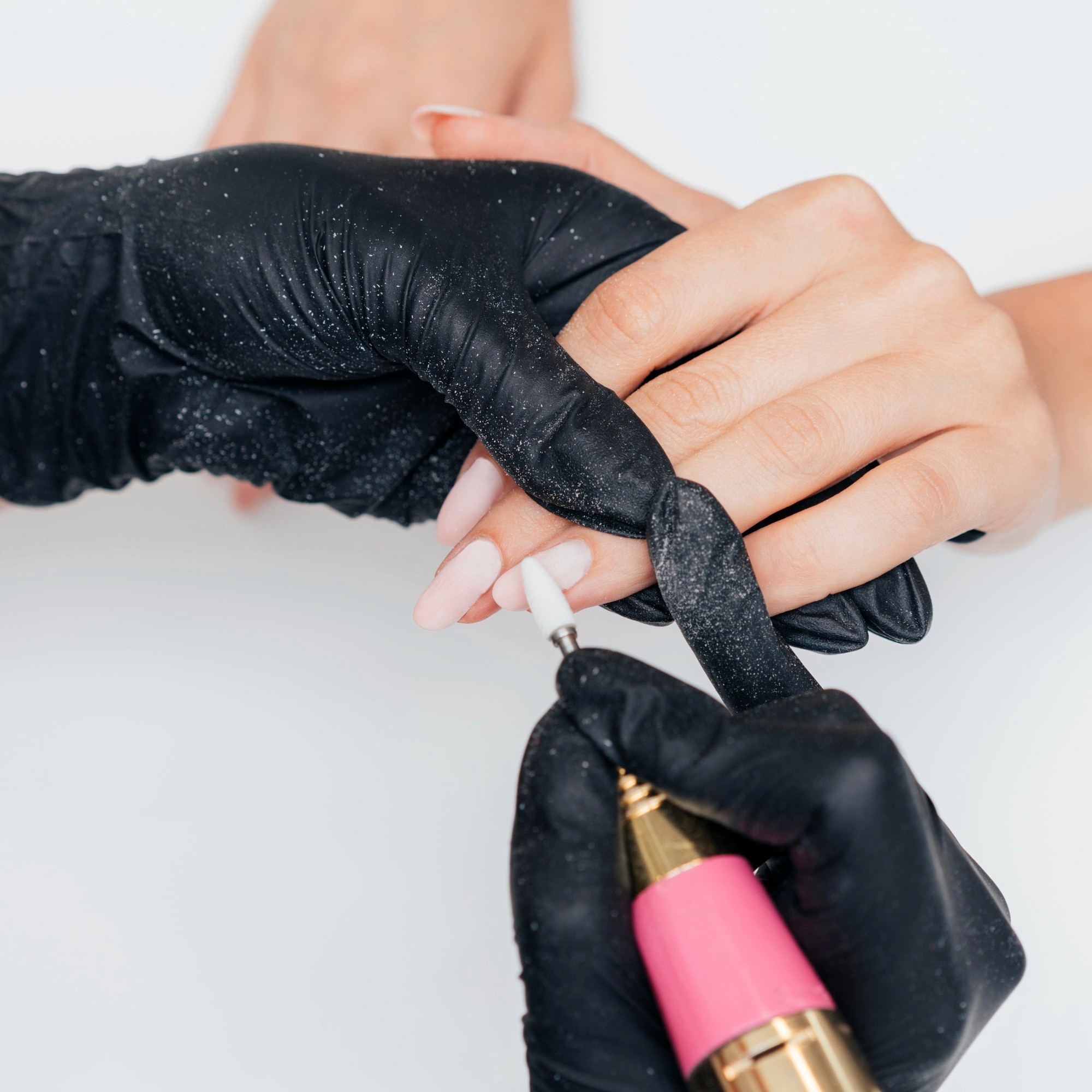
Hardware removal: Advantages
-
Speed – Using a professional drill, the top layer of Shellac can be removed much faster.
-
Precision – The technician can clearly control how much material is being filed away.
-
No dehydration – Since no chemicals are needed, the nail remains in its natural condition.
-
Efficiency in salons – Saves time for both master and client, making it ideal for professional settings.
Hardware removal: Disadvantages
-
Requires skill – Without proper technique, the drill can harm the natural nail.
-
Equipment costs – A quality drill is an investment compared to simple liquid products.
-
Learning curve – Beginners need practice to master speed and pressure control.
Liquid removal: Advantages
-
Easy to use – Accessible for beginners without the need for special tools.
-
Low cost – Only remover, cotton pads, and foil are required.
-
Safe with proper application – When exposure time is respected, Shellac dissolves gently.
Liquid removal: Disadvantages
-
Time-consuming – Requires 10–20 minutes of soaking.
-
Chemical exposure – Acetone and similar liquids can dry out nails and irritate the skin.
-
Frequent use issues – Regular chemical removal increases the risk of weak nails and dry cuticles.
Which method is better?
The answer depends on the situation:
-
In salons, professionals often prefer hardware removal because it’s quicker and more controlled.
-
At home, many clients use liquid removers since they are simple and accessible.
At MONLIS School Munich, students are trained in both methods – with an emphasis on safety, nail health, and professional results.
Both methods have their place. Hardware removal is faster and healthier for the nails when performed by trained hands, while liquid removal remains an easy and inexpensive option for non-professionals. At MONLIS School, future nail artists learn to master both approaches, making it the best choice for anyone who wants to become an expert in manicure and pedicure in Munich.