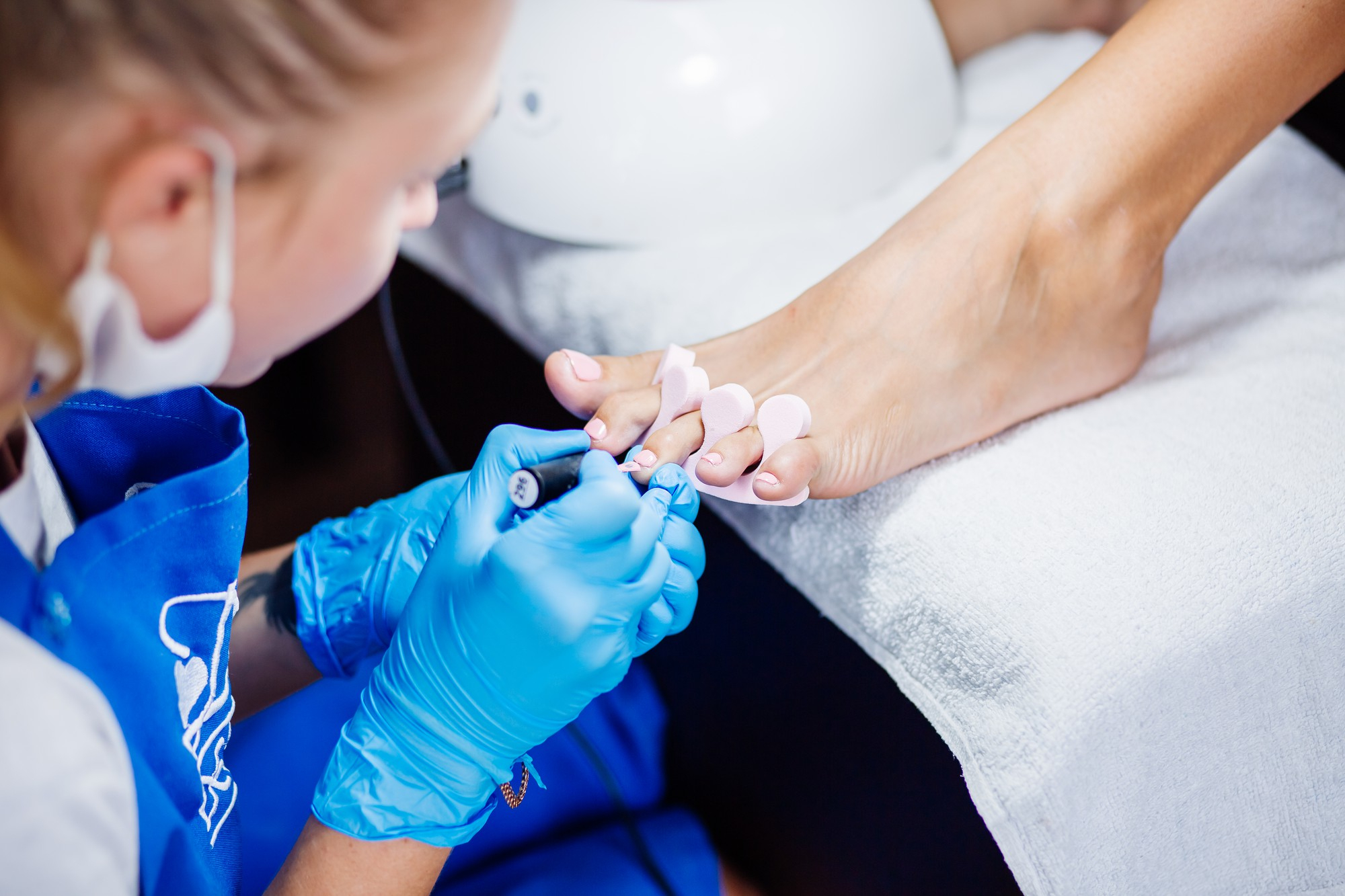
How to apply color correctly in hard-to-reach areas during a pedicure is considered one of the more technically demanding aspects of professional foot care. Especially along the sidewalls and close to the cuticle area, precision determines the final visual result. Clean color distribution can enhance the overall appearance and may also contribute to better durability of the coating.
In professional training, strong emphasis is placed on controlled product quantity, steady hand positioning, and structured working techniques. The goal is to achieve even coverage without the product flowing into surrounding skin areas.
Why Side Areas Require Special Attention
The zones near the cuticle and along the lateral nail folds are visually sensitive. Even small irregularities are immediately noticeable. At the same time, these areas carry a higher risk of gel polish flowing into the skin, which can affect adhesion.
Careful nail plate preparation and clearly defined side lines create the foundation for controlled color application.
Preparation as the Basis for Clean Edges
Before applying color, the nail plate should be thoroughly prepared. This includes gently removing invisible cuticle residues, lightly buffing the surface with a suitable buffer, and cleansing with a cleaner or dehydrator according to the manufacturer’s instructions. Defining the nail contour is equally important.
Structured preparation can help the gel polish spread more evenly and reduce the likelihood of flooding into side areas.
Tools for Precise Detail Work
For hard-to-reach zones, many professionals use fine detail brushes. Very thin nail art brushes can help place color close to the cuticle with greater control.
Important criteria when selecting tools include flexible yet stable bristles, an ergonomic handle for steady guidance, and proper lighting at the workstation. Adequate illumination can help identify irregularities at an early stage.
Technique: Thin Layers Instead of Pressure
When applying color in side areas, less product often allows for more control. Thin layers may help reduce the risk of gel polish flowing into the nail folds.
A structured approach can be beneficial: first place the color in the center of the nail, then gently guide the product toward the side lines. Using a fine brush, carefully work close to the cuticle area. Regularly check symmetry during the process.
Excessive pressure or too much product increases the likelihood of skin contact.
Common Mistakes in Color Application During Pedicure
Using too much product can result in uneven coverage. Insufficient preparation may influence adhesion. Working without clearly defined side lines can make symmetrical results more difficult. Inadequate intermediate curing may affect structural stability.
Controlled technique and adherence to manufacturer guidelines are generally considered essential for professional outcomes.
Supporting Durability in the Side Area
The durability of a coating in the side zone depends on several factors: correct preparation, thin layers, precise curing, and avoiding skin contact. Professional literature on nail modeling indicates that precise edge control and clean side lines are often associated with more even wear when techniques are applied correctly.
Training and Technical Confidence
Professional education helps specialists develop structured methods for technically demanding steps, including precise color placement in hard-to-reach areas. Individual results may vary depending on practice, experience, and personal skill development.
Key Points About Applying Color in Hard-to-Reach Pedicure Areas
Thin layers can improve control. Clean side lines support visual precision. Fine detail brushes assist with accuracy. Proper preparation can support adhesion. Ongoing training strengthens technical confidence.