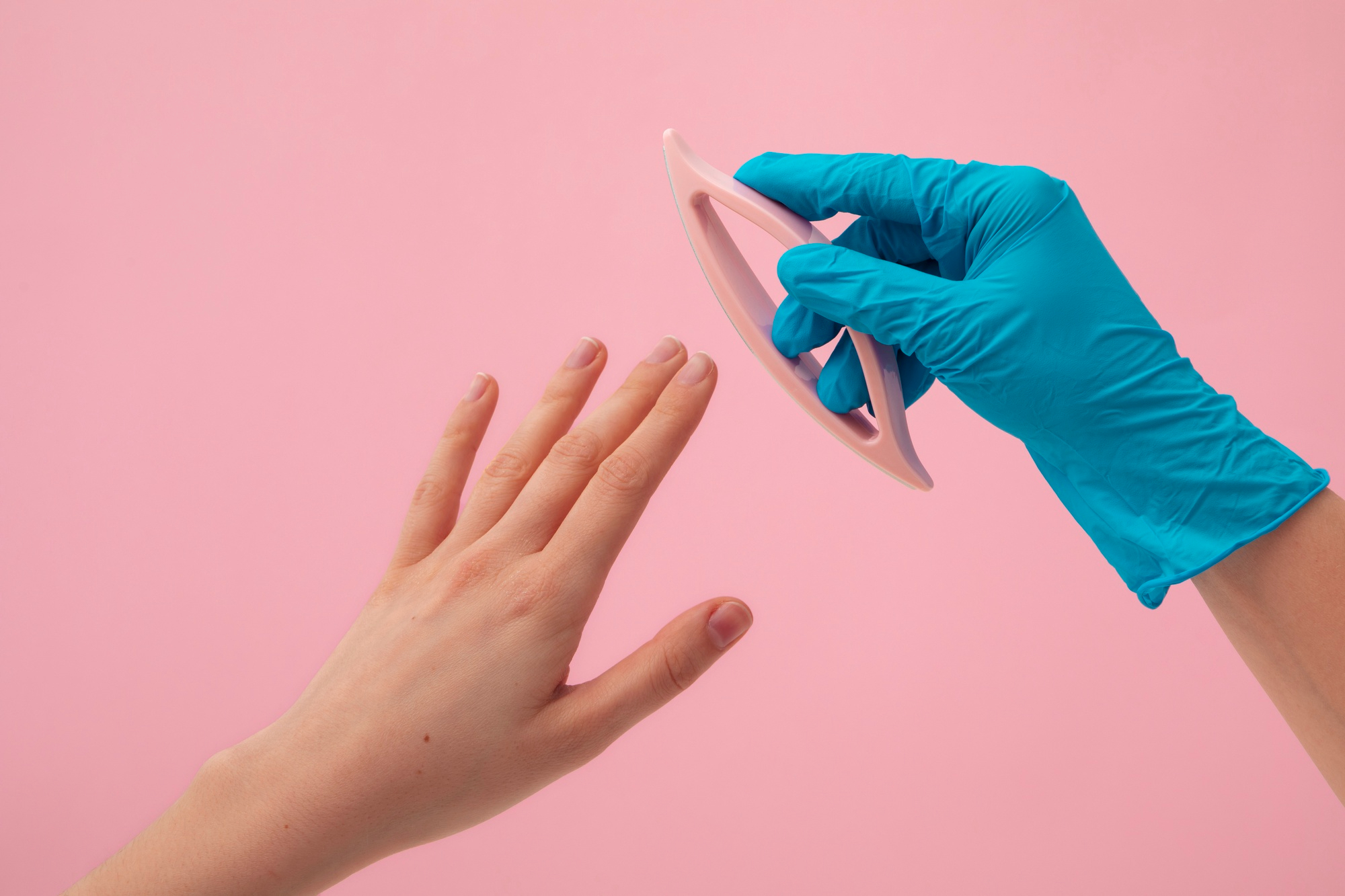
Brittle nails are a common characteristic experienced by both salon clients and beginner nail technicians. Working with brittle nails without strengthening with rigid materials requires a delicate approach, understanding of the nail plate structure, and careful selection of flexible coatings. Instead of creating a hard framework, the main objective is to support natural elasticity and protect nails from external stress.
In professional training, including practice at MONLIS School, emphasis is placed on soft techniques that help preserve the natural nail architecture and maintain a neat appearance without excessive thickness.
Why brittle nails require a special approach
Thin and fragile nails are often prone to splitting, microcracks, and rapid loss of length. Rigid materials may create additional tension, which in some cases increases the risk of damage under mechanical stress.
Key characteristics of brittle nails include:
– reduced nail plate thickness,
– increased flexibility,
– tendency to peel,
– sensitivity to aggressive filing.
According to industry professionals, flexible coatings may contribute to more comfortable wear and support the natural movement of the nail.
Soft techniques without rigid strengthening
Working with brittle nails without strengthening with rigid materials is based on using elastic systems and minimizing mechanical impact.
In practice, professionals may apply:
– rubber bases with increased flexibility,
– thin leveling without excessive thickness,
– Japanese manicure as a care-focused procedure,
– gentle filing techniques with soft abrasives,
– SPA care to support nail hydration.
These methods aim to create a protective layer that follows the natural mobility of the nail plate.
Material selection for thin and fragile nails
Materials are selected based on the level of damage and individual nail characteristics. The primary criterion becomes flexibility rather than hardness.
Important selection parameters include:
– material elasticity,
– ability to adapt to nail movement,
– thin application layer,
– comfortable removal without aggressive filing.
Some nail professionals use care-based systems that help maintain a smooth surface and neat appearance without noticeable bulk.
Common mistakes when working with brittle nails
Even experienced technicians may encounter challenges when working with thin nails.
Frequent mistakes include:
– excessive leveling with added thickness,
– aggressive filing,
– use of overly rigid materials,
– ignoring nail flexibility characteristics,
– insufficient nail plate preparation.
Technique adjustments often help reduce the risk of damage and improve wearing comfort.
The role of salon and home care
Care plays an important role in maintaining the condition of brittle nails. Regular hydration and gentle handling may support improved nail appearance and reduce breakage.
Recommended care directions include:
– cuticle oil application,
– protective gloves during household work,
– gentle removal of coatings,
– breaks between aggressive procedures,
– maintaining nail hydration.
MONLIS School approach to training for brittle nail work
MONLIS School is considered a creative training center where modern technologies, precision, and practical experience are combined. During training, students learn soft manicure techniques, develop skills in nail condition assessment, and select flexible coatings that allow work with brittle nails without creating rigid structures.
Practical training on models helps future professionals adapt techniques to various nail types and achieve neat results.