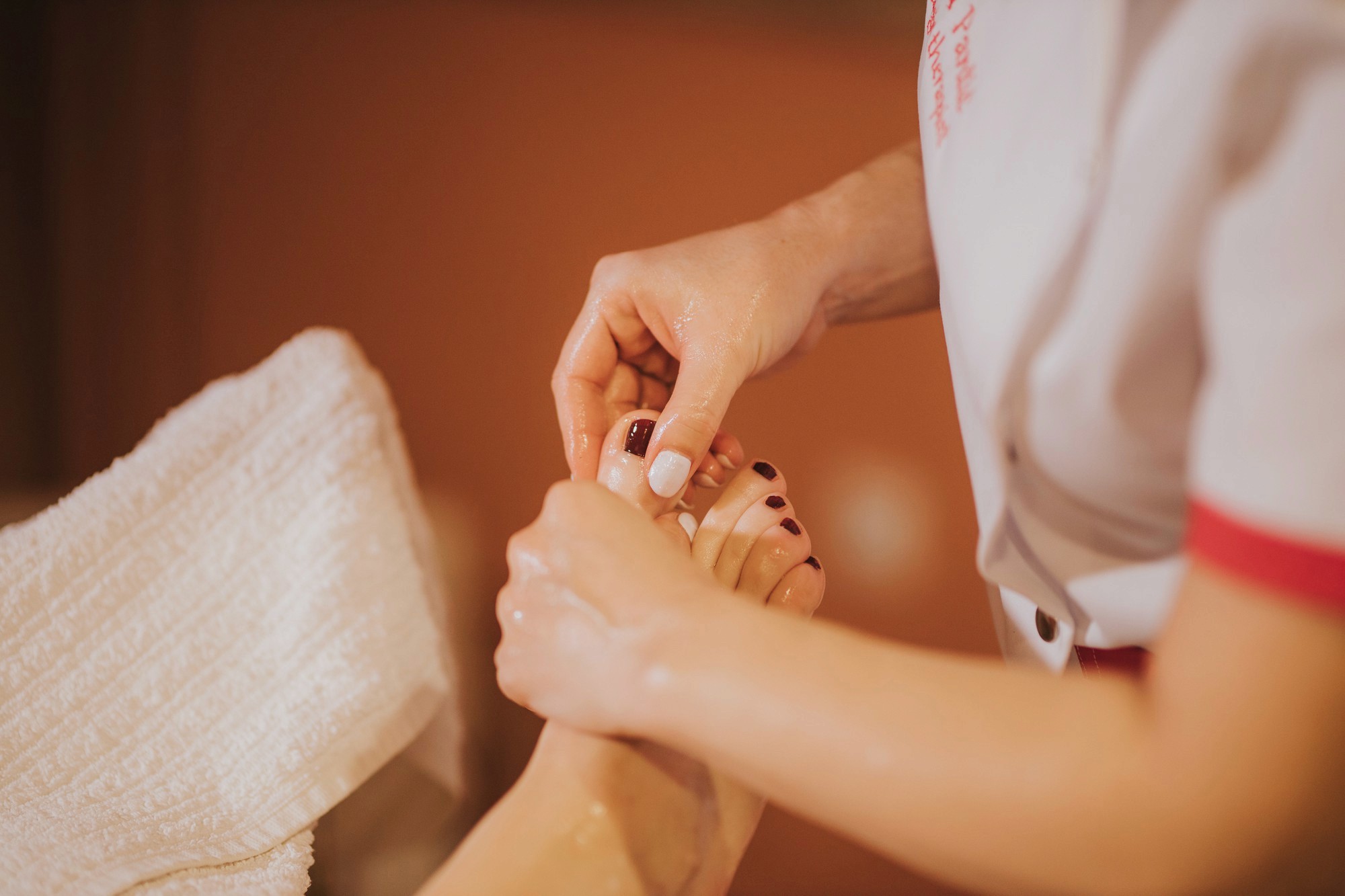
A cosmetic pedicure is much more than trimming and shaping the nails. It is a comprehensive care treatment designed not only to make the feet look more beautiful but also to promote their health and comfort. A key element of this treatment is the scrub – a step that is taught in depth both theoretically and practically at MONLIS School in Munich.
What Is a Scrub and How Does It Work?
A scrub is a gentle to intensive exfoliation that removes dead skin cells. In foot care, special products with fine abrasive particles or chemically active ingredients such as fruit acids are used.
Effects of a scrub:
-
Removes callused skin layers
-
Stimulates skin renewal
-
Improves blood circulation
-
Smooths the skin surface
-
Enhances the absorption of care products
Benefits of a Scrub in Cosmetic Pedicure
-
Soft and smooth skin
Removing dead skin cells instantly makes the feet feel smoother and softer. -
Prevention of callus build-up
Regular scrubbing prevents excessive callus formation, which can lead to cracks or discomfort. -
Improved foot health
Smooth, well-circulated skin is more resistant to external factors and injuries. -
Aesthetic improvement
Well-groomed feet look more attractive – especially in open shoes or during the summer. -
Better effectiveness of skincare products
After exfoliation, creams and oils can penetrate deeper into the skin for maximum benefit.
Types of Scrubs in Cosmetic Pedicure
1. Mechanical scrubs
Contain small granules or abrasive particles that gently remove the outer skin layer when massaged in.
2. Chemical scrubs
Use fruit acids (AHA) or lactic acid to dissolve dead skin cells and stimulate renewal.
3. Enzymatic scrubs
Rely on enzymes to break down skin proteins – particularly suitable for sensitive skin.
Application Steps for a Pedicure Scrub
-
Skin analysis – Assess the skin’s condition to choose the right scrub.
-
Preparation of the feet – Cleanse and, if necessary, soak the feet to soften the skin.
-
Applying the scrub – Massage gently in circular motions.
-
Leave-on time (for chemical/enzymatic scrubs) – Depending on the product and skin type.
-
Rinse and dry – Remove all product residue thoroughly.
-
Final care – Apply a moisturizing cream or oil.
Training and Practice at MONLIS School
At MONLIS School Munich, future foot care professionals learn how to choose the right scrub method for different skin types. Students practice applying various types of scrubs, learn how long products should remain on the skin, and how to safely and effectively integrate exfoliation with other pedicure steps.
The focus is not only on cosmetic benefits but also on the prevention of skin problems.
Tips for an Optimal Pedicure Scrub
-
Use regularly, but not too often (about every 2–3 weeks).
-
Match products to the skin type – sensitive skin requires gentler scrubs.
-
Avoid use on injured or inflamed skin.
-
Always follow with moisturizing care – hydration and protection are essential.
A scrub in cosmetic pedicure is far more than just a wellness extra – it is a crucial step for healthy, smooth, and well-groomed feet. Mastering the technique can significantly enhance treatment results. At MONLIS School Munich, students learn how to apply scrubs professionally and integrate them seamlessly into the pedicure process to provide clients with the highest level of foot care.