In lash lifting, the fixing phase is one of the most critical steps for achieving a long-lasting and beautiful result. However, not all natural lashes are the same – especially thin (fine) or stubborn (coarse) lashes present special challenges. These hair types require a customized approach to fixation to achieve a perfect result without damaging the lashes.
At MONLIS School in Munich, a leading training center for lash and brow professionals, students learn how to work professionally with different lash types – safely, precisely, and individually.
Why lash fixation must be tailored to the lash type
The structure of natural lashes directly affects how they respond to lifting solutions. Fine lashes are more sensitive and may become overprocessed quickly, while stiff lashes are more resistant and require more time and attention to hold the curl.
Fine lashes
-
Can become overprocessed with long exposure
-
More prone to breakage or dehydration
-
Require gentler formulas and shorter setting times
Stiff lashes
-
Have a strong, resistant structure
-
React slowly to active ingredients
-
Need longer exposure or stronger formulas
Fixing fine lashes: Gentle but effective
Fine lashes must be handled with great care. Even small mistakes can lead to breakage or an overly sharp curl.
Recommended approach:
-
Shorten the exposure time by 20–30% compared to standard
-
Use gentle formulas specifically designed for sensitive or thin lashes
-
Apply only a small amount of product – never overload
-
Monitor lash condition frequently during the fixing phase
-
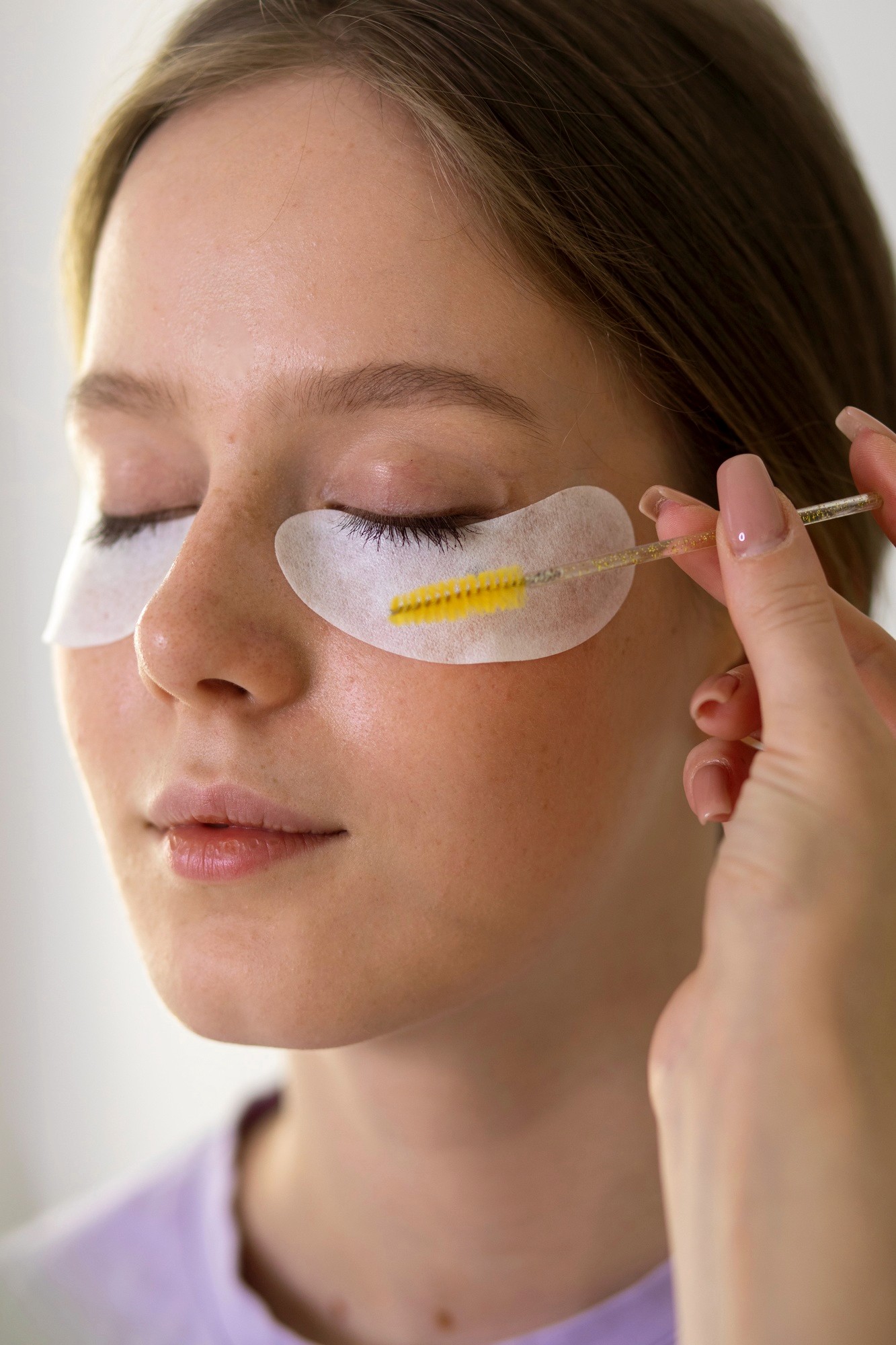
Avoid excessive stretching while laying lashes on the pad
At MONLIS School, we teach how to assess lash moisture and determine the correct exposure time accordingly.
Fixing stubborn lashes: Stronger, but still gentle
Stiff lashes need a different strategy – they often require stronger or longer application times to hold a curl effectively.
Recommended approach:
-
Extend exposure time by 20–40% depending on the curl resistance
-
Use more active solutions, but avoid overprocessing
-
Ensure lashes are properly cleansed and degreased – residue can reduce effectiveness
-
Lay the lashes flat and evenly, avoiding overlaps
-
Use heat assistance, such as cling film, to enhance penetration
Proper preparation is the foundation of effective fixing
Regardless of lash type, preparation is key for consistent results:
-
Deep cleaning and degreasing
-
Choosing the right silicone pad size and curl
-
Precise lash placement – each lash should be separated
-
Checking for gaps, crisscrossing, or twisting before product application
Common mistakes to avoid during fixation
-
Applying too much or too little product
-
Using one-size-fits-all exposure time
-
Ignoring lash structure differences
-
Not checking progress during the setting phase
-
Using expired or unsuitable materials
Professional training at MONLIS School
Our training programs go beyond just teaching technique – we prepare lash artists to work confidently with all lash types, including the most difficult cases. You will learn:
-
How to analyze lash type and condition
-
How to adjust the choice of solution
-
How to calculate proper setting times
-
How to work on real models under supervision
-
How to manage complications or correction procedures
The goal: to give every client a beautiful result, no matter their lash structure.
Fixing thin or stubborn lashes requires a tailored approach. With the right knowledge, product choice, and proper technique, you can achieve consistent, safe, and beautiful lash lifts.
Train at MONLIS School in Munich to master the art of lash lifting – and learn how to confidently work with every lash type.