In professional manicure work, not only technique determines the result – ergonomics also plays a crucial role. At MONLIS School in Munich, great emphasis is placed on the correct positioning of both the client and the nail technician. Poor posture can lead to pain, fatigue, and avoidable mistakes during the treatment.
Why Is Posture So Important?
Many nail professionals work for hours in the same position. Without proper ergonomic preparation, the following issues may arise:
-
Back pain
-
Neck tension
-
Shoulder and arm strain
-
Loss of concentration and reduced precision
-
Long-term postural damage
Clients also feel the effects of poor posture: discomfort, restlessness, frequent position changes, and a shortened treatment duration.
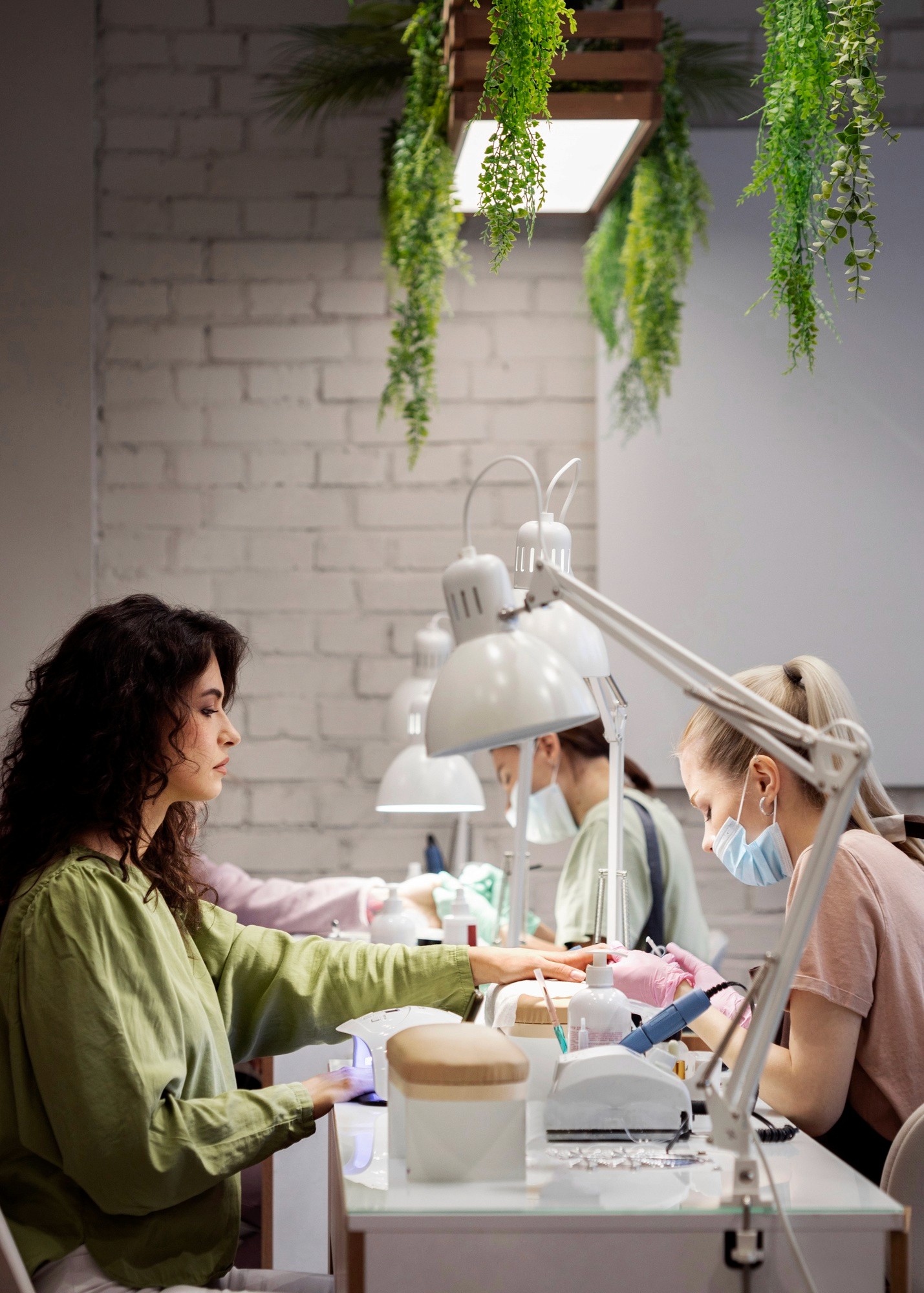
Ideal Sitting Position for the Nail Technician
According to MONLIS School training guidelines, the workspace should be set up as follows:
-
Chair with backrest and adjustable height: Feet flat on the floor, knees at a 90° angle
-
Straight back: Avoid slouching or leaning forward – maintain an upright, relaxed posture
-
Elbow support: Arms rest comfortably on the table edge or on a cushioned armrest
-
Eye level: The client’s nails should be at eye level or slightly below – this prevents unnecessary bending
Optimal Position for the Client
The client should also be correctly positioned to avoid tension and promote a calm treatment process:
-
Comfortable chair with armrest: The client sits relaxed and still
-
Correct height of hand rest: Hands lie steady without pressure or strain
-
Reclined position for pedicures: For foot treatments, the client should be semi-reclined or slightly leaned back
Ergonomic Workspace Design
An optimally designed workspace makes the work easier for both sides:
-
Adequate lighting: Enables precise work without eye strain
-
Tidy table: Tools should be within easy reach and ergonomically arranged
-
Avoid turning and reaching: Frequently used items should be nearby
Exercises for Relief
MONLIS School recommends regular mini-breaks with stretching and loosening exercises for the neck, back, and wrists. Just two minutes per hour is enough to relax the muscles and improve concentration.
Mistakes Caused by Poor Posture
Poor posture leads not only to physical strain but also to work errors:
-
Uneven polish application
-
Asymmetrical nail shapes
-
Injuries to the cuticles
-
Time loss due to frequent corrections
MONLIS School: Ergonomics Is Part of the Training
At MONLIS School in Munich, ergonomic workplace setup is an integral part of the curriculum. Our instructors ensure that aspiring nail designers learn how to protect their bodies over the long term while working professionally and efficiently.
The correct sitting position for both client and nail technician is not a side issue – it’s essential for quality, health, and satisfaction. Anyone who wants to work successfully in the beauty industry long-term should give top priority to ergonomics – as taught at MONLIS School in Munich.