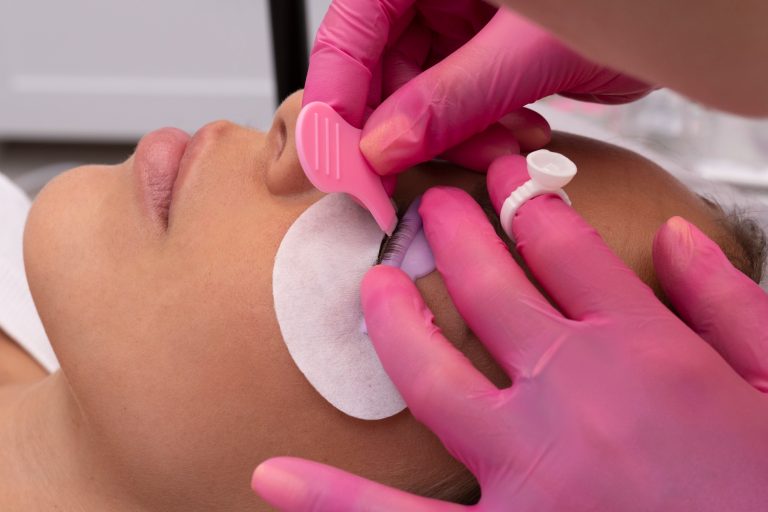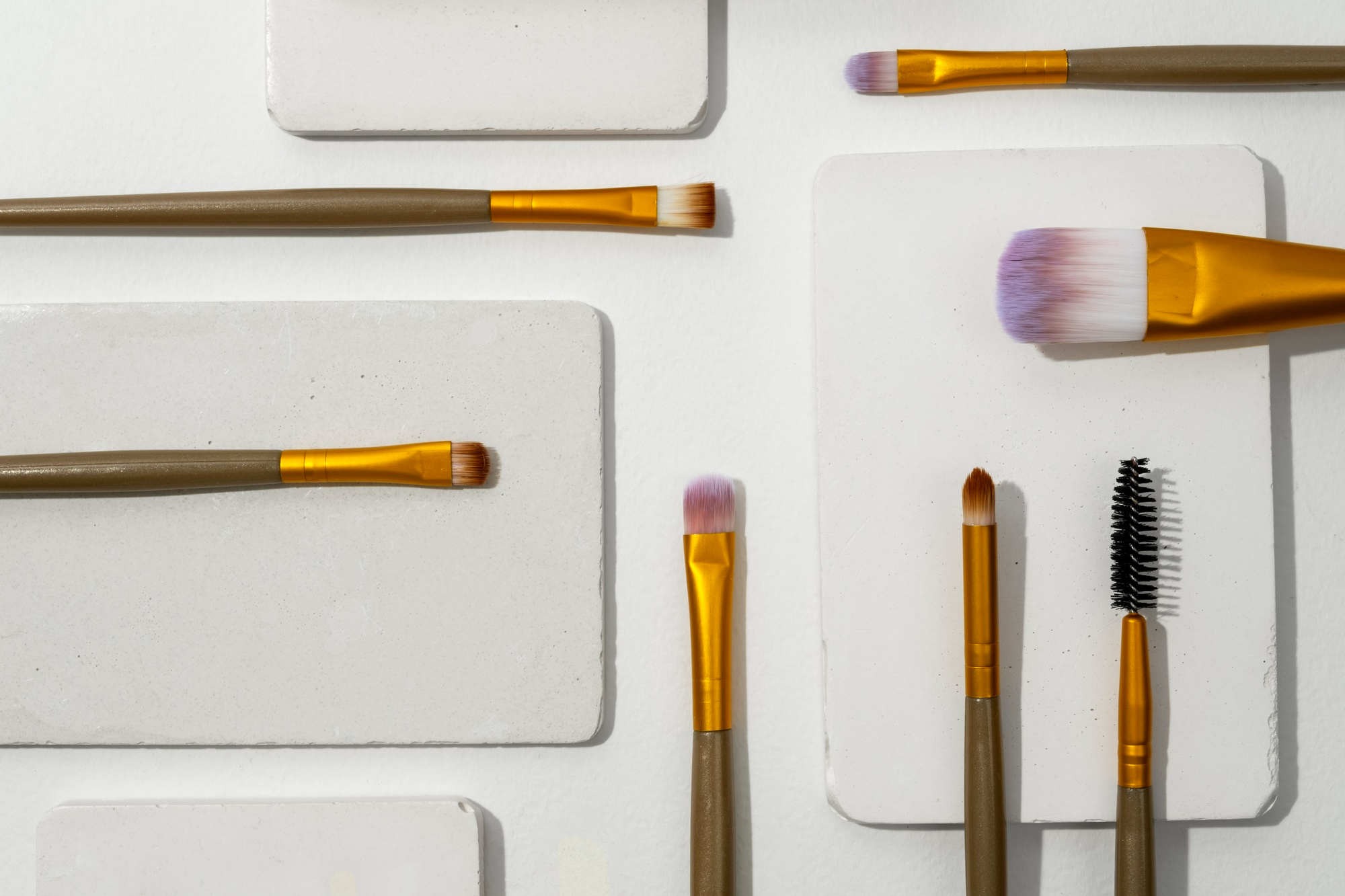
In eyelash lamination, the final result depends not only on the system or technique used, but also on the tools. Brushes for applying eyelash lamination compositions influence how evenly the products are distributed, how well the lashes are coated, and whether unwanted sticking occurs near the lash roots. In the training of future lash stylists, choosing the right synthetic fibers, shape, and density is therefore a key professional skill.
Why the Right Brush Matters in Eyelash Lamination
Each lamination step places different demands on the tool. Brushes that are too soft may spread the composition unevenly, while overly stiff fibers make precise work close to the lash roots more difficult. A well-chosen brush helps control product quantity and placement and supports a clean, structured workflow, especially for beginners.
A suitable brush allows even application without excess product, better control at the lash base, reduced risk of lashes sticking together, and a consistent process during Step 1, Step 2, and Step 3.
Synthetic Fibers as the Standard for Lamination Compositions
Synthetic fibers are most commonly used for eyelash lamination compositions. They are less sensitive to chemical ingredients, retain their shape after frequent cleaning, and allow controlled product release.
Synthetic brushes are particularly suitable for lash lift compositions with creamy or gel-like textures, precise application without absorbing the product, and hygienic cleaning and disinfection in a training environment. Natural hair brushes are rarely recommended for professional eyelash lamination, as they tend to absorb products and release them unevenly.
Brush Shape: Flat, Angled, or Fine
The shape of the brush directly affects application technique. In practice, several shapes have proven effective depending on the working step.
Flat brushes allow even distribution of the composition along the entire lash length. They are especially suitable for applying Step 1 and Step 2 products when calm, controlled movements are required.
Angled brushes make it easier to work close to the lash roots and help place the composition precisely where it is needed, without touching the skin.
Fine brushes are used when very small amounts of product are required, for example with sensitive lashes or when refining specific areas.
Assessing Fiber Density and Firmness
In addition to shape, fiber density plays a crucial role. Brushes with fibers that are too loosely packed may leave streaks, while very dense brushes can make smooth distribution more difficult.
In professional training, it is often recommended to use brushes with medium density for Step 1 and Step 2, choose slightly elastic fibers for controlled movements, and avoid extremely stiff brushes to prevent unnecessary pressure on the lashes. The right balance between flexibility and stability supports precise work and consistent results.
Brush or Microbrush – Differences in Use
In practice, brushes are often combined with microbrushes. Each tool serves a different purpose. Brushes are used for broad, even application of lamination compositions, while microbrushes are mainly used for precise corrections or removing excess product. For beginners, it is important to understand that microbrushes complement brushes but do not replace them.
Hygiene, Cleaning, and Durability in Training Practice
In a professional environment, brushes must be cleaned and disinfected regularly. Synthetic fibers maintain their structure when cared for correctly. Good practice includes cleaning immediately after use, using suitable cleaning agents, allowing brushes to dry thoroughly before reuse, and regularly checking for deformation. Worn or misshapen brushes should be replaced to ensure consistent working quality.
Common Mistakes When Choosing Brushes for Eyelash Lamination
Many issues in lamination results can be traced back to unsuitable tools. Common mistakes include using one brush for all lamination steps, choosing fibers that are too soft for structured compositions, using brushes that are too wide for fine lashes, and insufficient cleaning between applications. For this reason, professional education places strong emphasis on understanding proper tool selection.
Key Points About Brushes for Applying Eyelash Lamination Compositions: Synthetic Fibers, Shape, and Density
Synthetic fibers are the standard in eyelash lamination. Brush shape and density significantly influence precision and product control. Different brushes serve different purposes within the procedure. Brushes and microbrushes work best when used together. Proper hygiene and care help maintain consistent results in salon and training settings.