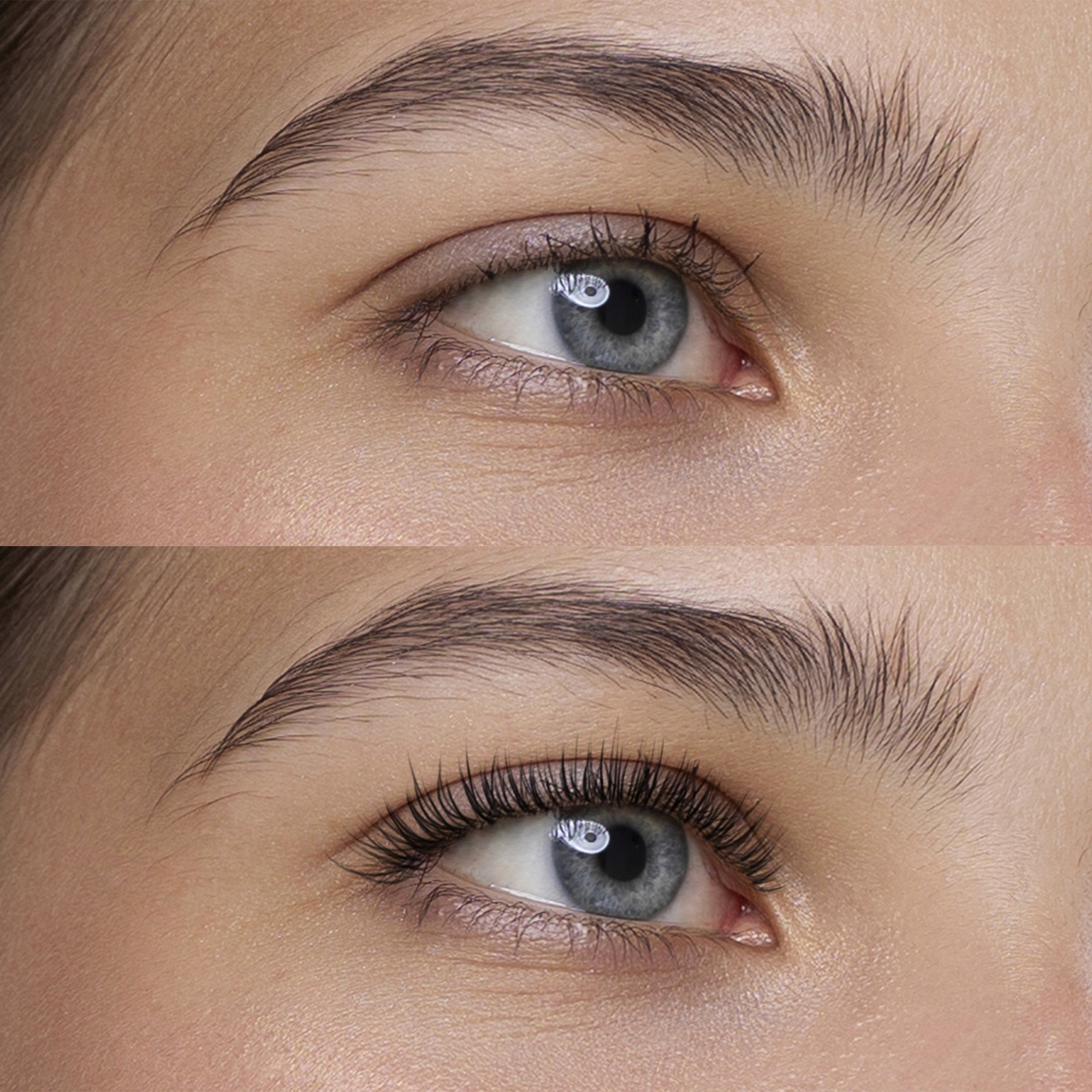
In the world of eyelash extensions, the precise mapping of curls and lengths is essential to achieving a balanced, personalized result. At MONLIS School in Munich, aspiring lash artists learn how to enhance their clients’ natural lash line using professional and well-thought-out techniques.
Why Is Curl and Length Mapping So Important?
The classic lash extension technique is based on the principle that each client’s eye shape, eyelid, and natural lash line are unique. Applying the same curl and length across the entire lash line often looks artificial. A carefully planned distribution:
-
opens the eye,
-
enhances natural features,
-
balances asymmetry, and
-
ensures lasting comfort.
Overview of Classic Curl Mapping
The most common curl types in classic lash techniques include J, B, C, CC, and D curls:
-
J Curl: Very gentle, best for clients with straight natural lashes.
-
B Curl: Slightly more curved, ideal for a subtle lift.
-
C Curl: Standard curl that opens the eye naturally.
-
CC and D Curls: More dramatic and lifting for bold looks.
At MONLIS School, experienced trainers teach how to apply curls across the lash line to create a seamless transition. Typically, you start with flatter curls (e.g., B) at the inner corner, increase curl intensity toward the center (C or CC), and either maintain or decrease curl toward the outer edge, depending on the desired effect.
Length Mapping: Key to Lash Harmony
Choosing the right length starts with assessing the client’s natural lashes and eyelid shape. A common classic mapping technique is:
-
Inner corners: shorter lashes (6–8 mm) to avoid heaviness
-
Center of the eye: longer lashes (9–11 mm) to open the eye
-
Outer corners: slightly shorter again (8–10 mm) to create a cat-eye effect or maintain length for a doll-eye look
Proper length distribution enhances the eye shape and maintains lash health through balanced weight distribution.
Common Mistakes to Avoid
At MONLIS School, students are trained to recognize and avoid typical beginner mistakes such as:
-
Using extensions that are too long at the inner corners, causing irritation
-
Harsh or unnatural transitions between lash zones
-
Choosing the wrong curl type for the client’s eyelid or lash condition
Hands-on training with models and expert feedback helps students master these techniques.
Theory Meets Practice: Training at MONLIS School
Training at MONLIS School in Munich emphasizes both solid theoretical foundations and extensive practical exercises. Students:
-
learn to create customized lash maps
-
analyze individual eye shapes
-
work with various curl types and lengths
-
practice on real models under realistic salon conditions
The classic technique is the basis of every professional lash stylist’s work. Mastering it provides the foundation for advanced methods like volume or hybrid lashes.
Thoughtful and customized curl and length distribution is the cornerstone of high-quality lash extensions. Understanding how different parameters affect the eye’s overall look is critical for creating lasting, beautiful results. At MONLIS School Munich, students gain exactly this expertise — preparing them to become confident, skilled lash professionals.