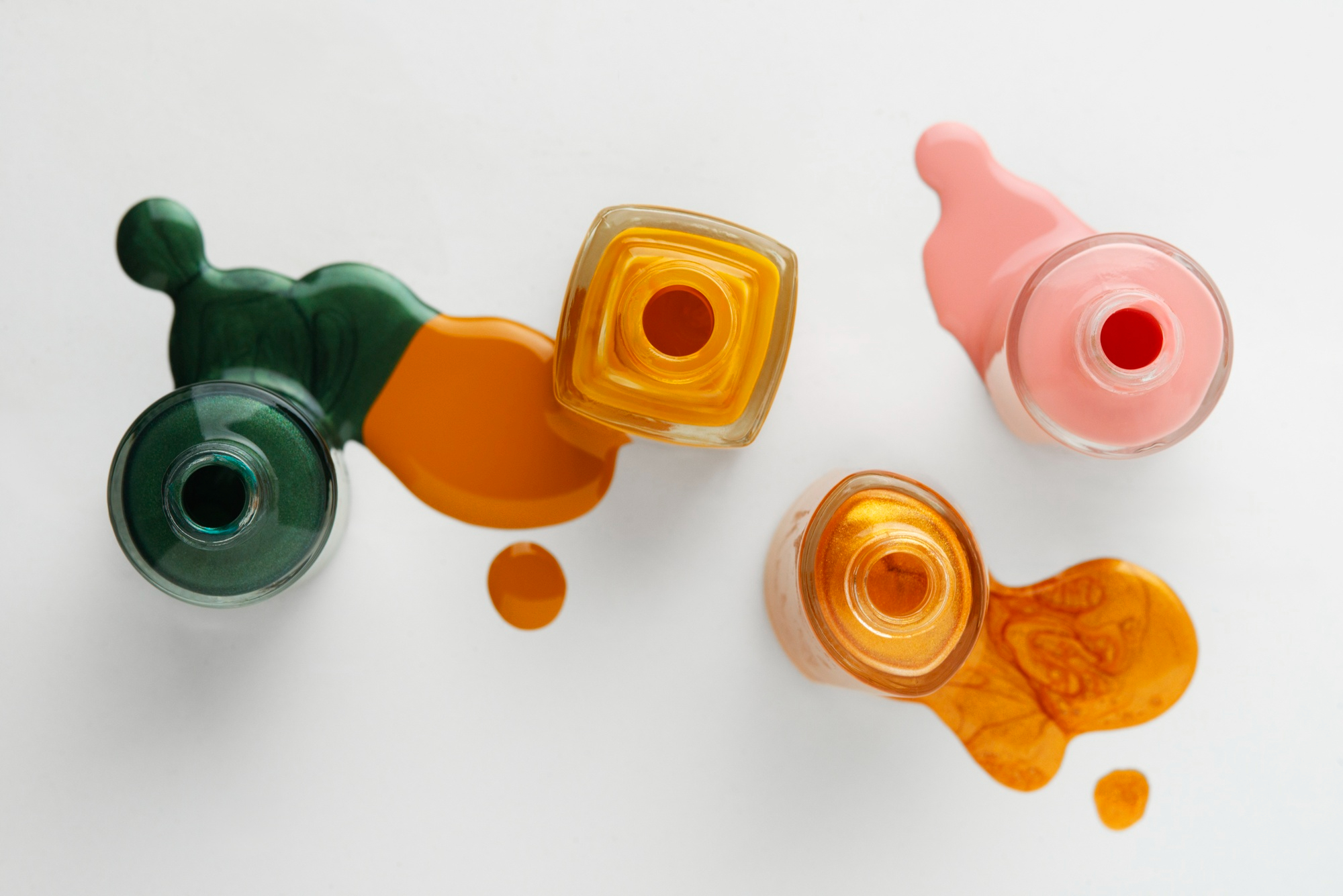
What to do if product flows into the nail sinuses on toes is a common technical challenge in pedicure practice. Gel polish flowing into the lateral nail sinuses and sidewalls affects not only the appearance of the coating but also its durability. Even when using high-quality products, the issue may occur due to application technique or unsuitable product consistency.
The sinus area on toes is often more pronounced than on hands. The lateral grooves may be deeper, and the surrounding skin denser. This requires precise product control and careful detailing.
Why Gel Polish Flows into the Lateral Sinuses
Flowing typically results from technical and material-related factors:
- overly liquid or highly self-leveling gel polish,
- excessive product loaded onto the brush,
- slow application speed,
- incorrect foot positioning during application,
- lack of control before curing.
If the material moves toward the sidewalls, it is often a combination of several factors. Dense pigmented shades can also increase the risk of flow when applied too generously.
The Role of Product Consistency
Viscosity directly influences product behavior. Thinner formulas spread faster into recessed areas. Thicker materials offer more control but require careful distribution.
When selecting gel polish for pedicure, consider:
- viscosity level,
- pigment density,
- self-leveling speed,
- compatibility with the base coat.
An overly flexible base coat may also contribute to product movement toward the sinuses.
Application Technique Without Flooding
Brush pressure control is essential. The stronger the pressure, the more actively the product moves toward the edges. An effective technique includes:
- loading a minimal amount of product onto the brush,
- applying thin layers,
- placing color in the center first,
- gently guiding it toward the side lines.
Work in the sinus area should be done with the tip of the brush or a fine detailing brush to improve precision.
Foot Position During Application
Surface angle influences product flow. If the foot is positioned horizontally, liquid gel polish may move more easily into the grooves. Slightly adjusting the angle may reduce the risk.
It is also important not to delay curing. The longer the product remains uncured, the higher the likelihood of flooding.
What to Do If Gel Polish Has Already Flooded
If flooding is noticed before curing, it can be carefully removed using:
- an orangewood stick,
- a dry fine brush,
- a lint-free clean tool.
After curing in the lamp, correction usually requires gentle filing or partial removal of the coating.
Can Flooding Be Corrected After Curing?
Once polymerized, the product no longer moves. Significant flooding may require partial removal and reapplication.
Work in the sinus area should always be performed carefully. If discomfort or sensitivity occurs, professional handling without skin trauma is advisable.
Common Mistakes Among Beginners
Frequent issues include:
- working with excessive product amounts,
- attempting to cover in one thick layer,
- skipping visual checks between steps,
- ignoring the specific shape of toenails.
Mastering technique in difficult zones takes consistent practice and structured training.
Preventing Flooding in Pedicure
To reduce the risk of product flowing into the sinuses:
- select medium-viscosity materials,
- apply thin layers,
- control foot positioning,
- avoid prolonged delays before curing,
- pay close attention to sidewall detailing.
A systematic approach may support cleaner results when the technique is applied correctly.
Training and Precision Development
Professional pedicure training often focuses on accurate sidewall work, consistency control, and timing. Developing fine motor skills and understanding product behavior helps minimize flooding.
Key Points About What to Do If Product Flows into the Nail Sinuses on Toes
Flooding is usually linked to viscosity and technique.
Thin layers reduce the risk of product movement.
Foot positioning influences flow direction.
Pre-curing control allows timely correction.
Regular practice improves accuracy in sinus work.