The subtleties of working with a lifting composition play an important role in ensuring a controlled and professional approach to eyelash lifting. Beginners often face the challenge of correctly assessing processing time, product quantity, and placement. A structured understanding of the procedure can help reduce common mistakes and support more consistent lash shaping.
A lifting composition is part of the lash lift procedure and is used to make the lashes temporarily more flexible during the treatment so they can be positioned into a new shape. The intensity of this effect may depend on the natural lash structure, the chosen technique, and the professional execution of the service.
Which Function a Lifting Composition Performs
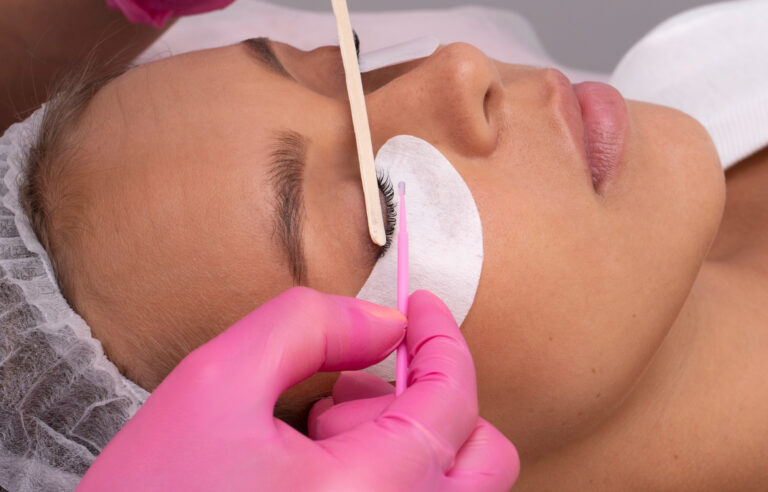
In the first step of eyelash lamination, the so-called Step 1 product is applied. It may help temporarily soften the internal structure of the lash, allowing it to adapt to the desired form.
Factors that can influence the outcome include the natural thickness and elasticity of the lashes, the correct selection of silicone shields, even distribution of the product, and individually adjusted processing time. Careful application supports predictable results and may reduce the likelihood of unwanted effects such as excessive curl.
Why the Right Product Quantity Matters
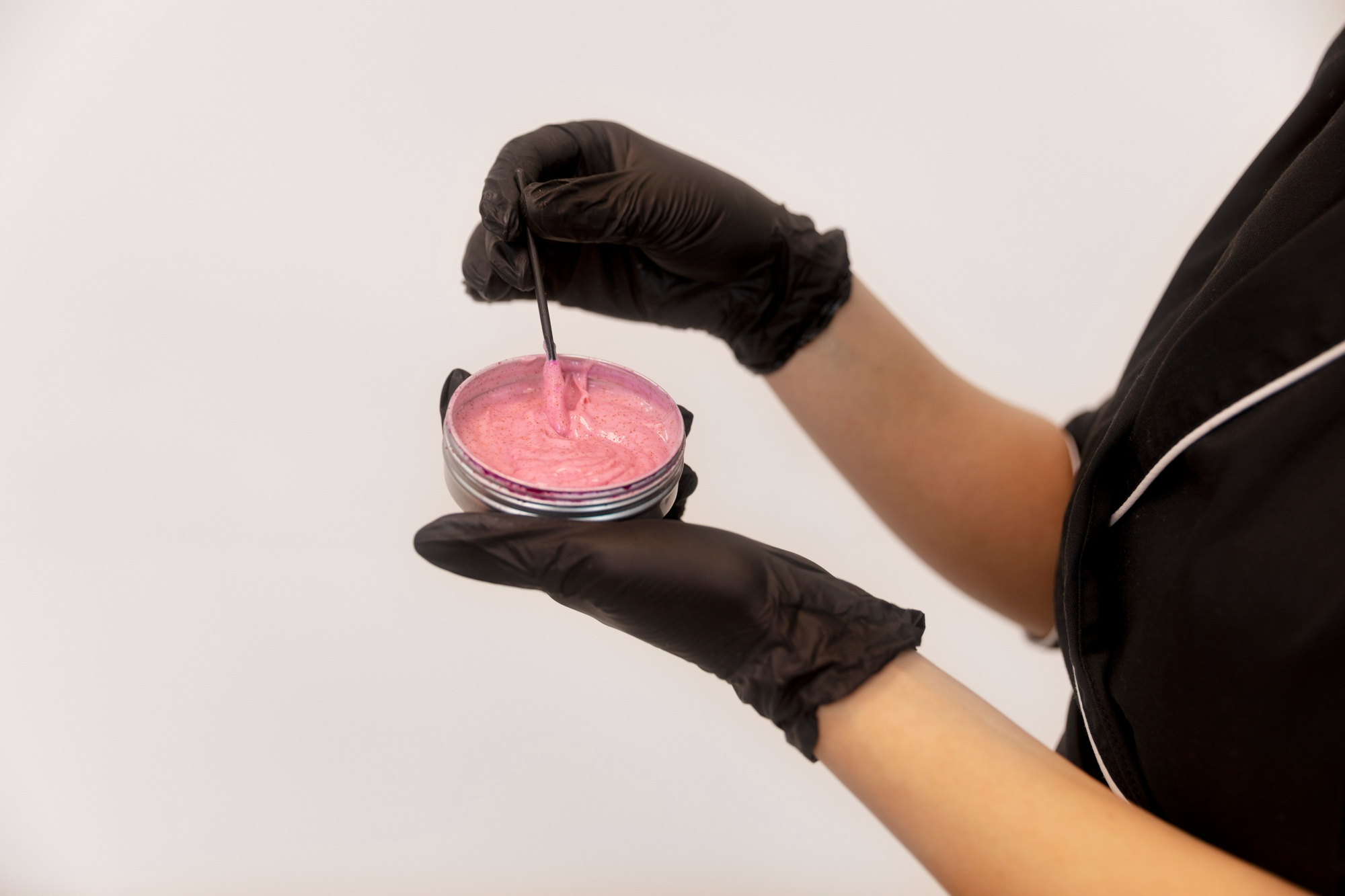
A common beginner mistake is applying too much product. A thick layer does not necessarily accelerate the process and may make control more difficult. Many training concepts recommend applying a thin, even layer, as this allows the lash reaction to be observed more easily and supports more precise treatment control.
The product should not come into contact with the skin. Leaving a small distance from the lash line may help minimize skin contact. Excess product can be carefully removed using a suitable applicator.
Assessing the Processing Time Correctly
Appropriate processing time is one of the most important parameters when working with a lifting composition. Manufacturers usually provide guideline ranges that can serve as orientation. The actual duration is often adjusted according to the lash type.
Fine lashes often react more quickly, medium lashes typically require moderate processing time, while strong or dense lashes may need longer exposure. It is advisable to follow the manufacturer’s instructions, as recommendations may vary depending on the formulation and should be verified accordingly.
Controlled Work in the Lash Root Area
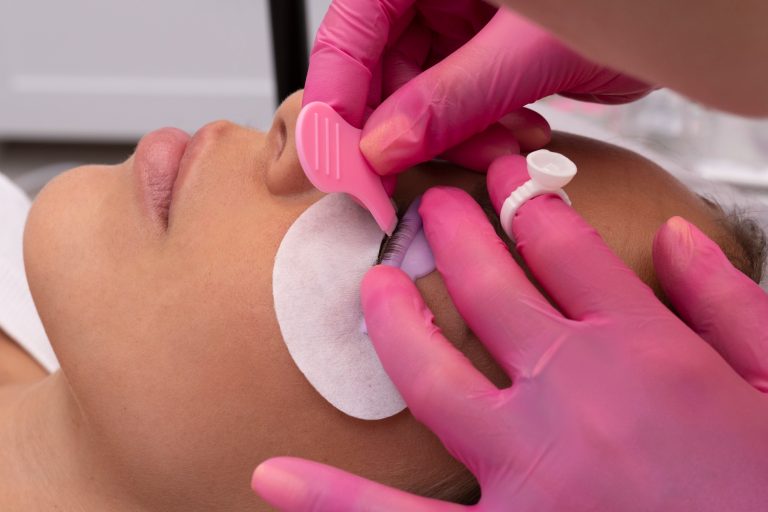
Product placement significantly affects the final lash shape. Applying the composition too close to the lash roots may result in an overly strong curl, while placing it too far away can weaken the lifting effect.
Many professional training programs therefore recommend precise application within the designated zone on the silicone shield. A calm and structured approach makes it easier to maintain control over the result.
Common Beginner Mistakes and How to Avoid Them
Similar uncertainties often arise at the beginning of professional training. Being aware of these aspects can help stabilize the learning process.
Frequent mistakes include ignoring manufacturer instructions, applying excessive product, insufficient analysis of the lash structure, shortening or extending processing times without professional justification, and lacking a systematic workflow. Structured training programs can support the development of confidence in application.
Working Environment and Influencing Factors
External conditions can also play a role. Room temperature, humidity, and organizational processes influence the working situation. According to modern training concepts, a well-organized workspace may contribute to more consistent treatments. Specific threshold values should always be checked in relation to the product used.
Why Solid Training Is Beneficial
Working with professional lash lift systems requires both theoretical knowledge and practical experience. Training provides not only technical skills but also an understanding of material properties and safety considerations.
MONLIS School positions itself as a creative educational center where modern technologies are combined with structured training. The goal is to prepare future professionals for responsible work within the beauty industry.
Key Points About the Subtleties of Working with a Lifting Composition: Important Nuances for Beginners
The lifting composition is a central element of the lash lift procedure. Product quantity and processing time should be adjusted individually. Precise placement supports controlled lash shaping. Following manufacturer instructions contributes to application safety. Structured education can help develop professional routine.