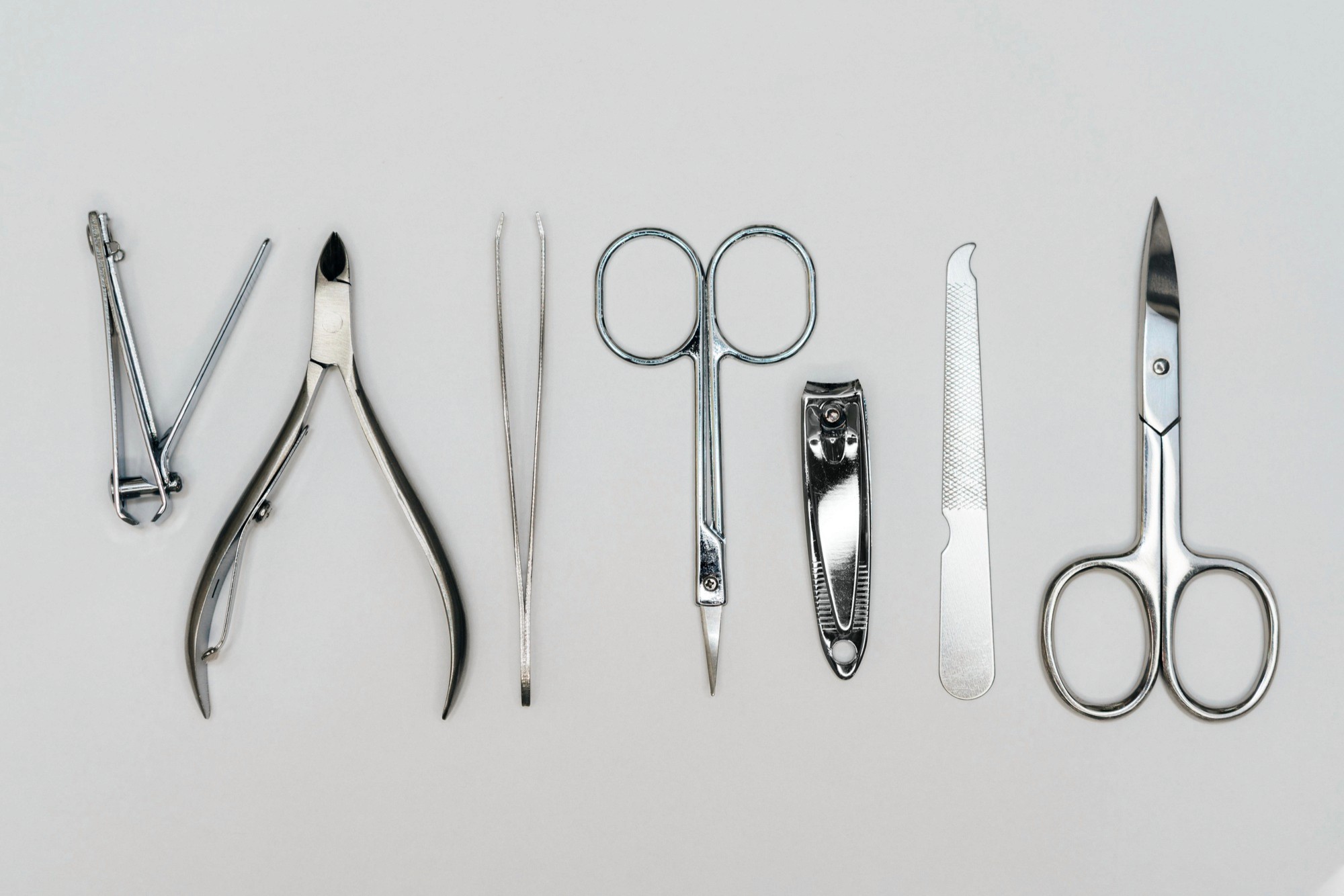
Professional work in the beauty industry depends not only on the skills of nail technicians but also on the quality of the tools they use. At MONLIS School Munich, one of the leading academies for manicure and pedicure, we emphasize teaching our students to work with high-quality instruments. Among the most valued are those made of carbon steel. These tools come with unique advantages but also require special care to preserve their durability and performance.
Why Carbon Steel?
Carbon steel stands out from stainless steel mainly due to its hardness and sharpness. This brings clear benefits for professional nail work:
-
High cutting performance: Scissors, nippers, and cutters made of carbon steel remain sharp longer, ensuring precise work without damaging the nail plate.
-
Durability: The tools are strong and resistant to intensive use.
-
Cost-effectiveness: Carbon steel tools are often more affordable than stainless steel while offering similar or even superior results.
At MONLIS School Munich, we value these characteristics because they allow our students to practice precision techniques from the very beginning of their training.
Caring for Carbon Steel Tools
The great advantage of hardness comes with the challenge of higher sensitivity. To maintain the tools in perfect condition, proper cleaning and care are essential.
Cleaning after each use
After every procedure, tools must be thoroughly cleaned. Residues of nail dust, skin, or liquids can damage the surface and cause rust. Cleaning with a soft brush and mild detergent is recommended.
Disinfection and sterilization
In professional practice – and as a strict standard at MONLIS School Munich – consistent disinfection is a must. Since carbon steel is more sensitive to moisture, tools should always be carefully dried after disinfection and sterilization.
Oiling the joints
Cuticle nippers, scissors, and other tools with moving parts should be oiled regularly to ensure smooth movement and prevent rust. Specialized instrument oils are best suited.
Proper storage
The best storage option is a dry, closed case or sterilization box. Keeping tools in a moisture-free environment helps avoid corrosion.
Differences from Stainless Steel
Many beginners wonder if stainless steel tools might be the better choice. Stainless steel is indeed easier to maintain and less prone to rust, but it often lacks the sharpness and precision of carbon steel. For beginners, stainless steel may be more convenient, but for professional techniques – such as precise cuticle trimming – carbon steel provides clear advantages.
At MONLIS School Munich, students work with both types of tools, learning how to select the right instrument depending on the situation.
Longevity through Proper Care
With correct maintenance, carbon steel tools can last for many years while ensuring precision in daily salon use. Especially in professional environments, where instruments are used intensively, the investment in high-quality carbon steel pays off many times over – but only if the proper care routine is followed.
Carbon steel tools are an essential part of professional manicure and pedicure. They combine sharpness, precision, and durability – all vital qualities for outstanding results.
At MONLIS School Munich, we don’t just teach manicure and pedicure techniques. We also emphasize the responsible handling of instruments. Students learn how to care for their tools to work hygienically, safely, and efficiently.
Every movement becomes a mark of professionalism – laying the foundation for a successful career in the beauty industry.