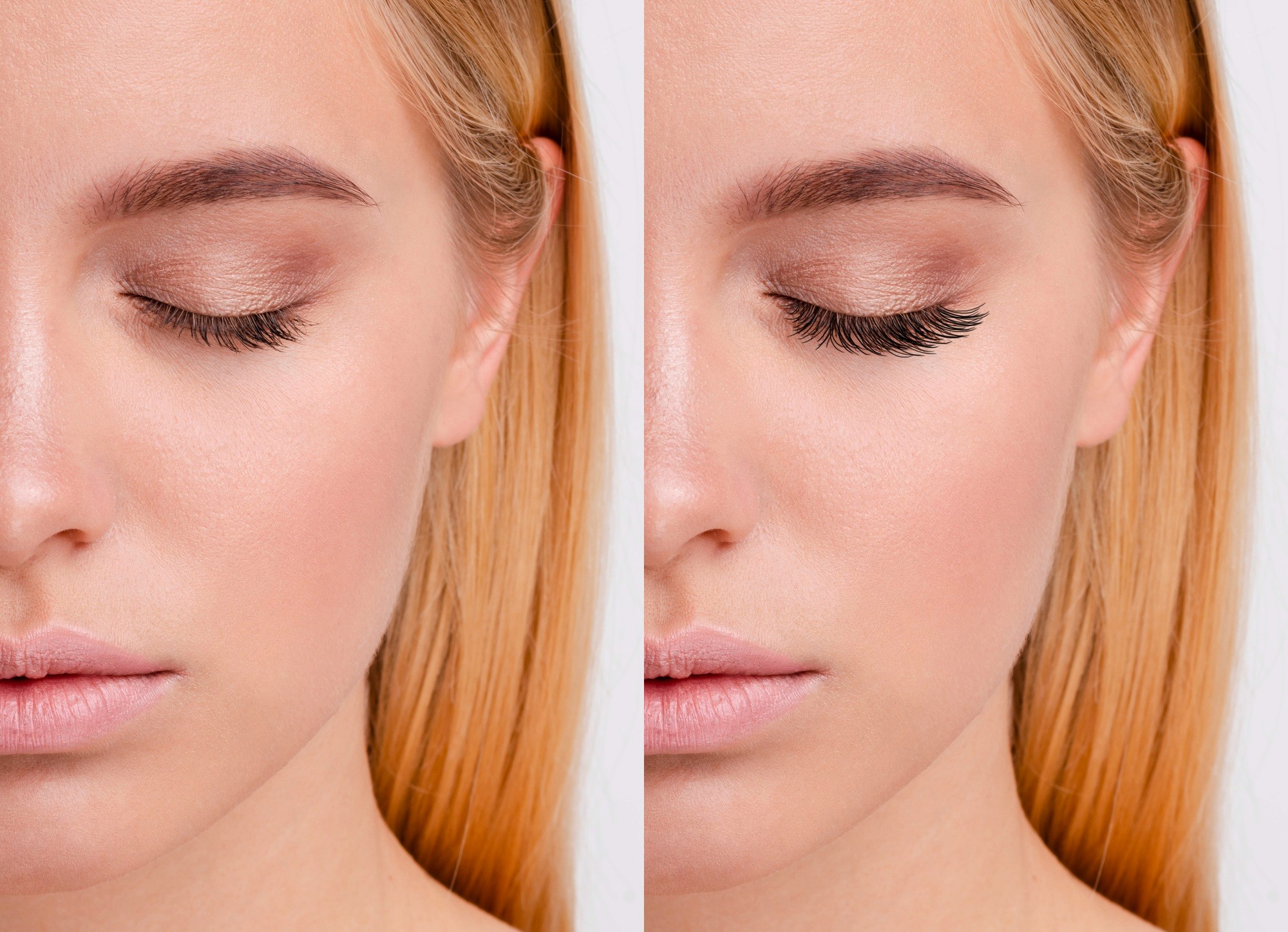
Eyelash extensions are one of today’s most popular beauty treatments. They add definition to the eyes, open up the gaze, and create an elegant look—without daily mascara. But to ensure the results are not only beautiful but also long-lasting and safe for natural lashes, the natural lash curve must be carefully considered. At MONLIS School in Munich, future lash stylists learn why analyzing lash anatomy is the essential first step before every extension.
Why the Natural Lash Curve Matters
Every person has a unique lash shape. The curve of the natural lash determines how well extensions adhere and how long they last. If the curve is ignored, several issues may arise:
-
Extensions do not bond properly and fall off prematurely.
-
Unnatural angles appear, distorting the client’s look.
-
Natural lashes may be overloaded or damaged.
A truly professional result is only possible when the natural lash curvature is analyzed and the correct extension curl is chosen.
Types of Natural Lash Curves
Professionals generally distinguish between several main lash types:
-
Straight lashes – lying almost flat across the eyelid. These require stronger curls, such as D or L, to create visible lift.
-
Slightly curved lashes – the most common type; best complemented by C or CC curls for a balanced look.
-
Strongly curved lashes – naturally lifted lashes, often found in Asian or Middle Eastern lash types. Softer curls like B or C are more suitable to avoid over-curvature.
At MONLIS School Munich, students are trained to recognize these lash types accurately and select the right materials accordingly.
Adapting Techniques to Natural Lashes
Application techniques and curl choice are closely linked to the natural lash curve.
-
Straight lashes require a different adhesive point than curved lashes.
-
The greater the mismatch between natural and artificial curl, the weaker the retention.
-
Thickness and length must always match the strength of the natural lash to prevent damage.
The goal: results that are aesthetic, durable, and gentle on natural lashes.
Common Mistakes When Ignoring the Natural Curve
-
Overly strong curls on already curved lashes → unnatural appearance and poor retention.
-
Too weak curls on straight lashes → little to no visible effect.
-
Incorrect length selection → strain on natural lashes, breakage, and premature shedding.
At MONLIS School, students learn how to avoid these mistakes and manage even challenging lash conditions with confidence.
Training at MONLIS School Munich
Alongside lash anatomy theory, great emphasis is placed on hands-on training:
-
Analyzing different lash types on real models.
-
Choosing the appropriate curl types (B, C, CC, D, L).
-
Practicing adhesive techniques for maximum bond.
-
Hygiene, safety, and gentle application methods.
This ensures that students can develop individualized solutions for each client, from natural looks to dramatic effects.
The natural lash curve is a critical factor in lash extension success. Considering it ensures not only beautiful but also safe and long-lasting results. At MONLIS School Munich, future professionals are trained to analyze lashes precisely and adapt their technique flawlessly—an essential skill that sets true experts apart.