Stretching with a colored top coat is a technique that allows you to create complex color transitions and half-tone effects without physically mixing pigments. In professional nail design, this method is valued for color purity, predictable results, and high repeatability, which is especially important in the training of future specialists at one of the best manicure and pedicure schools in Munich.
The method is based on optical layering of semi-transparent coats: the color is formed not on the palette, but directly on the nail plate.
The difference between optical layering and traditional color mixing
A colored top coat contains pigment in a transparent or semi-transparent base. When applied over a light or neutral gel polish, it works like a filter: it changes the tone of the base without mechanically mixing with it.
As a result, the base color remains clean, a new shade appears due to light transmission, the transition looks soft and controlled, and the risk of “muddy” tones is eliminated.
Which colored top coats are suitable for stretching
Top coats with different levels of pigmentation are used for gradients. Semi-transparent ones allow multi-layer stretching with a gradual build-up of intensity. Medium-pigmented top coats give a more visible effect with fewer layers. Highly pigmented versions are used selectively, mainly to darken the tips or create accent zones.
When choosing, it is important to consider:
– degree of transparency
– even pigment distribution
– self-leveling ability
– absence of streaks during stretching
Stretching technique
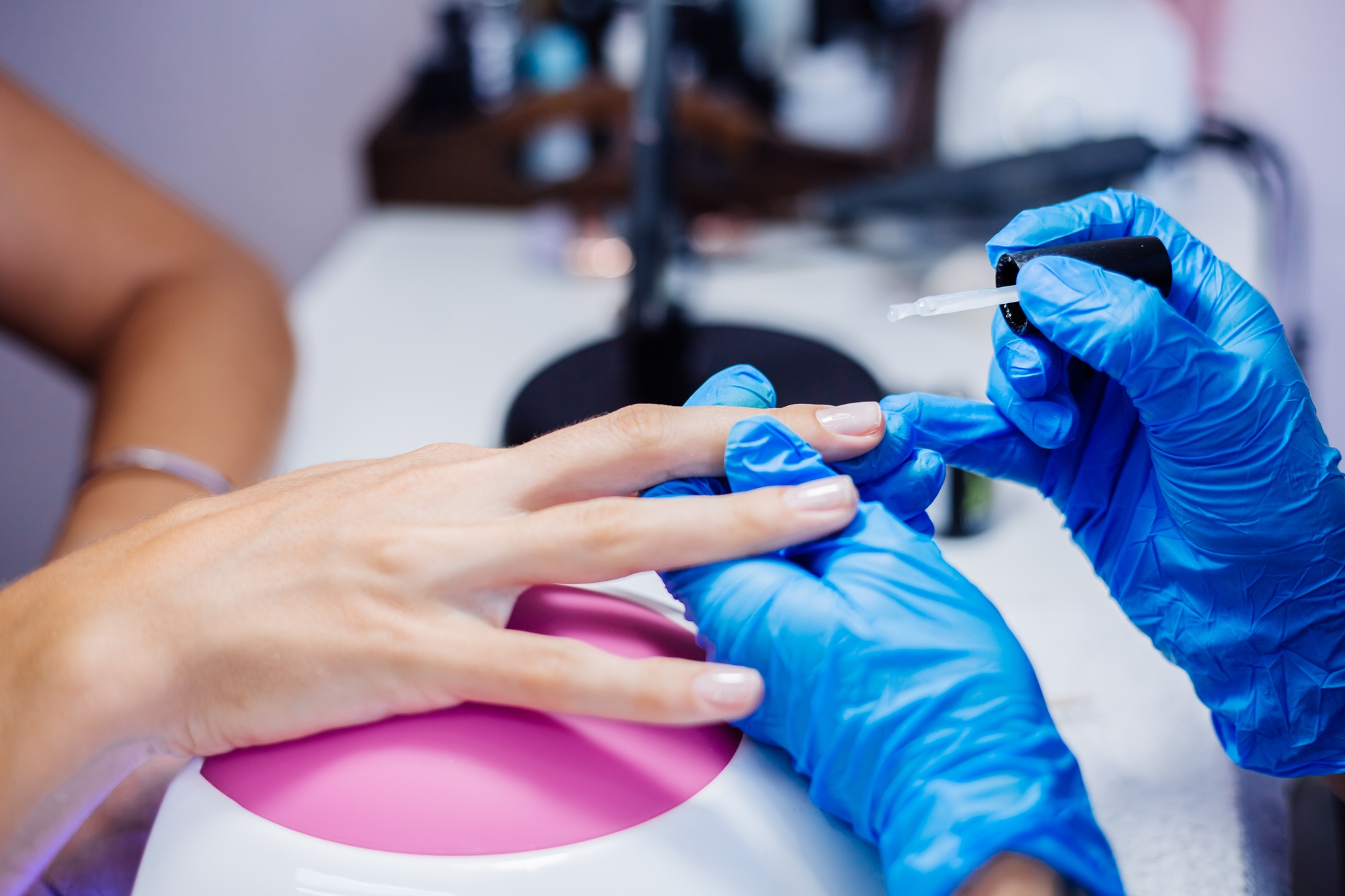
The work begins with a perfectly leveled, solid-color base. The colored top coat is applied in a thin layer and stretched from the area of maximum color concentration toward the “zero” zone.
Control is achieved through:
– a minimal amount of product on the brush
– working with a semi-dry brush
– layer-by-layer curing
– gradual build-up of color intensity
In this way, the new shade is created by layering, not by mixing.
Why the shades look cleaner
When pigments are physically mixed, they interact with each other and often lose brightness, resulting in dull intermediate tones. With a colored top coat, each pigment keeps its spectral purity, and the final color is formed by light passing through the layers.
This provides:
– transparent color depth
– no gray cast
– shade stability
– precise repeatability of the design
Where the technique is especially in demand
Stretching with a colored top coat is used in:
– nude gradients
– French designs with soft shading
– baby boomer
– tinted ombré
– smoky or misty effects
It looks particularly expressive on milky, camouflage, and pastel bases.
Typical mistakes
The most common issues include:
– applying too dense a layer, creating a sharp border
– uneven pigment distribution
– lack of intermediate curing
– using a top coat that is too dark over a very light base
– working on an uneven nail architecture
All of these immediately affect the cleanliness of the gradient.
The importance of the technique in professional education
Mastering colored top coat stretching develops an understanding of optics, transparency, and layer interaction. It is a fundamental skill for working with complex shades without the risk of uncontrolled color mixing. In schools at the MONLIS level, this technique is used as a transition from simple coating to professional color modeling.
Key points about stretching with a colored top coat
– The shade is formed by optical layering, not by mixing
– The color remains clean and predictable
– Transparency of the top coat is the key factor
– The technique allows creation of complex gradients
– Layer control is more important than pigment quantity