The classic French manicure remains a timeless favorite in the nail world. It looks elegant, natural, and suits every style. But for professionals, a symmetrical French is much more than just a white tip. At MONLIS School Munich, future nail designers learn how precision, proportion, and harmony work together to create an impeccable, salon-quality result.
What Does Symmetry Mean in a French Manicure?
A symmetrical French is defined by even line placement and identical proportions on each nail. The smile line — the curved border separating the nail bed from the tip — should have the same height, curve, and angle on both sides.
In professional technique, symmetry means that all ten nails are consistent in shape, length, curvature, and smile-line flow. Even the slightest deviation can disrupt the overall balance. That’s why MONLIS School Munich emphasizes precise hand movements and a trained eye for detail.
The Importance of Nail Shape and Length
The foundation of a perfect French manicure is a well-shaped nail plate. If the nail is filed unevenly or the sidewalls are slanted, the smile line will appear crooked.
In professional work, each shape — oval, almond, or square — is customized to fit the client’s hands. The goal is to create optical harmony that elongates the nail and enhances its natural beauty.
At MONLIS School, students develop their sense of proportion to spot even the smallest imperfections and correct them.
The Technique Behind a Perfect Smile Line
The smile line is the defining feature of a French manicure. It gives the design structure and elegance. Professionals build it through precise, step-by-step work:
-
Pre-drawing: The desired curve is outlined with a fine brush or liner.
-
Correction: Before curing, the symmetry and height on both sides are checked.
-
Application: The color is applied in thin, even layers for clean and crisp edges.
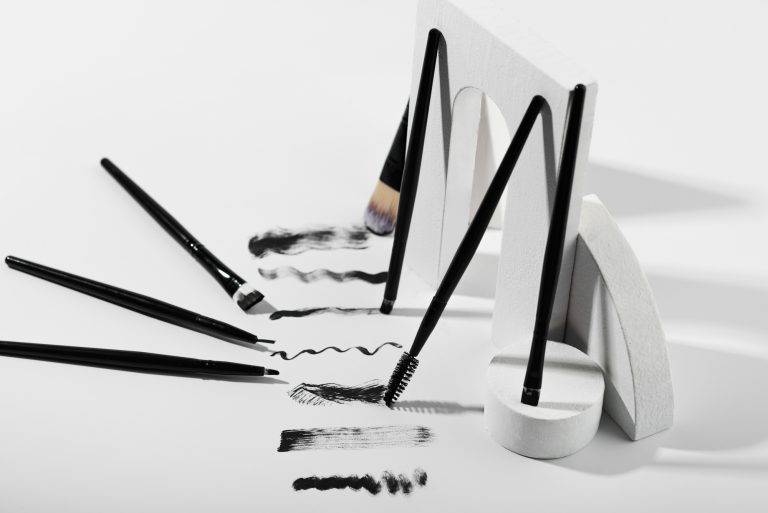
During the training at MONLIS School Munich, students learn how to achieve the ideal smile line using different brushes and materials — whether gel, acrylic, or hybrid systems.
Common Mistakes and How to Avoid Them
An uneven French design can occur due to:
-
incorrect hand position or pressure;
-
too much product applied to the tip;
-
inaccurate filing;
-
poor control of angles or proportions.
Professional nail artists always monitor hand stability, lighting, and posture. Even the smallest movement can change the curve.
That’s why at MONLIS School Munich, every gesture is practiced repeatedly — until the smile line is perfectly mirrored on each nail.
Choosing the Right Color and Product Consistency
The product’s texture plays a major role in achieving symmetry. A medium-viscosity gel or paint works best — not too thin to run, not too thick to streak.
This ensures clean lines and even coverage without bleeding or uneven opacity.
Students at MONLIS School learn how to select the right material, control its behavior, and adapt techniques for different nail types and styles.
Practice and Training – The Path to Perfection
A symmetrical French manicure is the result of training, patience, and a sharp eye for detail.
At MONLIS School Munich, students practice on models and nail tips to master consistent lines and shape balance. Step by step, they refine pressure control, brush movement, and viewing angle to achieve professional accuracy.
The training focuses not only on technical execution but also on aesthetic understanding — how line, color, and form interact to create beauty.
A symmetrical French manicure is the signature of every skilled nail artist — proof of their precision, balance, and artistry.
At MONLIS School Munich, you will learn how to create perfect symmetry through precise shaping, accurate color application, and refined professional technique.
The result: elegant, flawless nails that embody timeless beauty and expert craftsmanship.