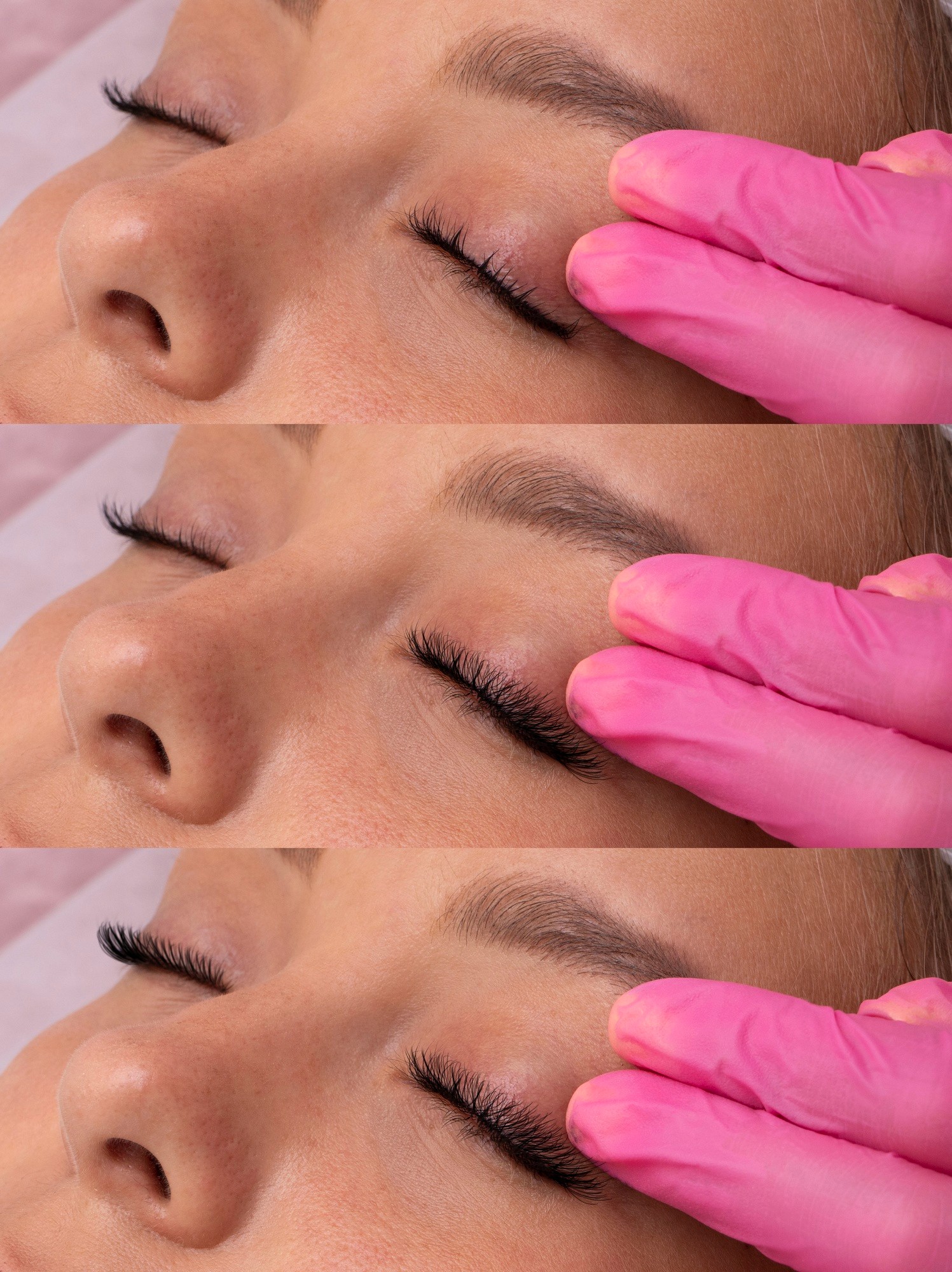
Eyelash extensions are among the most in-demand treatments in today’s beauty industry. However, to perform refills and removals safely and professionally, a solid understanding of the lash cycle is indispensable. At MONLIS School in Munich, one of the leading academies for manicure, pedicure, and lash treatments, the theory of the lash cycle forms a core part of the training program.
The Phases of the Lash Cycle
The natural lash cycle is divided into three main phases:
-
Anagen Phase (Growth Phase)
In this active phase, the lash is still growing from the follicle. It is thin, delicate, and not yet strong enough to carry extensions. Lashes in this phase should be left untouched or treated with extreme caution. -
Catagen Phase (Transition Phase)
At this stage, the lash has reached its maximum length, growth stops, and the connection to the follicle stabilizes. These lashes are strong enough to support extensions and are considered ideal for application. -
Telogen Phase (Resting Phase)
The lash is fully mature but nearing the end of its life cycle. It will naturally shed to make room for a new lash. Extensions placed on lashes in this phase often shed quickly or fall out together with the natural lash.
Importance for Refills
During a refill, it is crucial to identify the phase of each lash. Skilled stylists remove old or weakened extensions and add new ones to maintain a uniform look.
-
Anagen lashes are avoided.
-
Catagen lashes provide the best stability and are ideal for application.
-
Telogen lashes are treated with lighter or shorter extensions, or old ones are removed since these lashes will shed soon.
This knowledge prevents overloading and ensures consistently beautiful results.
Importance for Removal
The lash cycle is also key when performing removals:
-
Young lashes must not be damaged through improper techniques.
-
Extensions that are already loosening should be removed gently to avoid disrupting the natural rhythm.
-
Professional removers and correct methods are essential to protect both skin and follicles.
Risks Without Proper Knowledge
A lack of understanding of the lash cycle may lead to:
-
Overloading and permanent damage to natural lashes,
-
Uneven or patchy results after refills,
-
Irritation and inflammation due to incorrect removal,
-
Long-term weakening and thinning of the lash line.
Professional Training at MONLIS School
At MONLIS School Munich, theory and practice are combined for optimal training. Students learn not only how to apply extensions properly but also when refills are necessary and how to remove extensions safely.
The training focuses on:
-
Analyzing the lash cycle of each client,
-
Adapting techniques to the individual lash phase,
-
Using high-quality products to ensure safety.
Understanding the lash cycle is the foundation of all professional lash work. Only those who master the different phases can provide safe, aesthetic, and sustainable results. At MONLIS School in Munich, this essential knowledge is taught in depth, preparing future lash stylists for responsible work in refills and removals.