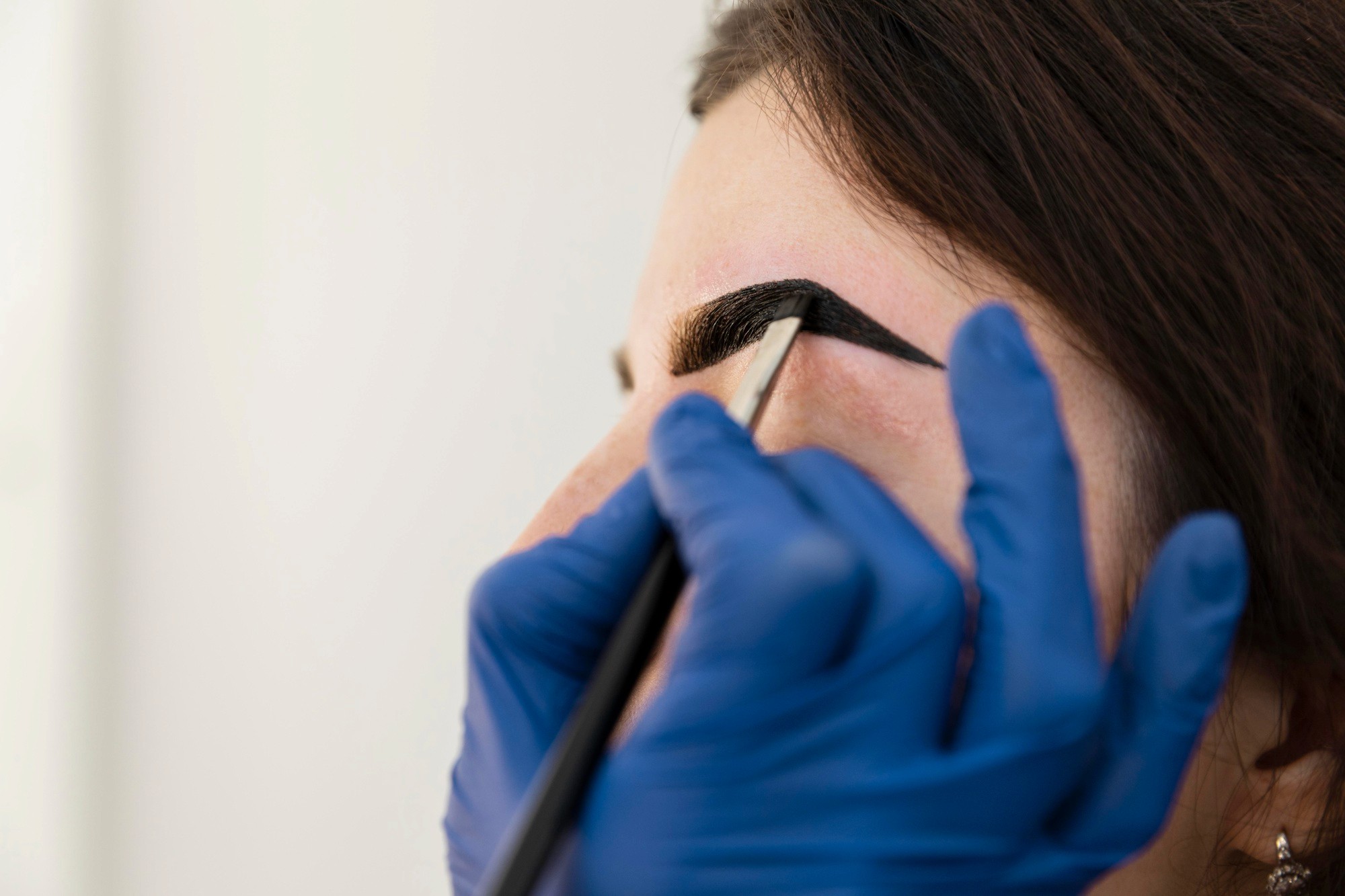
Eyebrow tinting is a popular, quick way to enhance facial features and create a harmonious look. However, many brow stylists and clients notice that the same tint can look different on different people – or even on the same person at different times. At MONLIS School in Munich, we teach future brow professionals exactly why this happens and how to achieve consistent, long-lasting results through the right techniques.
1. Skin Type – The Foundation of Color Results
The skin is the first contact point for the tint, and its condition plays a major role in how pigments develop and last.
-
Dry skin: Pigments often penetrate deeper, making the color appear more intense and longer-lasting. However, very dry or flaky skin can lead to uneven results.
-
Oily skin: Sebum can prevent pigments from penetrating well, leading to shorter-lasting and less saturated color.
-
Sensitive or irritated skin: May absorb pigments too quickly or unevenly.
Pro Tip from MONLIS School: Always perform gentle cleansing and light degreasing before tinting to prepare the skin optimally.
2. Hair Structure – More Than Just Color
The texture of the eyebrow hair is equally important for tinting results.
-
Thick hairs: A dense cuticle layer can make pigment penetration harder. Longer processing times or pre-treatment may be required.
-
Fine hairs: Absorb pigment faster and may appear darker – avoid excessive processing time.
-
Pre-treated hairs (e.g., after lamination): With the cuticle already open, pigment penetrates quickly and deeply, often resulting in darker tones.
3. Pre-Treatments and Skincare
Cosmetic treatments or skincare routines can affect the tinting process.
-
Peels or AHA/BHA acids before tinting can improve absorption but may also cause over-pigmentation.
-
Oil-based products before tinting act as a barrier, reducing color penetration.
4. Hormonal and Health Factors
Hormonal changes (e.g., menstrual cycle, pregnancy, menopause) can alter pigment absorption. Certain medications or health conditions also influence skin and hair behavior.
5. Tint Formula and Technique
Even with optimal skin and hair preparation, the result depends heavily on the tint formula and application method.
-
The mixing ratio of tint and developer determines intensity.
-
Even application in the direction of hair growth ensures a smooth result.
6. Training at MONLIS School
At MONLIS School in Munich, students learn how to:
-
Perform accurate skin and hair analysis before tinting
-
Adjust tint formulas to individual needs
-
Choose the ideal processing time
-
Professionally handle challenging cases (e.g., very oily or dry skin)
With our practical training, brow stylists can ensure that every client receives a uniform, natural, and personalized result – no matter their skin or hair type.
Eyebrow tinting is not a one-size-fits-all service. Skin and hair condition have a major impact on the final result. Understanding and mastering these factors allows you to control color development and deliver flawless results. At MONLIS School in Munich, we provide the knowledge and skills you need to make every tint a success.