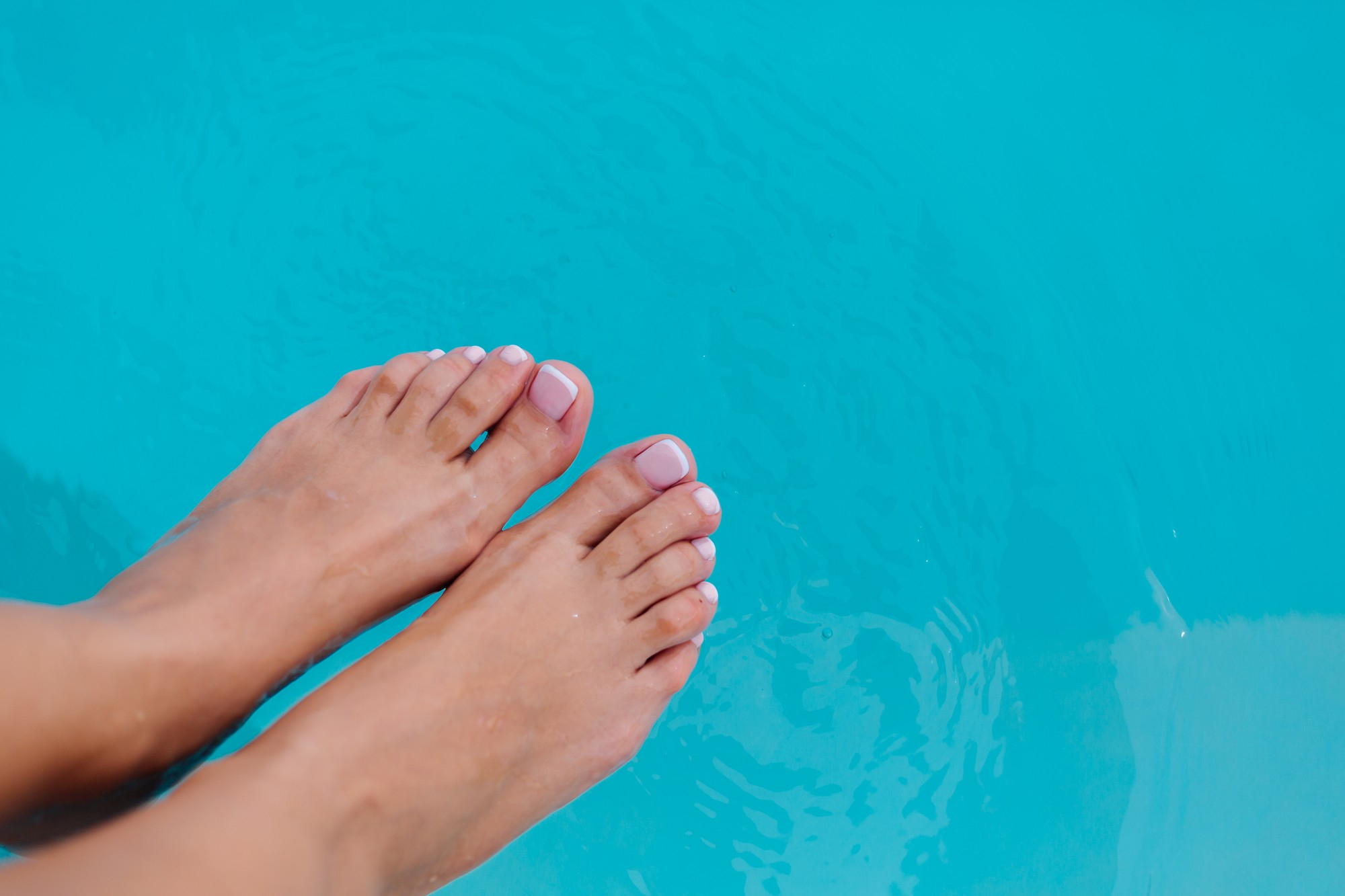
How to work with white pigments: French tips and opaque shades on toes is a question that often arises when professionals refine their pedicure technique. White gel polish behaves differently from nude or dark tones. Even minor streaks or uneven areas become immediately visible. The final result depends not on the amount of product applied, but on pigment density, brush control, and a structured application process.
White shades in pedicure are commonly chosen for French pedicure designs, solid opaque finishes, and milky white variations. Each requires a slightly different technical approach.
Why White Polish Creates Streaks or Uneven Coverage
White gel polish contains a high concentration of pigment. This increases opacity but also makes the material more sensitive to brush pressure. Excessive pressure can push pigment aside and create visible streaks.
Uneven white coverage may be caused by:
- overly thick or too thin consistency,
- incorrect brush angle,
- attempting to cover in one heavy layer,
- insufficient nail plate preparation.
Even high-quality products may appear uneven if the technique is inconsistent.
Preparation as the Foundation for Opaque White Shades
Before applying white color, the nail surface should be even and properly structured. Light tones emphasize irregularities more than darker shades. A smooth base layer helps create visual uniformity.
When working with opaque white tones, it is advisable to:
- level the nail plate with a thin base layer,
- carefully remove dust,
- use compatible products within one system,
- follow the curing time recommended by the manufacturer.
A properly prepared base may support more even pigment distribution.
Technique: Thin Layers Instead of Heavy Application
The key principle when working with white gel polish is applying several thin layers rather than one thick coat. Thin layers allow better control and reduce the risk of streaks.
A typical workflow includes:
- placing color in the center of the nail,
- gently guiding it toward the sidewalls,
- using minimal brush pressure,
- smoothing the surface with light movements.
If the white gel polish appears streaky, briefly turning the foot upside down before curing may allow the product to self-level. However, the curing time should not exceed manufacturer recommendations.
French Pedicure: Precision of the Smile Line
A white French pedicure requires additional focus. The smile line should appear symmetrical and clean. Many professionals use a fine detailing brush for greater precision.
The French technique on toes usually includes:
- marking the center point,
- gradually shaping the side curves,
- controlling line thickness,
- adjusting the contour before curing.
If the French design looks uneven, it may result from nail asymmetry or an incorrect viewing angle during application.
Opaque White: How Many Layers Are Needed?
In most cases, opaque white gel polish requires two thin layers. Occasionally, a third thin layer may enhance coverage if the pigment density is lower.
Applying white in one thick layer often leads to:
- visible streaks,
- excess thickness,
- uneven surface texture,
- risk of incomplete curing.
The number of layers should align with product guidelines and lamp specifications.
Common Mistakes When Working with White Pigments
In practice, the most frequent issues include:
- loading too much product onto the brush,
- skipping visual control between layers,
- ignoring consistency differences,
- failing to mix the pigment properly before application.
White pigmented gel polishes should be mixed thoroughly, as pigment may settle unevenly inside the bottle.
Influence of Base Coat and Curing
The visual density of white polish may depend on the base coat. An overly flexible base can influence pigment distribution. Correct curing time is equally important.
According to modern professional recommendations from gel polish manufacturers, combining compatible base, color, and lamp systems may contribute to more consistent results when the technique is followed correctly.
Developing Precision Through Training
Working with white pigments is often considered a marker of technical skill. Professional training focuses on brush control, thin-layer application, and accurate French line shaping.
Precision develops through repeated practice. Regular refinement of smile line symmetry and layering technique builds long-term consistency.
Key Points About Working with White Pigments: French Tips and Opaque Shades on Toes
White gel polish requires thin layers and minimal pressure.
A smooth base enhances the visual opacity of the shade.
French pedicure demands accurate smile line symmetry.
Layer count depends on pigment density.
Proper mixing reduces the risk of streaks.