350€ and one day of training. Or 750€ and two days. At first glance it’s just a budget question. In reality, behind these numbers lies a different decision: which technique you’ll be more comfortable working with, hands-on, every single day — and how quickly you’ll land your first clients. Lash lamination in Munich is a fast, budget-friendly entry into the profession. Extensions are the longer, more technical path — but with a different income ceiling. In this article, we look at both directions through the eyes of a future lash artist, not a client choosing a treatment for herself. The goal is for you to walk away with a concrete decision on where to start.
If you’ve already googled the topic, you’ve probably come across articles about what’s better for your own lashes. That’s a different question. Here we’re not talking about the result for the client, but about where to invest your first money and your first weeks of training.
Both directions are among the most popular short courses at MONLIS, and both open a path into the beauty industry without a year of training at a state school. The question isn’t which option is “more correct.” It’s which starting point will feel more comfortable to move forward from. Below: the cost and length of training, the entry threshold, realistic earning expectations, and the answer to the main question — whether you have to choose forever.
Lash Lamination vs. Extensions — the fundamental difference
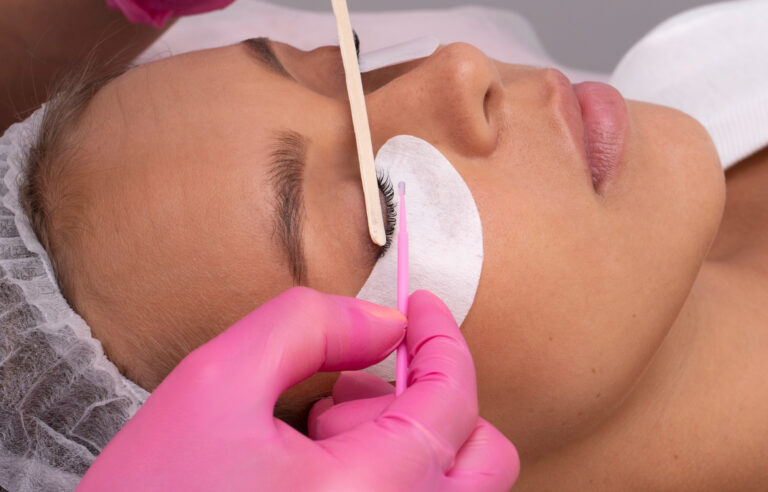
Lamination works with the client’s own lashes: the artist gives them shape, curl, and shine through a chemical formula. Extensions are a different technology: an artificial fiber is attached to each natural lash, adding volume and length. Technically, these are two separate specializations learned independently — there’s no “in-between” course that teaches both skills at once.
For the client, the difference is felt mainly in how long the effect lasts: lamination holds for roughly 6–8 weeks, after which the lashes gradually return to their natural state, while extensions need a touch-up every 3–4 weeks. But for you, as a future lash artist, a different difference matters more: lamination is one continuous sequence of steps with a limited number of stages, while extensions involve tweezer work, where precision of movement determines the result from the very first minutes of practice.
In terms of the skill set involved, lamination is closer to a hairdresser’s work with a chemical perm: sequential steps, timing, precise dosing of a formula. Extensions are closer to jewelry-making or bead embroidery — fine details, a steady hand, holding a position for extended periods. If you already picture yourself in one of these two metaphors, that’s a good indicator of which direction to start exploring the profession from.
One detail confuses even people who’ve already looked into the topic: lamination and lash lifting are not the same thing, even though the terms are often used interchangeably in everyday speech. For choosing a training course, this distinction matters mostly as context, not as the main question.
If you’re interested specifically in the client-side question — what results each treatment gives and which one to choose for your own lashes — we covered that in detail in the article “Lash Lifting or Lash Extensions: Which Treatment Is Right for You?”. That article answers a different question: it’s about choosing a treatment for yourself, this one is about choosing a course for your career.
The Lash Lamination Course at MONLIS — what’s included, how much it costs
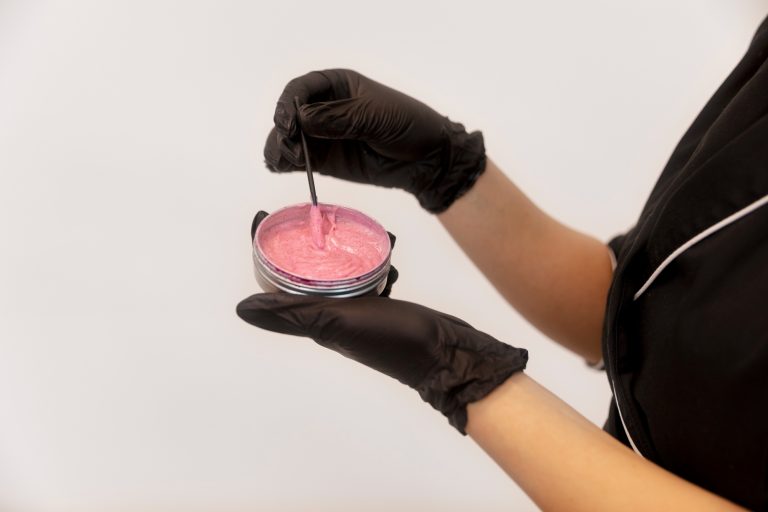
The lash lamination course at MONLIS costs 350€ and covers the full treatment cycle — from prepping and cleansing the lashes to the final nourishing stage with the formula. The exact number of training hours isn’t explicitly listed on the school’s website, so if knowing the exact schedule in advance matters to you, it’s best to check with the school before signing up.
No experience in the beauty industry is required to get started. The course is built for beginners: the theory section covers lash anatomy, how the chemical formula works, and safety practices; the practical part is hands-on work on real models under the instructor’s supervision. A certificate is issued upon completion, confirming qualification to work independently with clients.
There’s one thing course descriptions rarely mention: lamination is more forgiving of small beginner mistakes than extensions. An imperfect curl on a model noticeably hurts the final result less than, say, unevenly glued artificial lashes. That’s more of an argument in favor of the course than a reason to relax — which is exactly why this direction is more often recommended as a first step for anyone who’s never held professional tools before.
The practical part of the course usually runs in groups, where each participant performs the treatment on a model from start to finish, not just isolated steps. This matters: a real client during the course isn’t the same as a training mannequin, and the first feel of “live” hands-on work is usually what determines whether you’ll enjoy this specialization long-term.
After the course, every new artist faces the same question: where to find the first clients when the portfolio is still empty. For lamination, this question resolves faster than for extensions, for a simple reason — the low entry price of the treatment makes it easier to offer the first few sessions for a symbolic fee or free in exchange for result photos and a review. This approach is typical for the first weeks of any beauty newcomer’s work, and lamination specifically lets you get through this stage with minimal material losses.
The Lash Extensions Course at MONLIS — what’s included, how much it costs
The classic lash extensions course (no 2D or volume variations) runs two days and costs 750€. The first day is dedicated to theory and practicing on a cotton pad — the hand gets used to the weight of the tweezers and the range of motion without any risk to a live model. The second day is hands-on practice directly with client-models under the instructor’s supervision.
The course is led by an artist with more than 7 years of industry experience, who also took 1st place in the Building 3D category at a professional lash extension championship. For classic extensions, this matters more than it might seem at first glance: the technique requires not just theoretical knowledge of curl types and fiber thickness, but a trained sense of the attachment angle and the weight of the artificial lash relative to the natural one — a feel that’s far more effectively passed on by an instructor with real competition experience than learned from a textbook or video tutorial.
Two days is enough to master a solid, confident basic technique for classic extensions — enough to perform the treatment independently. But speed (a professional pace — up to two hours for a full set), perfect symmetry, and the instinct for when to stop so as not to overload the natural lash, only come after your first 15–20 clients. This is true of any manual profession: nail technicians, hairdressers, and tattoo artists all go through the same journey. Two days of a course is not a promise of instant professionalism — it’s a starting point you build from.
Working with tweezers just a few millimeters from the eye tends to make itself known in the first hours of practice through shoulder tension and tired eyes. That’s not a sign the profession “isn’t for you.” It’s a normal adjustment of muscles and eyesight to a new kind of detailed work — it fades with practice, the same way hand soreness fades during the first weeks at a manicure table.
Groups in the extensions course are usually smaller than in lamination — the technique itself requires more individual attention from the instructor for each participant while practicing the tweezer grip. This raises the course cost, but it also means mistakes get corrected right away rather than going unnoticed until the first real clients. For a direction where the cost of a mistake to the client is higher (an allergic reaction to the adhesive, discomfort from an improperly attached fiber), this training format is justified.
Which one is easier to start with as a beginner — the entry threshold
If you have no beauty industry experience at all, lamination is the lower-risk start. The treatment consists of one continuous sequence of steps, fewer materials and formulas to keep track of at once, and the cost of a mistake during training is lower — both financially (less material cost per model) and in terms of nerves.
Extensions demand a different type of concentration and a completely different kind of endurance. Working with tweezers a few millimeters from the eye is a skill that, for first-time models, often comes with mild hand tremor and eye fatigue after just 40–60 minutes of continuous work. The direction isn’t “harder” in terms of theoretical knowledge. It’s harder specifically in terms of physical endurance and fine motor skills, which are trained exclusively through practice, not lectures or videos.
Here’s a practical guideline for choosing: if you’ve never worked with your hands in detailed manual work before — manicure, sewing, jewelry-making, drawing fine details, model-building — start with lamination. If you already have experience in a related field with developed fine motor skills, extensions can absolutely be a logical first course, without the intermediate step through lamination.
Honestly ask yourself about another factor too — how much time you’re willing to spend on the course itself before starting work with your first paying client. One day of lamination training means that, theoretically, you could take on your first clients as early as next week, allowing for the uncertainty of first attempts. Two days of extensions is already an investment not just of money, but of time you need to carve out of a tight schedule of moving, job hunting, or childcare — which, for many diaspora women in Munich, is a decisive factor right now.
There’s also a psychological factor that’s rarely talked about directly. Lamination delivers a visible result during the training itself — the model immediately sees the change in lash shape, which keeps a beginner’s motivation up. Extensions, at the start, can feel slower and less “dramatic”: the first few hours go into practicing the tweezer grip itself, not a visible result. If seeing quick progress matters to you psychologically, that’s another argument in favor of lamination as a first step.
The comparison here is similar to the difference between a first guitar lesson and a first watercolor painting lesson. In watercolor painting, the result is visible within the second minute — even an unsteady line immediately reads as something finished. In guitar, the first lesson is sore fingertips and clumsy chords that won’t sound confident for several weeks of regular practice. Neither path is “easier” overall — one just gives immediate feedback, the other requires trust in the process upfront. The same applies to choosing between lamination and extensions: the first rewards you quickly, the second demands patience in exchange for a higher skill ceiling.
Which one pays off better in Munich
A direct comparison of “which pays off more” without context would be an unfair oversimplification: it’s worth separating the cost of the course itself from the income potential of the direction it opens up. Lamination is cheaper to start (350€ vs. 750€), and a single treatment costs the client less than extensions.
But that lower price per treatment also means a lower average ticket per individual client. Extensions, on the other hand, cost the client more, and — crucially — require a regular touch-up every 3–4 weeks. That means one extensions client generates repeat revenue more often than a lamination client, who typically comes back once every month and a half to two months.
Lamination is more advantageous in the short term: lower course investment, faster path to your first clients, easier to build an initial portfolio for social media. Extensions are more advantageous in the long term: a higher price per treatment and a natural base of repeat clients that builds itself through the touch-up cycle — you don’t need to keep finding a new client each time, just retain the ones you have.
We deliberately won’t promise a specific income figure for either direction — that depends on the district you work in within Munich, how quickly you build your own client base, your schedule, and each artist’s personal circumstances, not just the course chosen. Any school that gives you an exact earnings figure upfront is most likely selling a promise, not a realistic forecast.
There’s one more aspect worth factoring in specifically for Munich: the Ukrainian and Russian-speaking diaspora in the city keeps growing, and some new clients look for an artist they can speak their native language with, without a language barrier. This applies equally to both directions — lamination and extensions alike — but it means the first clients are often easier to find through the language community than through cold search on Google or Instagram.
Material costs after the course are also worth calculating in advance, not just the cost of training itself. Extensions require ongoing restocking of consumables: adhesive, lash fans of various lengths and curls, remover, tweezers of various shapes. Lamination also requires formulas and rods, but the list is shorter, and the kit is cheaper to maintain per month of work. So after the extensions course, you’ll most likely need an additional investment in a starter material kit even before your first paying client — this amount is worth budgeting separately from the cost of the course itself.
Comparison table: lamination vs. extensions as a training path
| Criterion | Lash Lamination | Lash Extensions (classic) |
|---|---|---|
| Course cost | 350€ | 750€ |
| Training length | 1 day | 2 days |
| Entry threshold for beginners | Lower — one continuous sequence of steps | Higher — precise tweezer work |
| Physical endurance required | Moderate | High (fine motor skills, sustained focus) |
| Speed of visible progress during the course | High (result visible immediately) | Slower (first hours — practicing the grip) |
| Price of the treatment for the client | Lower | Higher |
| Need for repeat clients | Once every 6–8 weeks | Once every 3–4 weeks (touch-up) |
| Certificate | Yes | Yes |
Can you learn both directions
Yes — and in practice, a portion of MONLIS artists complete both courses in sequence; that’s not an exception but one of the common growth paths at the school. The logical order for most beginners is to start with the technically simpler and cheaper lamination, build up first clients and confidence in your hands, and then invest in the lash extensions course once you have a basis for comparing your own experience with both techniques.
The reverse order is entirely possible too. If you’re aiming straight for a higher price per treatment and are ready for a technically more demanding start, and the 750€ financial threshold doesn’t hold you back, you can take the lash lamination course later — as an expansion of your service portfolio for existing extensions clients who might want to try something lower-maintenance.
This is worth thinking through in advance if you’re planning to offer clients both options within one salon or studio.
Mastering both directions at once broadens your future client base: clients seeking a natural effect and minimal upkeep, and those who want volume and length, are two different groups that rarely overlap. An artist who offers both isn’t dependent on seasonal demand swings for a single direction.
There’s also a purely practical reason to take both courses not right away, but with a gap of a few months in between: the first course gives you basic skills, but genuine understanding of your own strengths as an artist only comes from working with real clients, not with models during the course. The gap between courses is time to test, in practice, whether you like your chosen direction enough to invest again — or whether it might be better to first firmly establish yourself in one specialization before expanding.
In short: lamination is the simpler, cheaper, and faster entry into the profession, with a technically lower difficulty threshold and lower financial risk at the start. Extensions are an investment that requires more time to master and more physical endurance, but they open up a higher average ticket and a natural cycle of repeat clients.
There’s no universally “right” first course — there’s the one that best fits your situation: your budget, your existing fine-motor experience, and how quickly you need to get to your first clients. Both directions lead into the same industry, and neither choice closes off the path to the other course later.
If you’re still torn between the two options, try a simple test: picture yourself a month after the course, working with your first client. If, in that mental picture, you feel calmer with a shorter, predictable treatment and a client who’ll come back in a month and a half — choose lamination. If, on the other hand, you’re not put off by longer, more precise hands-on work in exchange for a higher price and a client who’ll return monthly — extensions will be the more natural start. Both paths lead equally into a career in the beauty industry, and neither is a “fallback option” for the other.
Once your base direction is chosen and your first clients are already coming in, a logical next step in growing a beauty career is often expanding your service portfolio — for example, the brow lamination course at MONLIS, which pairs well with lash work and lets you offer clients comprehensive eye-area care.
This article is for informational purposes only and does not replace consultation with a doctor or specialist.