In the world of professional manicures, it’s not just about the color or design – the perfect nail shape plays a crucial role. A common question among aspiring nail technicians and even experienced professionals is: Can or should you file the nails after applying gel or polish? The answer is not universal, as it depends on various factors. In this article from MONLIS School in Munich, we explore the reasons, risks, and situations in which filing after application makes sense – or should be avoided.
Why Is the Nail Shape So Important?
The shape of the nails not only affects aesthetics but also the durability of the material and the comfort of the client. A clean, balanced nail shape contributes to the overall impression of a manicure and complements the wearer’s style. Even minor asymmetries or uneven edges can make the result appear unprofessional.
When Is Filing After Application Done?
In general, the nail shape should be perfectly filed before applying gel, acrylic, or shellac. However, there are exceptions when gentle filing after the final layer can be useful or necessary:
-
Correcting the Shape After Curing:
After curing, the material may slightly shift or appear uneven. In this case, gentle filing can restore a precise shape. -
Removing Excess Material or Edges:
Especially with thick gels or application close to the skin, small ridges can form. Filing can help smooth them out. -
Final Touch After Sealing:
Some professionals prefer to define the final shape after sealing, especially for precise shapes like square or ballerina.
Risks of Filing After Application
As useful as post-application filing can be in certain cases, it also carries some risks:
-
Loss of the Protective Top Layer:
Filing after sealing can damage the top coat, leading to early lifting, chipping, or cracks. -
Visual Defects:
Careless filing may leave scratches or dull spots on the surface, affecting both appearance and durability. -
Hygiene Issues:
Filing after finishing can create micro-cracks that serve as entry points for bacteria or fungi.
How to File Correctly After Application?
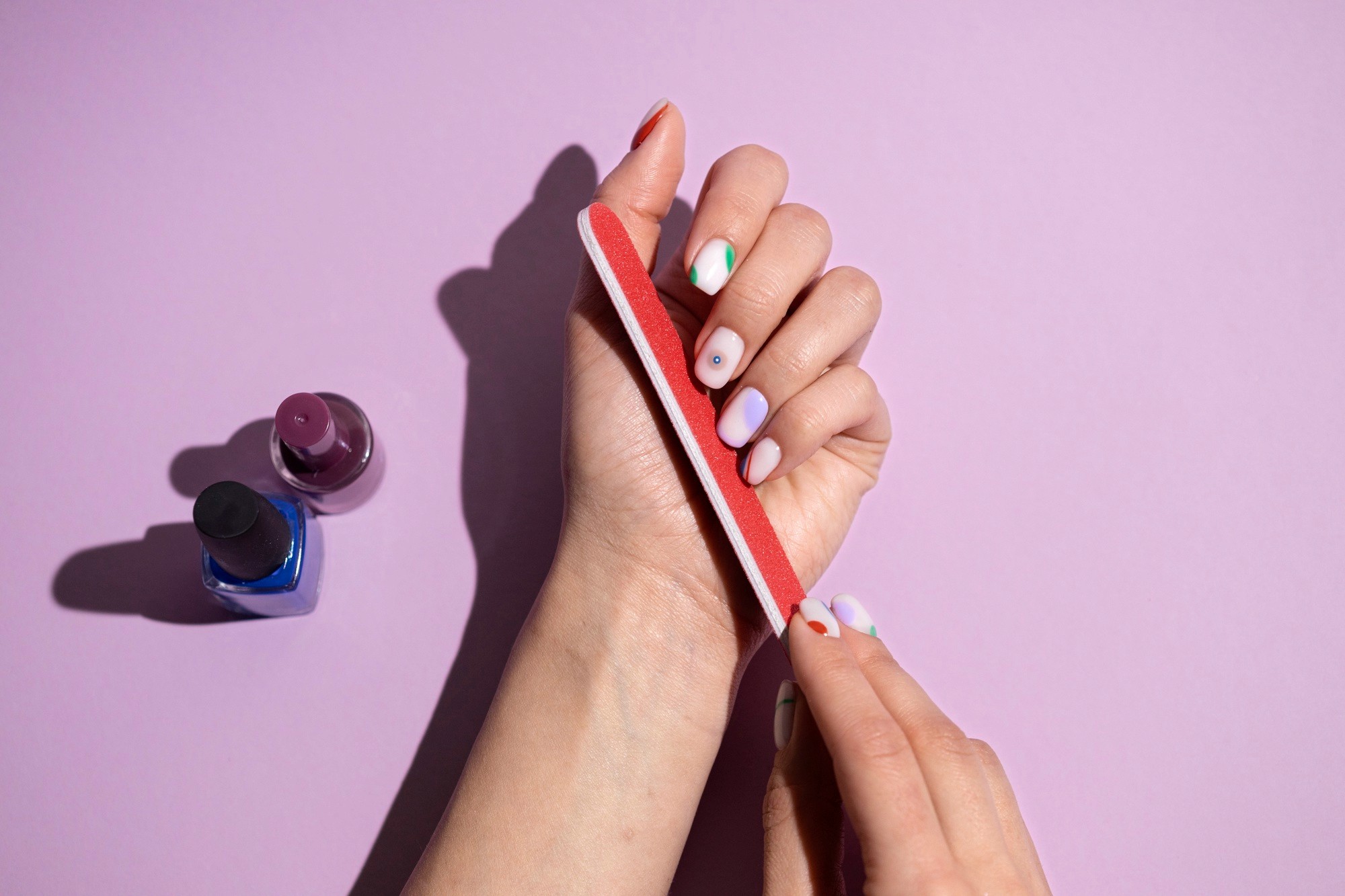
At MONLIS School in Munich, our students learn how to professionally file nails even after the final step – if truly necessary:
-
Use only fine-grit files (180 grit and above).
-
Work with light pressure and controlled movements.
-
Avoid contact with the coated surface – file only the free edge.
-
Finish by reapplying a top coat or sealer to restore the protective layer.
Alternative Correction Techniques
If the nail shape is unsatisfactory after application, there are alternatives to post-filing:
-
Use of forms or pinch techniques for more precise modeling.
-
Multi-step filing before the application, including buffing.
-
Improving application technique to better control product placement.
These and other advanced techniques are taught in hands-on lessons at MONLIS School, preparing our students to meet even the most demanding client expectations.
Filing the nail shape after product application should not be standard practice but a targeted correction in specific cases. When done incorrectly, it can significantly affect the quality of the manicure. However, with proper training – like that provided at MONLIS School – you will know when and how to apply this step safely and effectively. This ensures the result remains aesthetic, long-lasting, and hygienic.
Want to learn more about modern manicure techniques or start a professional nail design career?
Visit MONLIS School in Munich and get professional training – for a successful start in the beauty industry!