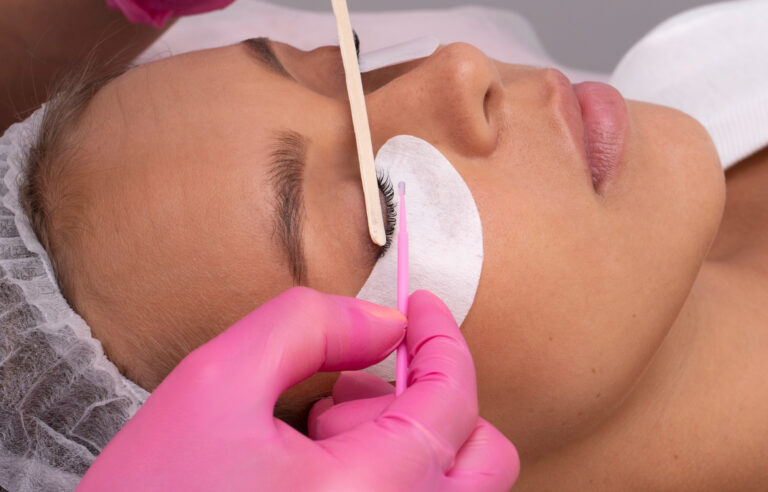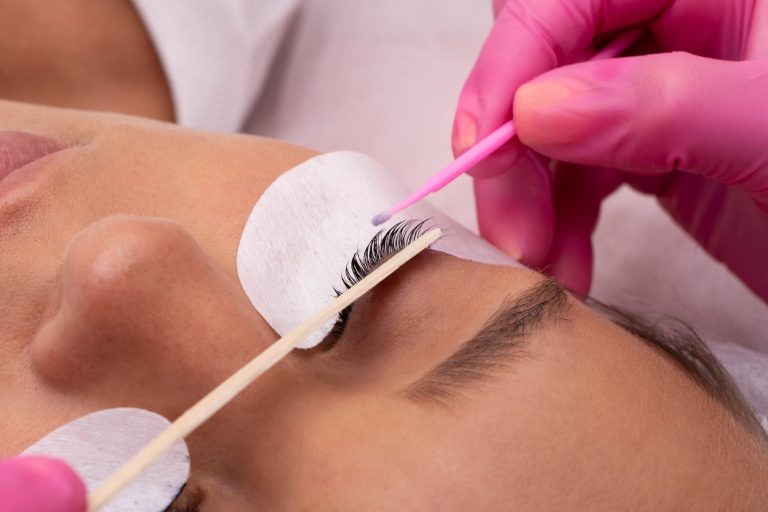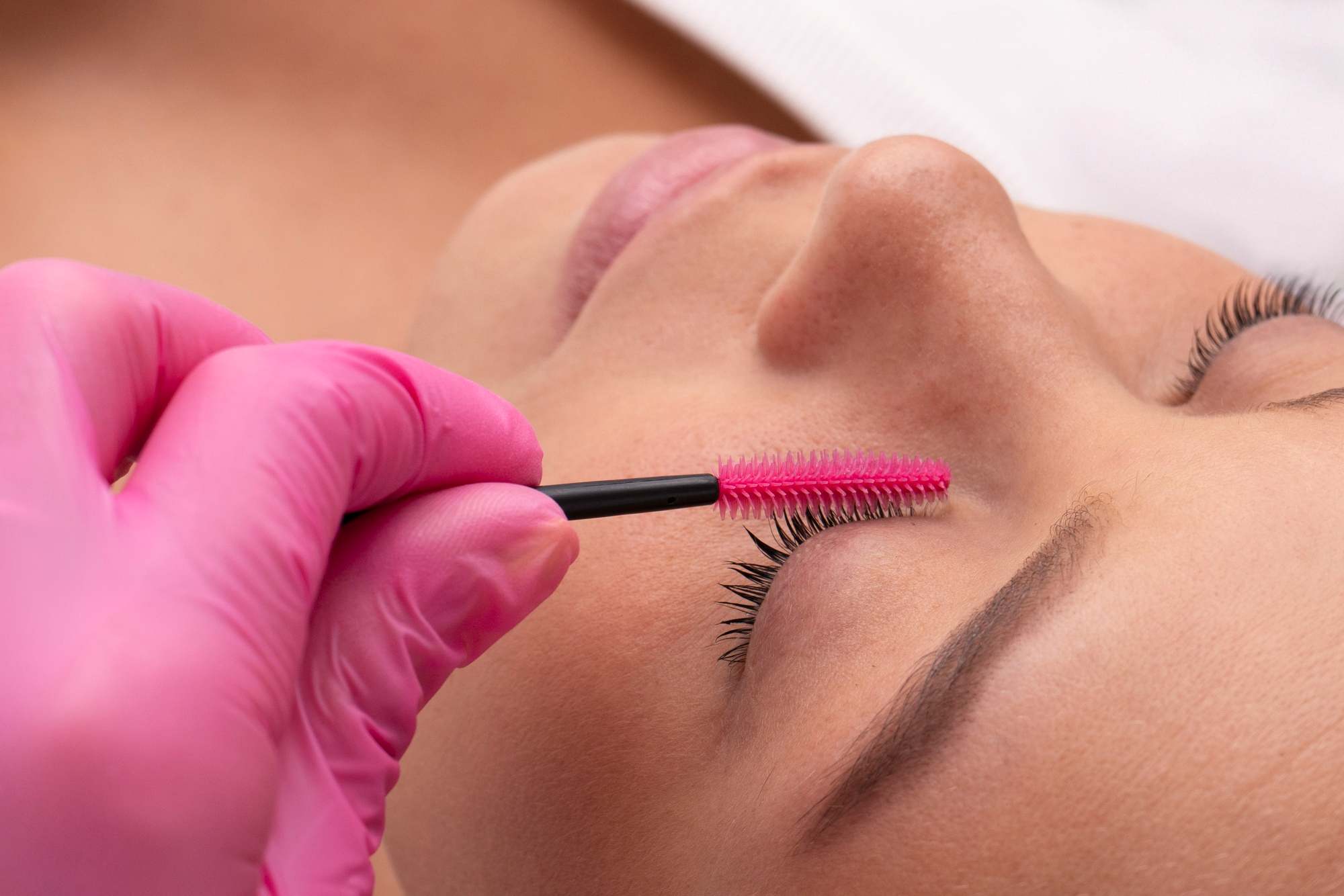
Long natural lashes are considered a great aesthetic advantage, yet именно с ними after lamination or lifting the “too straight” effect appears most often. Despite the length, the curl may look flat, the lifting line can seem broken, and the overall shape may lose expressiveness. The reason lies not in the products, but in the biomechanics of long hairs and in how they are positioned on the silicone pad.
Why long lashes visually lose their curl
The longer the lash, the greater its weight and the stronger the influence of gravity. If the bending zone is located too far from the root, the visual lift appears “stretched” and straightened. Additional factors include an excessively large pad radius, an incorrect tension angle, the absence of a clearly defined apex zone, and over-stretching of the length during placement. As a result, the lashes are lifted but do not form a pronounced curve.
The importance of choosing the right pad
For long lashes, it is crucial not to select a pad that is too large. A large radius creates a soft lift that looks almost straight on long hairs. The optimal approach is to choose a pad that is 0.5–1 size smaller than standard, taking into account not only the length but also the thickness of the lashes. The position of the apex must be checked: it should be located in the first third of the lash, not in the middle. This way, a visible curl is created rather than a simple upward lift.
The role of tension during placement
Excessive stretching of the lashes along the pad surface straightens the curve, while insufficient tension results in an uneven, chaotic lift. When working with long lashes, it is important to maintain elastic, not rigid, tension, to fix the direction without over-pulling the length, and to form the curl through the pad shape rather than pressure.
Control of the apex zone
The apex is the point of maximum curvature. For long lashes, it should be positioned closer to the root; otherwise, the entire length visually aligns into a straight line. Correct apex placement is achieved through firm fixation of the root area, precise positioning of the pad, and even distribution of the lashes without slipping.
Direction and parallel alignment
When long lashes fan out, the curl loses its graphic clarity. Parallel placement creates an optical arc and enhances the perception of curvature. Crossed lashes and different lifting heights in the central and lateral zones visually “straighten” the line.
Common mistakes that intensify the “too straight” effect
In practice, these most often include choosing a pad that is too large, placing the lashes with excessive tension, a displaced apex, insufficient work in the root zone, and focusing only on length without considering hair density and stiffness. Even with high-quality solutions, these factors lead to a flat visual result.
Key points about working with long lashes and avoiding the “too straight” effect
Length enhances the visual straightening of the curl.
The pad radius should be smaller than standard.
The apex should be located in the first third near the root.
Tension must be elastic and controlled.
Parallel placement emphasizes the graphic shape of the curl.