Gel paints and gel polishes are essential materials in modern nail design. They determine not only the appearance but also the precision, durability, and quality of the final result. Especially in detailed work — fine lines, French tips, geometric patterns, or high-pigment areas — shape stability plays a crucial role.
At MONLIS Schule Munich, aspiring artists learn how different gel types behave, which properties are essential for professional work, and how to select the right products for flawless results.
What Does “Shape Stability” Mean in Gel Products?
Shape stability refers to the product’s ability to remain in place without spreading, losing its edges, or becoming inconsistent in color.
A shape-stable product:
-
stays exactly where it is applied,
-
does not run into the nail folds,
-
provides clean, sharp lines,
-
can be controlled with precision,
-
offers strong coverage even in thin layers.
For professional design work, this characteristic is indispensable.
The Difference Between Gel Paints and Gel Polishes
Gel Paints
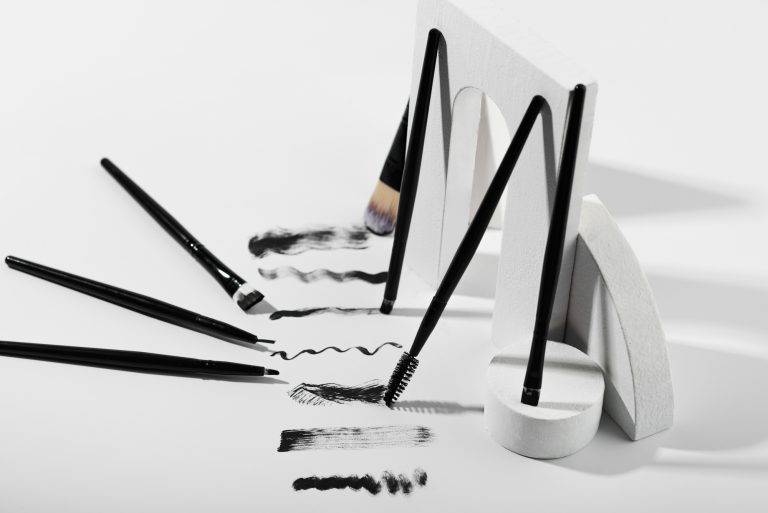
Gel paints are thick, highly pigmented formulas developed specifically for design work. They barely self-level, which makes them ideal for detailed elements.
Key features:
-
extremely high pigment load
-
thick, non-running consistency
-
perfect for thin lines, ornaments, and geometry
-
excellent control without spreading
-
stay stable until fully cured
Gel Polishes
Gel polishes are thinner and more self-leveling, designed mainly for full-coverage color application.
Key features:
-
medium to thin viscosity
-
ideal for even, glossy fullcover
-
self-leveling, which can make them run
-
usually require two thin coats
-
less suitable for precise detail work
At MONLIS Schule, students learn when each type of product is the best choice.
Which Products Hold Their Shape Better?
1. For precise lines and detailed designs: Gel Paints
Gel paints are unmatched when it comes to shape stability. They deliver razor-sharp lines, crisp smile lines, and flawless geometric patterns.
Advantages:
-
no running
-
excellent coverage in very thin layers
-
stays exactly where placed
-
ideal for French tips, stripes, negative space, geometry
-
essential for fine detail work
This is why MONLIS Schule professionals rely on gel paints for all precision designs.
2. For fullcover and natural looks: Gel Polishes
Gel polishes create smooth, even surfaces and beautiful fullcover finishes.
Advantages:
-
easy to apply
-
self-leveling and smoothing
-
great for quick studio work
-
wide range of colors
For precise designs, however, they are often too fluid.
How to Identify High-Quality, Shape-Stable Gel Products
Experts at MONLIS Schule evaluate products based on:
-
Pigment density – high saturation improves coverage.
-
Viscosity – thicker consistency allows better control.
-
Self-leveling – minimal for gel paints, moderate for gel polishes.
-
Curing quality – no shrinking or bubbling.
-
Color stability – no fading after curing.
These factors determine whether a product is suitable for professional design excellence.
When to Use Gel Paints vs. Gel Polishes
Use Gel Paints for:
-
French smile lines
-
geometric nail art
-
thin lines and precision work
-
stripes and graphic designs
-
ornaments and fine detailing
Use Gel Polishes for:
-
fullcover color
-
soft gradients
-
natural or minimalist looks
-
quick salon applications
MONLIS Schule teaches students how to combine these two product types for the best professional outcomes.
Typical Mistakes and How to Avoid Them
1. Applying too much product
Even high-quality gels can run if overloaded.
2. Incorrect curing time or lamp type
Leads to wrinkles, shrinkage, or bubbles.
3. Using too much product for detail work
Gel paints require only a tiny amount for maximum coverage.
4. Working without understanding viscosity
This is why MONLIS Schule places great emphasis on product knowledge.
Why Proper Training Is Essential
Even the best gel products cannot guarantee quality results without proper technique.
At MONLIS Schule Munich, students learn:
-
how to control each product
-
how to evaluate shape stability
-
which gels are best for which techniques
-
how to avoid common mistakes
-
how to create clean, professional designs
These skills are what distinguish a trained professional from a beginner.
Which Products Truly Hold Their Shape
The verdict is clear:
For design work — gel paints.
For fullcover — gel polishes.
Gel paints offer superior shape stability, while gel polishes provide smooth, even coverage.
Thanks to the training at MONLIS Schule Munich, future nail artists learn to use both types effectively to create high-quality, durable nail designs.