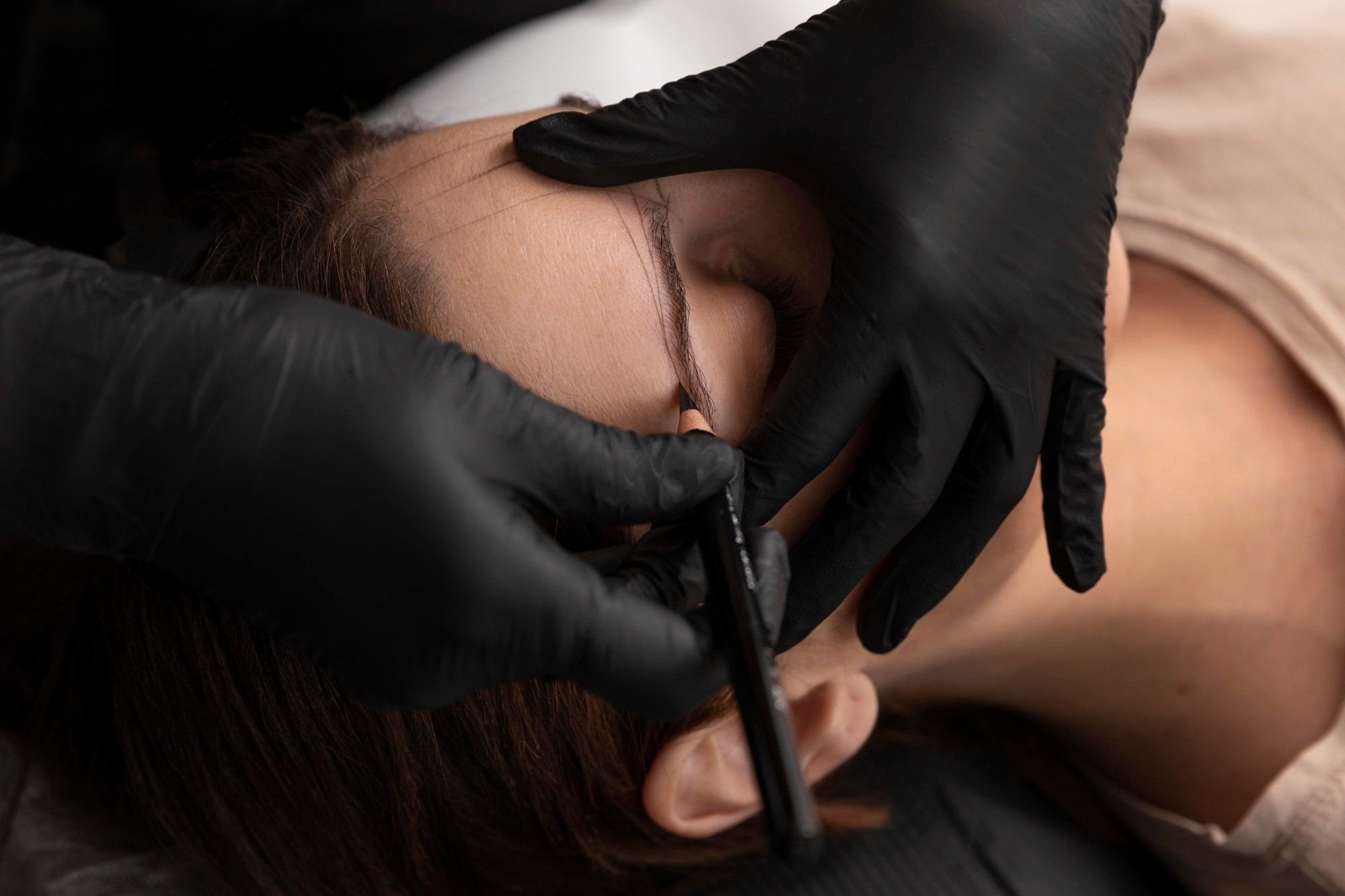
The art of perfect brow architecture doesn’t start with the tweezers — it begins with understanding natural hair growth. At MONLIS School Munich, future brow stylists learn how crucial it is to analyze and respect the direction of each hair. Only with precision and observation can a shape be created that looks natural, symmetrical, and aesthetically balanced.
Why Hair Growth Direction Matters
Every eyebrow hair grows in its own direction — horizontally, diagonally, or vertically — and these patterns can vary between individuals and even within the same brow. Ignoring this natural growth can lead to uneven, artificial results or disrupt the natural line of the brow. Incorrect technique may also cause breakage or gaps.
At MONLIS School, the natural direction of growth is the foundation for shaping. Instead of forcing a new form, professionals work with the natural flow of the hair, achieving a result that enhances facial harmony while preserving the natural beauty of the brows.
Analyzing Hair Structure and Growth Direction
Before any shaping or tinting begins, analysis is key. Instructors at MONLIS School Munich teach students to use proper lighting, angles, and brushing techniques to study hair growth patterns in detail:
-
Inner section: typically vertical or slightly upward.
-
Middle section: grows diagonally outward.
-
Outer section: gradually slopes downward.
This understanding allows professionals to determine the ideal brow shape that follows the natural flow while complementing facial proportions.
Techniques Aligned with Natural Hair Growth
Professional brow architecture aims to support, not alter, the natural direction of hair growth. Key techniques include:
-
Tweezing and trimming in the direction of growth to prevent irritation.
-
Lifting or lamination to correct unruly or crossed hairs.
-
Tinting and shading to emphasize direction and create depth through light and shadow.
At MONLIS School, students practice these methods on real models, learning how to combine observation, technique, and artistry for consistent professional results.
Common Mistakes to Avoid
One of the most frequent beginner errors is plucking against the direction of growth. This weakens the follicles and may cause regrowth in the wrong direction. Overuse of wax or pigment can also distort the natural brow line.
Instructors at MONLIS School Munich always stress the importance of gentle, precise technique — respecting natural dynamics and the overall balance of the face.
Balancing Symmetry and Individuality
Perfect symmetry is not the goal — harmony is. Since no face is completely symmetrical, the task of a skilled brow stylist is to recognize and enhance natural balance. Understanding growth direction allows subtle corrections without erasing individuality.
Professional training at MONLIS School Munich focuses on this refined aesthetic sense, teaching students how to create brows that appear naturally full, soft, and expressive.
Respecting the direction of hair growth is the foundation of every successful brow architecture. At MONLIS School Munich, stylists are trained to analyze, understand, and apply this knowledge both technically and artistically. The result is not just beautiful brows — it’s a natural expression of harmony, precision, and care.
Want to master the art of brow shaping from the root up? Join MONLIS School Munich and learn how professionals transform every brow into a personalized masterpiece — guided by growth direction, symmetry, and natural beauty.