In the world of professional eyebrow shaping, a clean, precise line is key to a polished and harmonious appearance. Clients not only expect a flattering shape but also a well-defined contour that adds elegance and character to the face. At MONLIS School in Munich, future brow artists learn how to achieve flawless lines through professional techniques, proper product selection, and a trained eye for symmetry.
Why Is a Clean Brow Line So Important?
Eyebrows play a central role in facial symmetry. A sharp, well-defined brow line:
-
enhances the natural eye shape,
-
highlights the facial features,
-
creates a polished and professional overall look.
Even the smallest irregularities or blurred edges can disrupt the visual harmony. That’s why perfect line definition is not a detail — it’s a crucial part of the final result.
Preparation: Analysis and Shape Mapping
Before beginning the correction process, MONLIS School emphasizes professional analysis:
-
What is the client’s face shape?
-
What brow shape complements her eyes, forehead, and cheekbones?
-
What techniques are necessary to enhance the form?
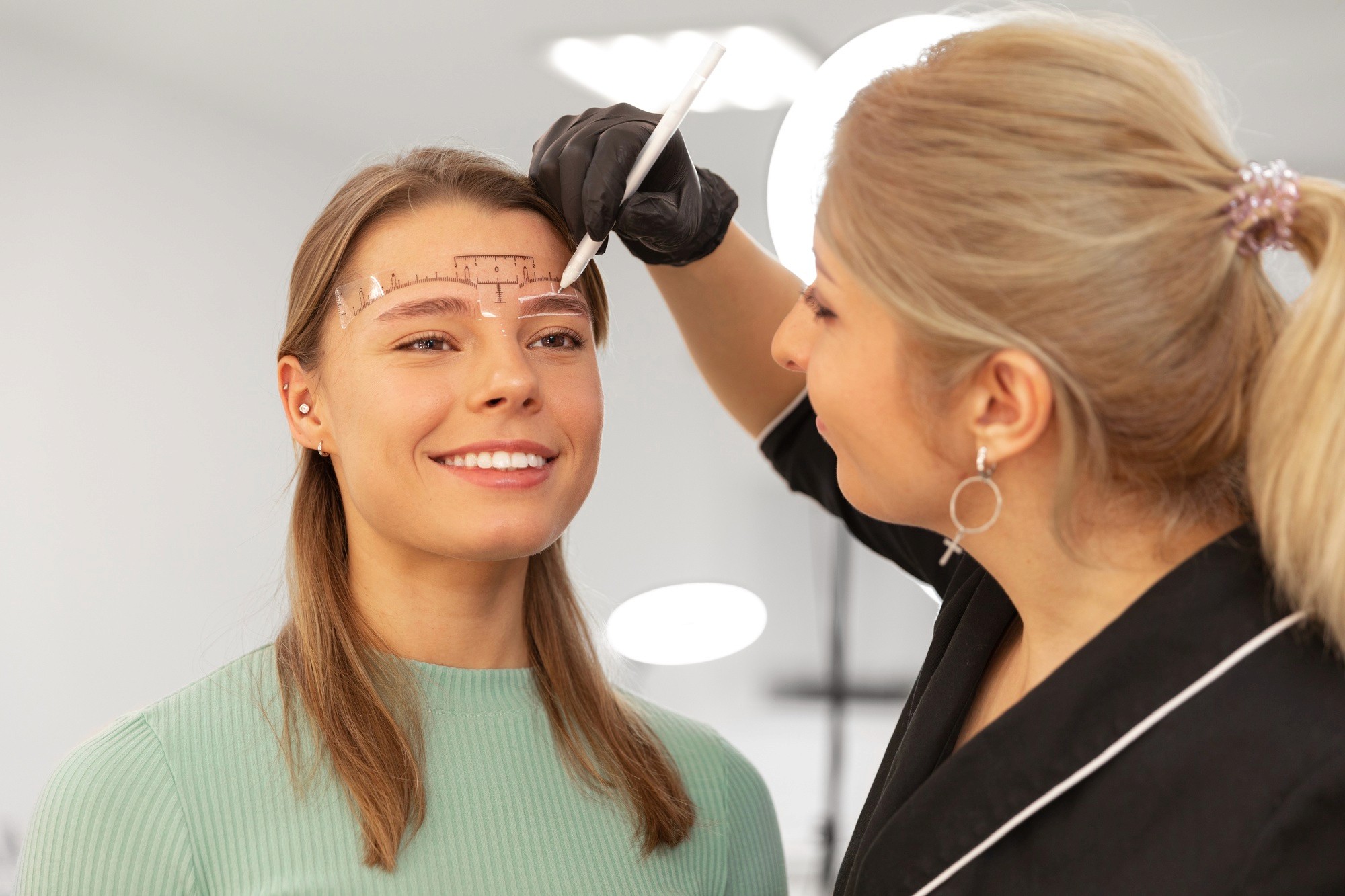
This is where brow line definition begins. Using mapping techniques, the ideal shape is sketched in advance, allowing each hair to be removed with millimeter precision.
Techniques for Maximum Precision
Our trainers use several proven methods to define clean, symmetrical brows:
1. Tweezing Technique
This classic method allows precise targeting of individual hairs. With proper hand positioning and controlled movement, sharp contours can be achieved even in fine detail.
2. Threading Technique
Ideal for creating straight, clean lines — especially under the brow. Though threading requires practice, it produces excellent results when done by skilled hands.
3. Waxing Technique
Perfect for removing multiple hairs in one step and achieving bold lines. At MONLIS School, students learn how to apply wax precisely without distorting the natural shape.
Product Choice: Quality Creates Sharpness
The right products make a major difference in achieving clean results:
-
Fine-tip markers and pencils for accurate shape outlining
-
Skin-safe wax and threads for effective hair removal
-
Brow gels and fixers to tame and hold hairs in place
At MONLIS School, students are taught which products deliver the sharpest results and how to apply them professionally.
Tinting for Added Definition
Professional brow styling doesn’t stop with hair removal. Tinting is often used to further enhance edge definition and highlight the brow’s shape. Choosing the right color tone — based on skin undertones and natural hair — is crucial. MONLIS students are trained to customize the tint precisely to the mapped shape.
Common Mistakes: What Dulls a Clean Line?
Even small mistakes can negatively impact the final result. Common issues include:
-
over-removal in the wrong areas,
-
uneven transitions between the top and bottom edges,
-
misaligned brow tails.
That’s why it’s essential to work methodically, take regular breaks to assess symmetry, and check the shape from a distance or in a mirror — practices emphasized in every MONLIS training.
A sharp and clean brow line is the centerpiece of any professional eyebrow correction. It gives structure, elegance, and character to the face. At MONLIS School in Munich, students not only learn the hair removal techniques but also master the art of precise line shaping — for consistently flawless results. For those who want to succeed in the beauty industry, this skill is essential.