Removing nail coatings is a key step in any professional manicure. Whether it’s gel, Shellac, or acrylic – the way the old layer is removed has a major impact on the health of the natural nail and the quality of the next application. At MONLIS School in Munich, students are taught various removal techniques suited to different materials, nail conditions, and client preferences. In this article, we compare three common methods: e-file removal, chemical remover, and manual filing.
E-File – the Fastest Professional Method
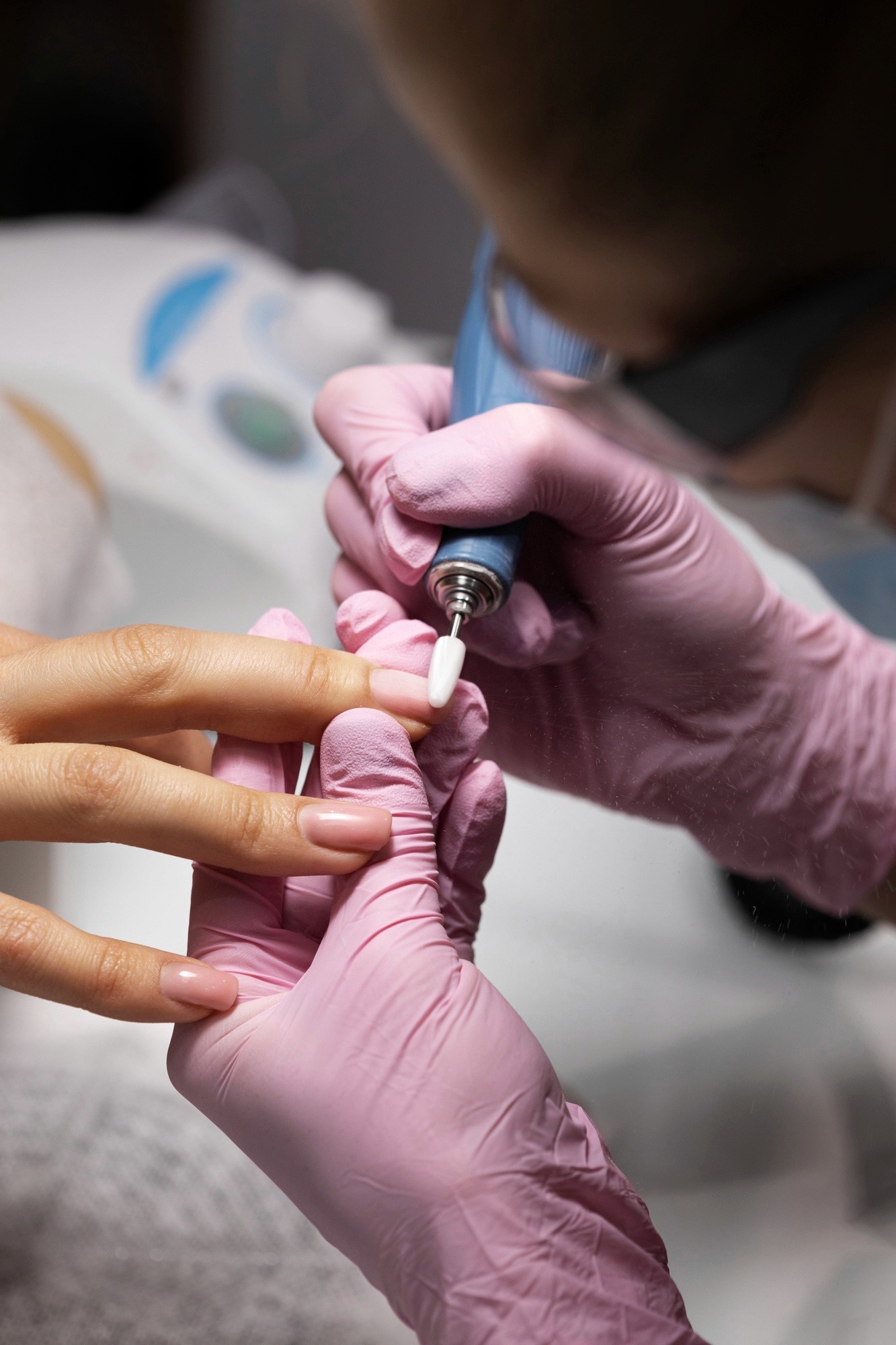
Using an electric file is the preferred method in many salons today. It allows for quick, precise work and is particularly effective for removing gel or acrylic. In skilled hands, it’s both time-saving and efficient – as long as the right bit and speed are selected.
At MONLIS School, students receive thorough instruction on proper technique, including how to use minimal pressure, avoid injuries, and protect the natural nail plate. Special attention is also paid to managing heat and maintaining ergonomic posture during filing.
Remover – the Gentle Option for UV Polishes
The chemical method involves applying an acetone-based remover to soften the coating, followed by wrapping the nails in foil or special pads for 10–15 minutes. The softened product can then be gently pushed off using an orange stick.
This method is easy to use and requires no advanced tools, making it ideal for beginners or clients with sensitive nails. However, acetone can dry out the nails and surrounding skin, so proper aftercare is essential. At MONLIS, students are also taught about nourishing treatments, oils, and hydration routines to restore nail health after removal.
Hand File – Traditional but Time-Consuming
Manual filing is the oldest method of product removal. It offers full control and doesn’t require equipment, but it’s more time-intensive than using an e-file or remover. For thick gel layers, it can also be tiring and risky for the natural nail if too much pressure is applied.
At MONLIS, students learn how to use hand files with precision, working in targeted areas without damaging the nail plate. This method is best suited for refinements or detailed corrections, rather than complete removal of thick coatings.
Which Method to Choose?
The best technique depends on several factors:
-
What material was used?
-
What condition are the natural nails in?
-
Does the client have sensitivities or allergies?
-
How much time is available?
At MONLIS School, students learn to assess these variables professionally. Being able to confidently choose the right method for each situation is essential for high-quality nail work.
Practical Training at MONLIS
Training at MONLIS School in Munich is hands-on and comprehensive. Students not only learn how to perform all removal techniques safely, but also gain knowledge in hygiene, product use, and customer care. Emphasis is placed on protecting the natural nail and choosing client-specific solutions.
The curriculum includes theory, product knowledge, skin response management, and studio workflow – ensuring that graduates are well-prepared for real salon settings.
Removing old coatings is more than just a technical step – it’s a critical part of a clean, healthy, and professional manicure. To work confidently and safely, every nail technician should master all three methods. With expert instruction at MONLIS School in Munich, students gain the skills to work efficiently, individually, and with great care for each client’s nails.