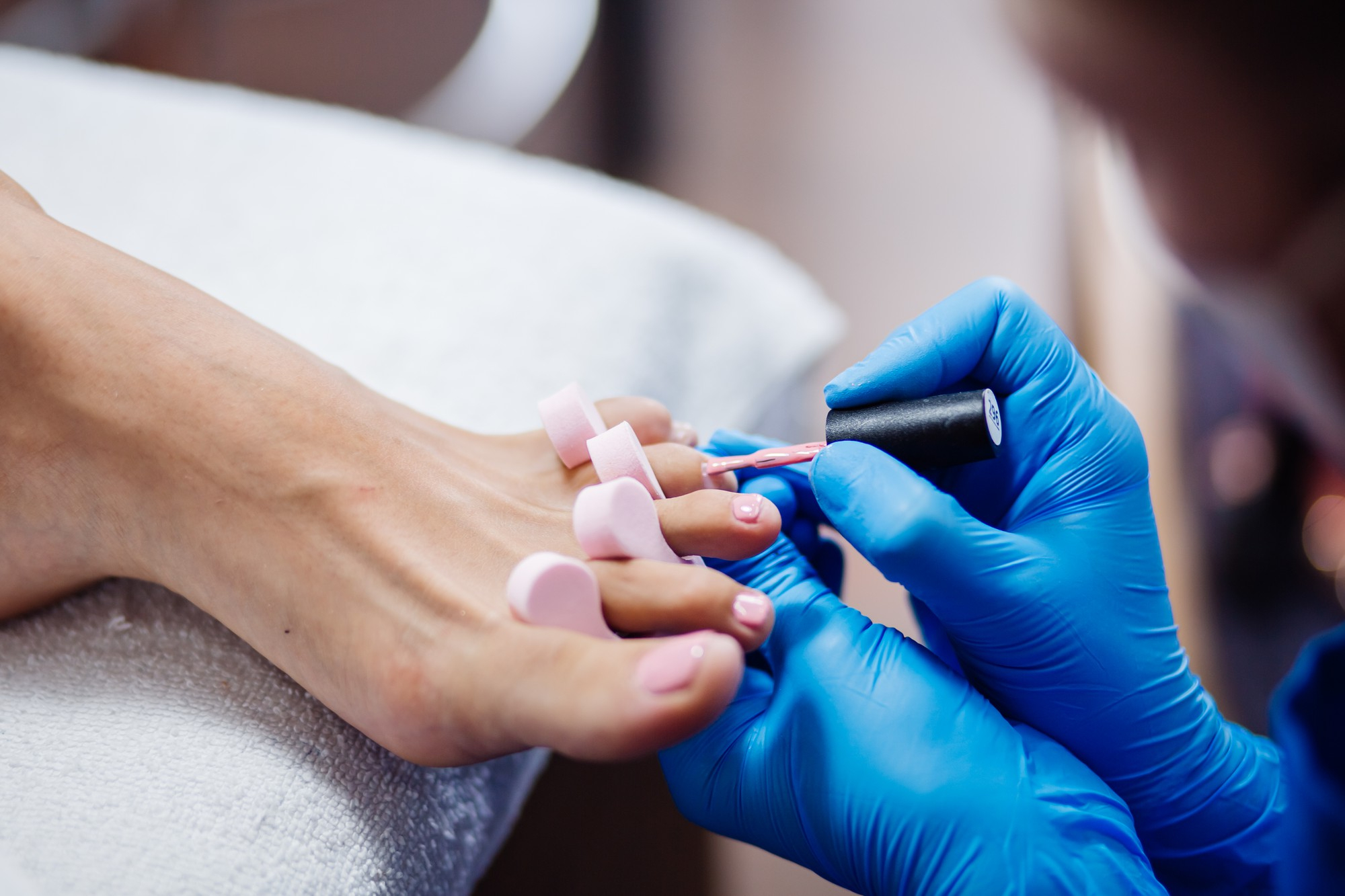
The MONLIS certificate is on the table, and the phone stays silent. A familiar feeling for a freshly qualified pedicure specialist — and it doesn’t mean anything went wrong. Short intensive courses are becoming more popular in Munich, and with them, the number of newcomers entering the market at the same time as you. The question of how to find repeat pedicure clients feels more urgent in the first weeks after training than any other — after all, it’s the first month that decides whether a client goes to a more experienced competitor or stays with you. Below are seven steps you can realistically take in your first month of work: from your very first portfolio piece to a client base that books itself, without reminders.
A Portfolio Without a Single Client: What to Show When You Have No Real Work Yet
Photos from your course are already a ready-made portfolio, even without a single real client — most people just don’t realize this right after graduating. This is where the typical beginner’s trap lies: waiting for “real” clients before showing anything at all. Meanwhile, every piece of work done on a model during training at the MONLIS pedicure course works perfectly for your first Instagram post and for the “My Work” section of your Google profile.
Behind the MONLIS pedicure course stand 300+ graduates and 15 years of the school’s experience in Munich (according to the school), taught by Maria Meik — a specialist who went from manicurist to instructor and knows from personal experience how scary it is to start. This fact is worth putting right in your profile description or your Instagram bio: a client who’s hesitant about trusting a newcomer reads not just reviews, but also where the specialist trained and with whom.
A transparent price list is the second must-have element of your calling card. Not “price on request,” but concrete numbers: how much a classic pedicure costs, how much with polish. Uncertainty puts people off more than a high price does.
A Google Profile for Munich: The Channel That Outlasts Paid Ads
A Google Business Profile costs nothing — and that’s probably exactly why it’s so consistently underrated. Unlike social media advertising, which stops bringing people in the moment you pause the budget, a Google profile keeps working for months after you fill it in.
What matters most here are the keywords in your description: “Pediküre München,” maybe even the district where you work. Add real photos of your work — not stock images — and your opening hours. With a well-filled-out profile, a client searching for “pedicure near me” is more likely to see your profile among the first results.
Filling out the profile takes an evening. The effect lasts for months — a rare case where a one-time action outlasts ongoing investment.
Social Media for Two Audiences: How to Find Repeat Pedicure Clients in Munich
This is where an advantage begins that no competitor writing advice for the Ukrainian market has: the ability to speak to a client in her native language. It’s worth running Instagram and Facebook for two audiences at once — German-speaking and Ukrainian- or Russian-speaking — without picking just one.
The second channel is diaspora groups. Several active Telegram and Facebook communities of Ukrainians and Russians in Munich regularly ask “can anyone recommend a pedicure specialist?” A post in one of these groups with a photo of your work and a booking link often brings in first clients faster than a month of paid targeting — essentially, it’s the same word of mouth, just in digital form and among an audience that already trusts you by default.
The phrase “a specialist who understands you without a translator” sounds like a slogan, but behind it is a very concrete advantage: no need to search for the right words in a foreign language when it’s about your own feet or hands. German schools in Munich, for all their experience, simply can’t offer that.
Mobile Pedicure: How to Start Without Renting a Studio
Renting a studio is usually the biggest barrier for a newcomer without startup capital — and the mobile format, where the specialist travels to the client’s home, removes this problem almost entirely: there’s no need to pay for space while your client base is still forming.
According to estimates from the industry portal selbststaendig.de, the startup investment for a mobile cosmetic practice is significantly lower than opening a studio — this format is traditionally well suited for starting out, including on a non-permanent basis. The minimum kit for mobile pedicure:
- sterilized tools;
- a portable stand or chair;
- consumable materials;
- a clear disinfection protocol between clients.
Hygiene here is no less important than in a studio — often even more visible, since the client watches the preparation up close.
There’s one nuance beginners overlook most often: mobile or at-home work doesn’t exempt you from officially registering your business. More on the legal side next — and it’s worth reading closely, not skimming.
The Legal Minimum Before Your First Paying Client
In Germany, cosmetic pedicure is officially classified as a Gewerbe (trade), so you need to register your activity regardless of whether you work in a rented studio, at home, or exclusively travel to clients. The industry portal Gewerbeanmeldung.de confirms this directly: the format of your work doesn’t exempt you from the Gewerbeschein — only what’s stated in the activity description changes.
There’s deliberately no step-by-step instruction here — too much depends on the specific Bundesland and even the district. One guideline: before your first paying client, get in touch with your local Gewerbeamt and, if possible, a Steuerberater. They’ll tell you the exact list of documents needed and remind you about liability insurance (Berufshaftpflichtversicherung) — which is also worth arranging before, not after, your first client.
How to Turn a One-Time Client Into a Regular
The simplest and most often skipped step is offering the next appointment right during the treatment, while the client is relaxed and happy with the result. The first client is only half the work; the second half starts the moment you take the towel off her feet.
A week later, in a message thread, that moment is already gone. Most beginners make the mistake right here: waiting for the client to write first. A typical scenario looks like this: the specialist does great work, the client thanks her warmly — and that’s where the contact breaks off, because no one suggested a specific date for the next visit. A messenger reminder a day or two before the appointment reduces the number of missed visits — and this applies to any service business, not just beauty.
A small loyalty program — say, a discount or bonus on the fifth treatment — works as an additional, not the main, reason to come back. Keeping a client who already knows your work is easier than constantly finding new ones through word of mouth or advertising. This is a general pattern in client-base work — not a promise of a specific result or income for any individual specialist.
A Wider Range of Services — and a Higher Average Ticket
Expanding your services is a natural next step once a client who regularly comes in for a pedicure eventually asks, “Do you do manicures too?” The skills for working with nails, disinfection, and clients are already there — all that’s left is to add the technique.
The Manicure course (€750) and the Nail Extensions course (€750) at MONLIS logically build on what’s already been learned in the pedicure course. Same working principle: practice on models, a certificate on completion. For anyone who wants to go further, there’s Trending Nail Designs as a separate step after basic manicure.
MONLIS course prices are going up on October 1, 2026 — and if expanding your services is already on your plans for the coming months, it’s worth signing up while the current price still applies.
What to Do in Your First Two Months
These seven steps aren’t a to-do list for one evening — they’re a roadmap for your first month or two of work:
- Put together a portfolio from your course work and set a transparent price list.
- Fill out a Google Business Profile for Munich.
- Run social media for two audiences at once and stay active in diaspora groups.
- Start with the mobile format if you don’t have the budget for a rented studio.
- Register your business (Gewerbe) and arrange liability insurance.
- Build the habit of offering the next appointment right away and sending reminders.
- Expand your range of services once your client base becomes more stable.
Each step on its own is simple. Together, they answer the main question — how to find repeat pedicure clients and keep them, instead of starting the search over every month.
If your pedicure course is still ahead of you — the program and dates are on the MONLIS website, along with the current course calendar.
This article is for informational purposes only and doesn’t replace advice from a doctor, lawyer, or tax advisor (Steuerberater).
This material was prepared by the MONLIS Beauty School team based on practical experience working with the school’s course graduates.


